





July brings a vibrant mix of cultural celebrations, awareness days, and community-focused events that provide rich opportunities for early childhood programming. By weaving these occasions into everyday experiences, educators can foster children’s curiosity, creativity, and sense of belonging, offering practical ways to connect learning with meaningful celebrations throughout the month.

Quality Area 5 (Relationships with Children) of the NQS focuses on fostering respectful, responsive, and meaningful interactions that nurture children’s sense of belonging, security, and wellbeing. While assessors often rely on observation and discussion, many services find it helpful to collate supporting documentation in a dedicated evidence folder. This provides clarity, consistency, and confidence when demonstrating compliance, while also celebrating the quality of relationships within the service.

Educators often wonder whether the number of days a child attends care should influence how many observations they complete. Some services believe that children attending 4–5 days a week require more documentation, while others maintain that quality matters more than quantity. This Q&A explores what the regulations actually require, how the exceeding services approach documentation, and practical strategies for balancing the planning cycle with meaningful practice.

The following activity ideas are mapped to each event, offering educators practical ways to embed experiences that connect with the EYLF outcomes. With five suggestions per event, educators can select and adapt activities to suit their group’s interests, environment, and resources, ensuring programming remains engaging, inclusive, and purposeful throughout the month.
National Reconciliation Week (27 May – 3 June) invites children and educators to celebrate the shared story of Australia and deepen understanding of Aboriginal and Torres Strait Islander cultures. In early childhood, this begins with simple, meaningful experiences: listening to stories, exploring nature, creating art, and learning about respect and belonging.
The Reconciliation Week Lesson Plan helps educators embed reconciliation through play‑based learning, group discussions, and interest‑area exploration. Each day builds on the theme “All In," encouraging children to see themselves as part of a caring, respectful community.
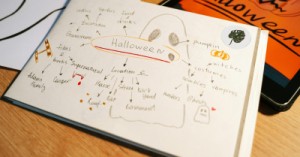
Mind maps are more than colorful diagrams; they are powerful tools for helping young children connect ideas, visualize learning, and build confidence in expressing their thoughts. In early childhood settings, they can be adapted into playful, age‑appropriate formats that encourage exploration and reflection.

May’s programming ideas are designed to be practical, adaptable, and inspiring—helping educators scaffold learning experiences that connect with children’s worlds while strengthening ties with families and communities.
Use this guide as a springboard to plan activities that are hands-on, reflective, and celebratory, ensuring that every child has the chance to explore, create, and grow throughout the month.

The Quality Improvement Plan (QIP) is not just a compliance document—it’s the heartbeat of continuous improvement in OOSH services. It shows how your service reflects on practice, identifies strengths, and sets goals for better outcomes. Even if you’ve never written one before, you can contribute meaningfully by following a clear, mapped process.
 Open ended questions cannot be responded to with one word answers such as yes or no. These types of questions enables a child to provide… Read More
 During your child’s preschool years, an important milestone begins to emerge. This is the development of pre-writing skills. Pre-writing skills are used to encourage, develop… Read More
 An Acknowledgment of the Country is a way of showing respect for the Traditional Owners and can be given by both non-Indigenous people and Aboriginal… Read More
 Open ended materials enables children to play freely. They are objects that have no rules to follow, use or function. Raw materials that can be… Read More
 Language plays an important role in a child’s development. It enables a child to communicate effectively with their family, learn at school, socialize with friends,… Read More
 Like adults, children have to deal with their own stress in life. Moving house, starting a new school, preparing for a new sibling - these are… Read More
 Playdough is such a versatile material. It provides numerous benefits to children as they manipulate it, it is safe and soothing and provides children with… Read More
 Teaching children about sustainability enables them to appreciate and respect the natural environment. Early childhood services can provide meaningful hand on learning experiences in order… Read More
 Recycling is an important concept that teaches children to care for the environment. It encourages children to be responsible and show a growing appreciating for… Read More
 Incursions provide children with the opportunity to explore meaningful learning experiences in the comfort of their early childhood service. The following provides a directory of… Read More
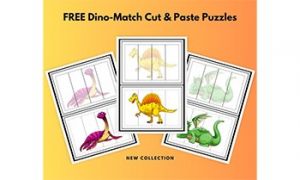
Dinosaurs have always captured the imagination of children, making them the perfect theme for engaging...
See more...
The Child Safe Standards recommended by the Royal Commission provide a framework for making organisations...
See more...
The Four Eyes Policy—also known as the Four Eyes Principle or Two-Person Rule—is a safeguarding...
See more...