



Yes, observations are required in OOSH, but they look different from early childhood settings. Educators must document children’s engagement, wellbeing, and learning through observations, though the focus is on leisure, social development, and safety rather than formal developmental milestones.
When documenting children’s learning, educators often feel pressured to align every observation with codes, sub‑outcomes, or compliance language. Yet, meaningful documentation doesn’t need to be weighed down by technical jargon. Instead, it can highlight dispositions, behaviours, and processes that reveal how children are engaging with their world.
The following keywords provide a practical lens for educators: they are simple, observable, and flexible enough to be woven into analysis, reflections, and planning notes. By focusing on these words, educators can capture the richness of children’s identity, community, well-being, learning, and communication without losing sight of the bigger picture. They act as anchors for professional reflection and as bridges to families, making documentation both accessible and purposeful.

Evaluating children’s goals is more than ticking boxes; it’s about noticing growth, reflecting on what supported it, and planning the next steps with intention. The framework reminds us that outcomes are not abstract; they are lived through everyday routines, play, and relationships. By using a simple cycle of Observation, Reflection, and Next Step, educators can make progress visible, adapt strategies responsively, and document learning in ways that honour each child’s journey.

In early childhood education, continuous improvement is not just a compliance requirement—it’s a mindset. Two key processes drive this improvement: Critical Reflection and the Quality Improvement Plan (QIP) Action Plan. While they are closely connected, they serve different purposes. Understanding how they work together ensures that educators move from thoughtful analysis to meaningful action.
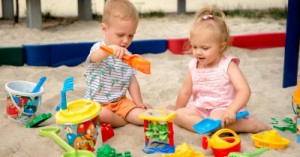
Outcome 3 - Children have a strong sense of wellbeing of the EYLF reminds us that wellbeing is about more than health, it’s about children feeling safe, confident, and capable in their bodies and emotions. This outcome highlights physical skills, emotional resilience, and the ability to manage challenges.

This cheat sheet condenses the principles, practices, and learning outcomes into a quick reference, with real OOSH examples to show how theory translates into everyday practice.

OOSH services often feel the tension between compliance and creativity. The law requires services to meet the outcomes of the approved My Time, Our Place, but it does not prescribe how this must be achieved. The NQS sets benchmarks for quality but avoids rigid rules. This flexibility means educators can focus on meaningful, child-led projects and reflective documentation rather than endless paperwork. A few strong examples each year can be enough to demonstrate compliance.

April is filled with cultural celebrations, awareness days, and playful observances. These programming ideas support educators in planning engaging experiences that connect children to community, diversity, and well-being, while linking to EYLF outcomes.

Quality Area 4 (QA4) focuses on staffing arrangements, including educator-to-child ratios, qualifications, continuity of care, and collaborative practices. Building QA4 evidence folders helps services demonstrate how staffing supports children’s learning, safety, and well-being, while also showcasing professional collaboration and compliance with the NQS.

Floorbooks are often associated with preschool and older children, but they can be just as powerful in nursery rooms with babies. While babies may not yet use spoken language, they communicate richly through gestures, facial expressions, sounds, and actions. Floorbooks provide a way for educators to honor these early voices, making learning visible and collaborative from the very beginning.
 Open ended questions cannot be responded to with one word answers such as yes or no. These types of questions enables a child to provide… Read More
 During your child’s preschool years, an important milestone begins to emerge. This is the development of pre-writing skills. Pre-writing skills are used to encourage, develop… Read More
 An Acknowledgment of the Country is a way of showing respect for the Traditional Owners and can be given by both non-Indigenous people and Aboriginal… Read More
 Open ended materials enables children to play freely. They are objects that have no rules to follow, use or function. Raw materials that can be… Read More
 Language plays an important role in a child’s development. It enables a child to communicate effectively with their family, learn at school, socialize with friends,… Read More
 Like adults, children have to deal with their own stress in life. Moving house, starting a new school, preparing for a new sibling - these are… Read More
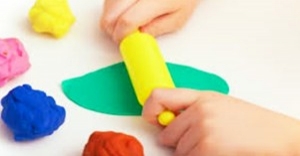 Playdough is such a versatile material. It provides numerous benefits to children as they manipulate it, it is safe and soothing and provides children with… Read More
 Teaching children about sustainability enables them to appreciate and respect the natural environment. Early childhood services can provide meaningful hand on learning experiences in order… Read More
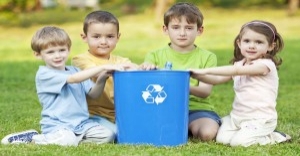 Recycling is an important concept that teaches children to care for the environment. It encourages children to be responsible and show a growing appreciating for… Read More
 Incursions provide children with the opportunity to explore meaningful learning experiences in the comfort of their early childhood service. The following provides a directory of… Read More
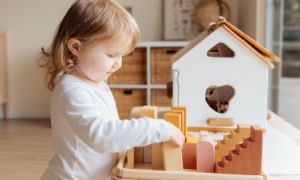
Construction play is often dismissed as “just building blocks,” but for girls it is a...
See more...
ABC Kids has a range of free content for Early Childhood Educators to use with...
See more...
Play-based learning uses playful experiences in which children have some degree of agency and control...
See more...