


Every photograph, every story, contributes to a child’s digital footprint, often in ways they cannot fully understand or consent to. This is where the concept of safe pedagogical photography emerges: a conscious, ethical approach to capturing learning moments that celebrates children’s growth while safeguarding their privacy.

In early childhood settings across Australia, the Early Years Learning Framework (EYLF) is more than a document; it’s a living, breathing presence in children’s play. When educators truly see the EYLF in action, they witness a tapestry of learning, relationships, and identity unfolding moment by moment. This article explores how the EYLF manifests through play and how educators can deepen their observations, documentation, and advocacy by tuning into its rhythms.
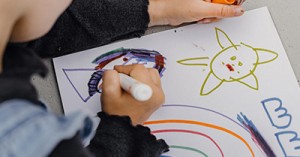
In early childhood education, children’s artwork is often vibrant, expressive, and deeply personal. Yet too often, it’s reduced to wall displays or sent home without context. Enter the art portfolio—a reflective, respectful way to document and celebrate children’s creative journeys.
“My Book of Art” template is a 9-page resource designed to showcase children’s artwork in a way that’s both professional and emotionally resonant. It can be added to a child’s portfolio or laminated into a keepsake book for families.

A: Yes, Transition to School Statements are highly beneficial and increasingly considered necessary in Australia. While not legally mandated nationwide, they are strongly encouraged by state education departments to support continuity of learning and emotional well-being during the move from early childhood education to school.

This mapping tool is designed to help educators translate everyday moments into meaningful documentation aligned with the EYLF. By spotlighting real examples of children’s play, interactions, and discoveries, it supports reflective practice and strengthens outcome-based planning.

A: No, you don’t have to include theorists in every piece of documentation, but referencing them can deepen your practice, especially when aligned with EYLF V2.0 and the National Quality Standard.

A: In early childhood education, programming isn’t just about planning activities—it’s about tuning into children’s rhythms, honouring their voices, and creating emotionally safe, meaningful learning journeys. One of the most common questions is:
“Should I plan daily or weekly?"
The truth is, there’s no one-size-fits-all answer, and that’s a good thing. Your approach will depend on your service’s philosophy, your room’s energy, and the unique needs of your children and team.
This guide breaks down the difference between weekly and daily programming styles, with practical examples, reflective prompts, and flexible options to help you find your rhythm—or co-create one that evolves with your context.

Early childhood education is a dynamic and deeply relational field. Educators are constantly navigating children’s diverse needs, family expectations, and systemic requirements. To sustain quality practice, reflection is essential. Reflection allows educators to pause, analyze experiences, and adapt their approaches to better support children’s learning and well-being.
One powerful framework for reflection is Gibbs Reflective Cycle (1988). Widely used in education, healthcare, and professional development, it provides a structured way to think critically about experiences and plan for improvement. In early childhood, Gibbs Cycle helps educators move beyond surface-level observations to deeper insights about pedagogy, relationships, and environments.

Reflections are powerful tools for growth, learning, and connection. Whether used in education, professional practice, or personal journaling, a strong reflection goes beyond recounting events—it captures authentic experiences, explores emotions, and identifies lessons that shape future actions. This checklist is designed to help writers and evaluators ensure that reflections are meaningful, structured, and impactful. It can be used by students, educators, colleagues, or anyone seeking to deepen their reflective practice.
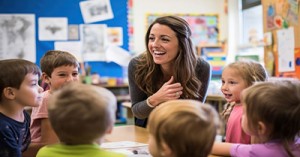
A: Intentional teaching means teaching with a clear purpose. It’s about making thoughtful decisions to help children learn in meaningful ways. At its core, intentional teaching means teaching with a clear purpose. It’s the art of knowing when to step in, when to step back, and how to co-construct learning that is meaningful, inclusive, and connected to each child’s world.
 Open ended questions cannot be responded to with one word answers such as yes or no. These types of questions enables a child to provide… Read More
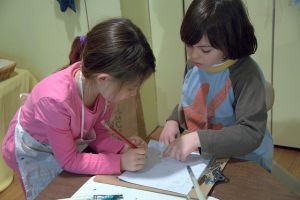 During your child’s preschool years, an important milestone begins to emerge. This is the development of pre-writing skills. Pre-writing skills are used to encourage, develop… Read More
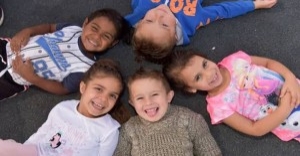 An Acknowledgment of the Country is a way of showing respect for the Traditional Owners and can be given by both non-Indigenous people and Aboriginal… Read More
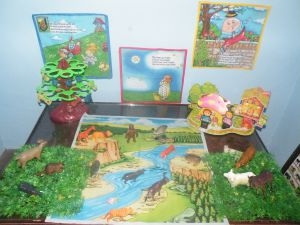 Open ended materials enables children to play freely. They are objects that have no rules to follow, use or function. Raw materials that can be… Read More
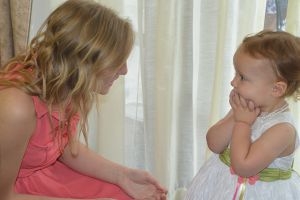 Language plays an important role in a child’s development. It enables a child to communicate effectively with their family, learn at school, socialize with friends,… Read More
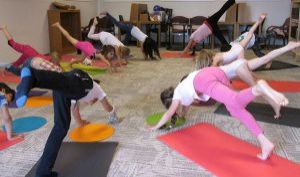 Like adults, children have to deal with their own stress in life. Moving house, starting a new school, preparing for a new sibling - these are… Read More
 Playdough is such a versatile material. It provides numerous benefits to children as they manipulate it, it is safe and soothing and provides children with… Read More
 Teaching children about sustainability enables them to appreciate and respect the natural environment. Early childhood services can provide meaningful hand on learning experiences in order… Read More
 Recycling is an important concept that teaches children to care for the environment. It encourages children to be responsible and show a growing appreciating for… Read More
 Incursions provide children with the opportunity to explore meaningful learning experiences in the comfort of their early childhood service. The following provides a directory of… Read More

A: Yes, Transition to School Statements are highly beneficial and increasingly considered necessary in Australia...
See more...
Supervision in an OSHC setting means more than just “watching” children; it’s about actively ensuring...
See more...
Child wellbeing. It’s a phrase we use daily—but how often do we pause to ask...
See more...