



Early childhood education thrives on curiosity, exploration, and authentic engagement. David A. Kolb’s Experiential Learning Theory offers a powerful framework for understanding how young children learn through doing, reflecting, thinking, and trying again. Rather than viewing learning as a linear process, Kolb positions it as a continuous cycle—one that mirrors the natural way children interact with the world.

The EYLF provides a foundation for quality early childhood education in Australia. At its heart are the five learning outcomes, which guide educators in supporting children’s holistic development. These outcomes—Identity, Community, Well-being, Learning, and Communication—are essential, but remembering them in order can sometimes be tricky. To make them easier to recall, educators can use creative strategies such as mnemonics, visual aids, storytelling, and interactive activities. This article explores fun and practical methods to embed the outcomes into everyday practice.

In early childhood education, the words we choose shape how learning is seen, valued, and shared. The EYLF gives us a powerful framework but in the rush of daily practice, it’s easy to lose confidence in linking outcomes or finding the right language to describe children’s learning. That’s where keywords and prompts become transformative.
Using consistent, purposeful language helps educators capture learning clearly and confidently. It supports teams to analyse observations with depth, link meaningfully to outcomes, and plan follow‑ups that honour each child’s identity, culture, and capabilities. Most importantly, it keeps documentation manageable, intentional, and child‑centred.
This article explores how EYLF‑aligned keywords and prompts can streamline your observation cycle, strengthen reflective practice, and bring clarity to everyday planning.

The EYLF practices are more than guiding principles; they’re invitations to co-create vibrant, inclusive, and emotionally safe learning environments. Whether you're nurturing infants, engaging toddlers, or scaffolding preschoolers’ agency, these strategies help bring the EYLF to life in ways that feel authentic, responsive, and restorative.
Each practice below includes:

Summative assessments are more than end-point reflections—they’re storytelling tools that honour each child’s journey. They help educators celebrate growth, identify emerging skills, and co-plan intentional next steps. This guide is designed for quick glances during documentation, team huddles, or family meetings, keeping your language strengths-based, specific, and emotionally resonant.
Use it to:

Here’s an educator-friendly EYLF V2.0 Reference Sheet designed for quick use in planning, documentation, and reflection. It’s structured to support intuitive linking between observations and outcomes, with simplified language and examples to spark educator insight.

A: You can show individual learning cycles in a simplified way by using visual templates and structured documentation that align with the EYLF. These tools help educators track each child’s progress without overwhelming complexity. Here are a few effective strategies.
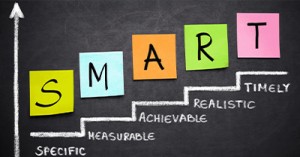
In the fast-paced world of education, professional growth can feel like a moving target. Between compliance demands, curriculum shifts, and the emotional labour of teaching, it’s easy to lose sight of your own development. That’s where SMART goals come in—offering a structured, achievable way to grow with purpose.

Critical reflection is more than a checkbox on a compliance form—it’s a powerful tool for growth, insight, and transformation in educational practice. Yet for many educators, it can feel abstract, time-consuming, or overly complex. This article breaks down critical reflection into accessible steps, offering tools and prompts that make it both meaningful and manageable.

In early childhood education, documentation is often framed as evidence or proof of learning, compliance, or curriculum alignment. But what if we reimagined it as a mirror? A tool that reflects not just cognitive milestones but emotional journeys, identity formation, and the quiet power of self-expression?
Visual documentation drawings, photos, annotated art, and symbolic storytelling can become a language of emotional literacy. It allows children to say what words cannot and invites educators to listen with their eyes, hearts, and intuition.
 Open ended questions cannot be responded to with one word answers such as yes or no. These types of questions enables a child to provide… Read More
 During your child’s preschool years, an important milestone begins to emerge. This is the development of pre-writing skills. Pre-writing skills are used to encourage, develop… Read More
 An Acknowledgment of the Country is a way of showing respect for the Traditional Owners and can be given by both non-Indigenous people and Aboriginal… Read More
 Open ended materials enables children to play freely. They are objects that have no rules to follow, use or function. Raw materials that can be… Read More
 Language plays an important role in a child’s development. It enables a child to communicate effectively with their family, learn at school, socialize with friends,… Read More
 Like adults, children have to deal with their own stress in life. Moving house, starting a new school, preparing for a new sibling - these are… Read More
 Playdough is such a versatile material. It provides numerous benefits to children as they manipulate it, it is safe and soothing and provides children with… Read More
 Teaching children about sustainability enables them to appreciate and respect the natural environment. Early childhood services can provide meaningful hand on learning experiences in order… Read More
 Recycling is an important concept that teaches children to care for the environment. It encourages children to be responsible and show a growing appreciating for… Read More
 Incursions provide children with the opportunity to explore meaningful learning experiences in the comfort of their early childhood service. The following provides a directory of… Read More

Educational leaders hold a unique position in early childhood services: part mentor, part compliance guide...
See more...
A resume is your first impression in a one to two page document that sums...
See more...
National Children’s Week (18th - 26th October) is more than a calendar event—it’s a call...
See more...