The Quality Improvement Plan (QIP) is not just a compliance document—it’s the heartbeat of continuous improvement in OOSH services. It shows how your service reflects on practice, identifies strengths, and sets goals for better outcomes. Even if you’ve never written one before, you can contribute meaningfully by following a clear, mapped process.
1. Understand the Purpose of the QIP
- Legal Requirement: All services under the National Quality Framework (NQF) must have a QIP.
- Practical Tool: It helps your team reflect, plan, and demonstrate improvement.
- Audience: Regulators, families, and staff use it to see how your service is progressing.
2. Know the Structure
Most QIPs follow a simple format:
- Service Context: Who you are, your philosophy, demographics, and community.
- Strengths: What your service does well (e.g., strong family partnerships, inclusive programs).
- Areas for Improvement: Where you want to grow (e.g., documentation, staff training, child voice).
- Goals & Actions: Specific steps, timelines, and responsible persons.
3. Start Small: Contributing as an Educator
You don’t need to write the whole QIP—start by feeding in observations and ideas:
- Reflective Notes: Jot down what’s working well and what challenges you see.
- Link to Standards: Connect your notes to the 7 Quality Areas (e.g., behaviour management → QA5 Relationships with Children).
- Suggest Actions: Offer practical steps (e.g., “Introduce weekly reflection meetings to discuss child wellbeing”).
4. Step‑by‑Step Writing Process
| Step | What to Do | Example |
|---|---|---|
| 1 | Identify a strength | “Children have strong friendships and peer support.” |
| 2 | Identify an area for improvement | “Behaviour management strategies are inconsistent.” |
| 3 | Set a goal | “Develop a consistent behaviour policy with child input.” |
| 4 | Plan actions | “Hold staff workshop, trial strategies, review after 6 weeks.” |
| 5 | Assign responsibility | “Lead educator + coordinator.” |
| 6 | Set timeline | “By end of Term 2.” |
5. Tips for Success
- Keep it Practical: Use plain language, not jargon.
- Be Honest: Regulators value realistic reflection, not perfection.
- Collaborate: Involve staff, families, and even children in identifying goals.
- Update Regularly: Treat the QIP as a living document, not a one‑off task.
Writing the QIP in OOSH doesn’t require expert knowledge—it requires reflection, honesty, and teamwork. By starting small and mapping your ideas into strengths, goals, and actions, you can play a vital role in shaping your service’s continuous improvement journey.

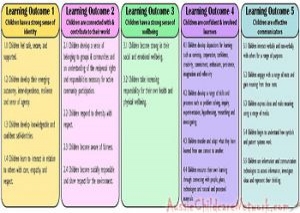 Here is the list of the EYLF Learning Outcomes that you can use as a guide or reference for your documentation and planning. The EYLF
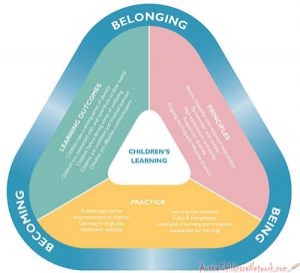 The EYLF is a guide which consists of Principles, Practices and 5 main Learning Outcomes along with each of their sub outcomes, based on identity,
 This is a guide on How to Write a Learning Story. It provides information on What Is A Learning Story, Writing A Learning Story, Sample
 One of the most important types of documentation methods that educators needs to be familiar with are “observations”. Observations are crucial for all early childhood
 To support children achieve learning outcomes from the EYLF Framework, the following list gives educators examples of how to promote children's learning in each individual
 Reflective practice is learning from everyday situations and issues and concerns that arise which form part of our daily routine while working in an early
 When observing children, it's important that we use a range of different observation methods from running records, learning stories to photographs and work samples. Using
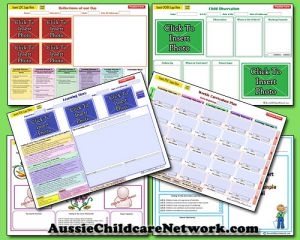 Within Australia, Programming and Planning is reflected and supported by the Early Years Learning Framework. Educators within early childhood settings, use the EYLF to guide
 This is a guide for educators on what to observe under each sub learning outcome from the EYLF Framework, when a child is engaged in
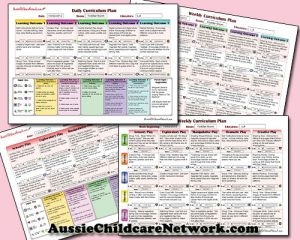 The Early Years Learning Framework describes the curriculum as “all the interactions, experiences, activities, routines and events, planned and unplanned, that occur in an environment