The Quality Improvement Plan is a living document guiding daily practice and growth.
A Quality Improvement Plan (QIP) is not a static document that sits on a shelf until Assessment and Rating. It is a living document, meaning it evolves continuously to reflect the service’s growth, challenges, and achievements.
A living QIP captures the voices of educators, families, and children, and it adapts as new insights emerge through critical reflection, observations, and feedback. When educators see the QIP as part of their daily practice, it becomes a genuine roadmap for quality rather than a compliance requirement.
What “Living Document” Means
A QIP isn’t something written once and filed away. It’s dynamic, constantly updated to reflect:
-
New insights from critical reflection
-
Evidence gathered through observations
-
Feedback from families and children
-
Changes in regulations or service priorities
Think of it as a mirror of your service’s journey — always evolving, never static.
Reflected in Daily Practice
Embedding the QIP into everyday routines ensures it remains relevant and meaningful. Educators can contribute through small but consistent actions.
- Routine updates: Quick notes after activities feed directly into QIP goals.
-
Team discussions: Staff meetings include short check‑ins against QIP priorities.
-
Family input: Suggestions are logged and linked to improvement strategies.
-
Child voice: Children’s preferences are documented and reflected in planning.
Practical Examples
Practical examples help educators see how their everyday actions connect to QIP priorities.
-
Sustainability: Children sort recycling after snack, recorded under the QIP sustainability goal.
-
Intentional teaching: Educators plan open‑ended questions during block play to meet literacy goals.
-
Safety: Playground supervision positions are trialled and outcomes documented in the QIP.
-
Cultural inclusion: Families share traditional songs or recipes, linked to inclusion priorities.
-
Wellbeing: Daily mindfulness sessions logged as evidence of wellbeing strategies.
The Continuous Cycle
The QIP thrives through a cycle of observation, reflection, planning, implementation, and review.
-
Observe – Notice what’s happening.
-
Reflect – Ask what worked and why.
-
Plan – Set strategies.
-
Implement – Put changes into practice.
-
Review – Document outcomes and adjust.
Building Ownership and Accountability
For the QIP to be effective, educators must feel genuine ownership. To ensure educators see the QIP as valuable and not just management’s tool:
-
Collaborative goal setting: Involve educators in identifying priorities.
-
Shared responsibility: Assign “champion roles” for specific goals.
-
Celebrate progress: Highlight small wins in meetings.
-
Embed in meetings: Make QIP updates a standing agenda item.
-
Peer reflection: Encourage buddy systems for accountability.
Embedding Examples in Action
- Programming links: Weekly programs reference QIP goals.
-
Room displays: Posters show current QIP goals and how children’s experiences connect.
-
Family communication: Newsletters include “This month’s QIP focus.”
-
Professional development: Training sessions tied back to QIP priorities.
-
Daily reflections: Educators note how activities supported QIP goals.
-
Staff meetings: A 5‑minute “QIP spotlight” where one educator shares how their practice contributed to a goal that week.
-
Family communication: Newsletters include a section, “This month’s QIP focus,” showing families how improvements are happening.
-
Child voice: Children’s suggestions (like wanting more cooking experiences) are documented and linked to QIP goals on inclusion and agency.
Scenario Examples
-
Sustainability goal: Educators involve children in recycling after snack, then record this as evidence under the QIP sustainability strategy.
-
Inclusion goal: A family shares a cultural song; educators add it to group time and note it under the QIP’s cultural inclusion priority.
-
Safety goal: Educators trial new playground supervision positions, reflect on outcomes, and update the QIP with what worked best.
-
Wellbeing goal: Daily mindfulness sessions are introduced, with reflections logged to show progress toward the QIP’s wellbeing strategies.
A Quality Improvement Plan as a living document means educators don’t just comply with requirements — they actively use it to shape practice every day. When the QIP is visible, collaborative, and celebrated, it becomes a shared roadmap for growth. Ownership and accountability emerge naturally when educators see their daily actions reflected in the plan, making quality improvement a collective journey rather than a management directive.
Further Reading
QIP Display Board Photo Ideas
Understanding The Quality Improvement Plan In Early Childhood
Critical Reflection vs. QIP Action Plan: Thinking and Doing in Practice
QIP Action Plan Guide For Educators
QIP Priorities for Early Childhood Services



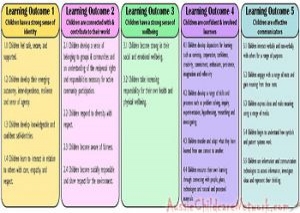 Here is the list of the EYLF Learning Outcomes that you can use as a guide or reference for your documentation and planning. The EYLF
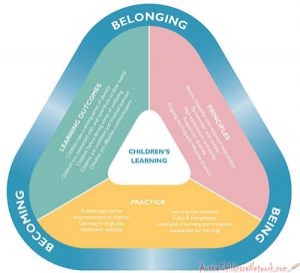 The EYLF is a guide which consists of Principles, Practices and 5 main Learning Outcomes along with each of their sub outcomes, based on identity,
 This is a guide on How to Write a Learning Story. It provides information on What Is A Learning Story, Writing A Learning Story, Sample
 One of the most important types of documentation methods that educators needs to be familiar with are “observations”. Observations are crucial for all early childhood
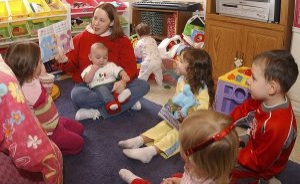 To support children achieve learning outcomes from the EYLF Framework, the following list gives educators examples of how to promote children's learning in each individual
 Reflective practice is learning from everyday situations and issues and concerns that arise which form part of our daily routine while working in an early
 When observing children, it's important that we use a range of different observation methods from running records, learning stories to photographs and work samples. Using
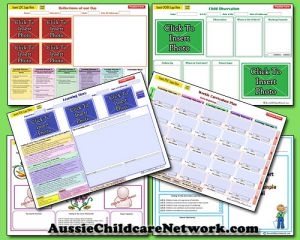 Within Australia, Programming and Planning is reflected and supported by the Early Years Learning Framework. Educators within early childhood settings, use the EYLF to guide
 This is a guide for educators on what to observe under each sub learning outcome from the EYLF Framework, when a child is engaged in
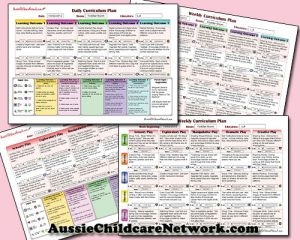 The Early Years Learning Framework describes the curriculum as “all the interactions, experiences, activities, routines and events, planned and unplanned, that occur in an environment