


“Thank You for the Memories” is a beautifully crafted end‑of‑year portfolio template designed to help educators farewell each child with warmth, gratitude, and a lasting memento of their time in care. Simple yet deeply meaningful, this template captures the emotional essence of early childhood education connection, belonging, and shared experiences.

Linking to the EYLF is one of the most misunderstood parts of early childhood documentation. Many educators feel pressured to attach outcome numbers to every observation, photo, or program entry even though this is not required by the National Regulations, the EYLF, or ACECQA.
This guide offers a clear, practical approach to linking that centres professional judgment, meaningful learning, and low‑paperwork practice. Instead of coding everything, educators can use linking strategically only when it genuinely supports planning, communication, or assessment.

A: No. There is no requirement in the National Regulations, the EYLF, or ACECQA guidance that says educators must add EYLF outcome numbers, sub‑outcomes, or codes to observations. Linking is optional, not mandatory.
Documentation should support children’s learning, not overwhelm educators. When linking becomes a tick‑box exercise, it loses meaning and adds unnecessary workload. This article breaks down what’s actually required, what’s optional, and how to use EYLF links only when they genuinely add value.

Observing children has never been the problem. Educators are natural noticers—tuned into the small sparks, the emerging skills, the quiet breakthroughs. What drains time and energy isn’t the observing but the unnecessary layers of documentation that have crept into practice over the years. Long stories, duplicated uploads, rigid templates, and quota‑driven expectations have turned a simple professional tool into a paperwork burden.
But the truth is simple: meaningful observations are brief, flexible, and entirely manageable. When we strip away the excess, we return to what the planning cycle was always meant to be—a clear, responsive loop that supports children’s learning and frees educators to do what they do best.
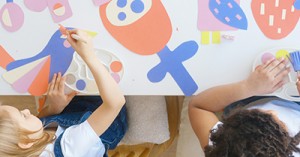
Art in early childhood is far more than paint, paper, and glue it is a language of identity, exploration, and meaning‑making. When children create freely, they reveal how they see the world, how they solve problems, and how they express emotion. Yet in many settings, art experiences still lean heavily toward adult‑directed crafts, templates, and identical products. These practices can unintentionally limit children’s agency, creativity, and confidence.
This guide invites educators to pause, question, and re‑envision their role in children’s artistic experiences. Through reflective prompts and practical shifts, it supports teams to cultivate environments where creativity thrives, individuality is celebrated, and every child’s artistic “voice” is valued.

Snapshots Of My Year is a thoughtfully designed template that helps educators document and celebrate a child’s growth through the lens of the EYLF learning outcomes. With its photo-rich format and reflective comment sections, it offers families a warm, visual summary of their child’s developmental journey.
The My Yearbook template is a beautifully designed resource that helps early childhood educators celebrate each child’s journey through the year. With its photo-rich layout and thoughtful prompts, it transforms everyday moments into lasting memories, fostering a deep sense of belonging and pride.

Despite the overwhelming volume of documentation educators are expected to complete, the National Law and National Regulations do not require endless observations, daily learning stories, or long‑form essays about children’s learning.
ACECQA’s own guidance for approved providers emphasises that documentation should be meaningful, authentic, and free from duplication, and that educators should use professional judgment when deciding what to record.
The National Regulations themselves focus on program visibility, child information, and records for safety and compliance, not excessive narrative documentation.

Observations are more than compliance—they’re acts of care, advocacy, and professional insight. When educators write observations with emotional intelligence and sector-savvy language, they make children’s learning visible, amplify their voices, and strengthen the case for quality early childhood practice. This guide supports educators in writing observations that are purposeful, symbolic, and aligned with the EYLF.

In early childhood education, every family brings a unique rhythm of celebration, memory, and meaning. The Family Holiday Traditions template offers educators a powerful tool to honour these rhythms—inviting families to share their cherished customs and weaving them into the fabric of the learning environment.
 Open ended questions cannot be responded to with one word answers such as yes or no. These types of questions enables a child to provide… Read More
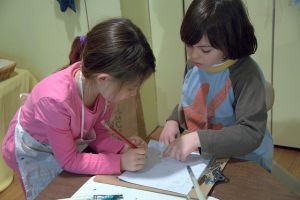 During your child’s preschool years, an important milestone begins to emerge. This is the development of pre-writing skills. Pre-writing skills are used to encourage, develop… Read More
 An Acknowledgment of the Country is a way of showing respect for the Traditional Owners and can be given by both non-Indigenous people and Aboriginal… Read More
 Open ended materials enables children to play freely. They are objects that have no rules to follow, use or function. Raw materials that can be… Read More
 Language plays an important role in a child’s development. It enables a child to communicate effectively with their family, learn at school, socialize with friends,… Read More
 Like adults, children have to deal with their own stress in life. Moving house, starting a new school, preparing for a new sibling - these are… Read More
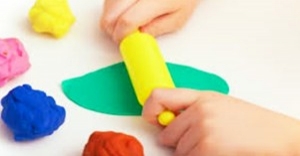 Playdough is such a versatile material. It provides numerous benefits to children as they manipulate it, it is safe and soothing and provides children with… Read More
 Teaching children about sustainability enables them to appreciate and respect the natural environment. Early childhood services can provide meaningful hand on learning experiences in order… Read More
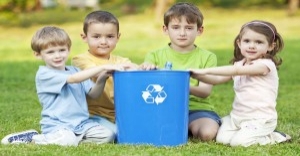 Recycling is an important concept that teaches children to care for the environment. It encourages children to be responsible and show a growing appreciating for… Read More
 Incursions provide children with the opportunity to explore meaningful learning experiences in the comfort of their early childhood service. The following provides a directory of… Read More

Quality Area Cheat Sheets 1–7: Simplify NQS standards with clear guides for educators and services.
See more...
Descriptive praise and appreciative praise are powerful tools for encouraging positive behavior and fostering intrinsic motivation...
See more...
Play provides opportunities for children to learn as they discover, create, improvise and imagine. Creative...
See more...