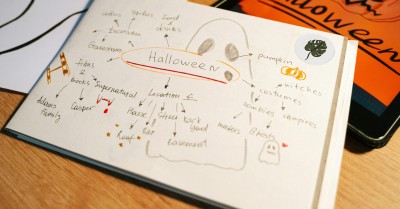
Mind maps are more than colorful diagrams; they are powerful tools for helping young children connect ideas, visualize learning, and build confidence in expressing their thoughts. In early childhood settings, they can be adapted into playful, age‑appropriate formats that encourage exploration and reflection.
Why Use Mind Maps with Young Children?
- Visual thinking — Children see how ideas connect, making abstract concepts concrete.
- Language development — Talking through branches builds vocabulary and narrative skills.
- Collaboration — Group maps encourage teamwork and shared ownership of learning.
- Confidence building — Children’s ideas are visibly valued, boosting self‑esteem.
Strategies for Educators
- Story maps — After reading a book, map characters, settings, and events with drawings or stickers.
- Emotion maps — Use a central “feeling face” and branch out with situations that cause joy, worry, or excitement.
- Theme webs — For topics like “Road Safety” or “Seasons,” children add pictures, words, or objects to branches.
- Daily reflection maps — At circle time, children contribute one idea about what they learned or enjoyed.
- Creative brainstorming — Use mind maps to plan art projects, songs, or play scenarios.
Practical Examples
- Road Safety Awareness: Central bubble “Crossing the Road” → branches: Stop, Look, Listen, Think. Children add drawings of stop signs, ears, eyes, and thought bubbles.
- Science Exploration: Central bubble “Plants” → branches: Roots, Leaves, Flowers, Fruit. Children attach real leaves or photos.
- Family Engagement: Send home a blank map with a theme (e.g., “Healthy Foods”) for families to fill together, then share in class.
- Morning Routine: Central bubble “Getting Ready” → branches: Brush teeth, Get dressed, Eat breakfast. Children tick off steps daily.
Displaying and Incorporating Mind Maps
- Walls — Large collaborative maps become living displays that grow with children’s input.
- Learning journals — Print or photograph maps to include in portfolios, showing progression over time.
- Digital boards — Use simple apps or interactive whiteboards for group mapping.
- Parent newsletters — Share snapshots of classroom maps to spark conversations at home.
- Daily routines — Incorporate mini‑maps into transitions (e.g., “What do we need before outdoor play?”).
Mind maps in early childhood settings are not about complex diagrams — they are playful, visual storytelling tools. When educators weave them into everyday routines, they nurture children’s creativity, language, and confidence while making learning visible to families and communities.
Further Reading
Child-Led Inquiry Map
Inquiry Based Learning In Early Childhood
How To Implement A Child Led Inquiry Map
Visual Learning Style In Children



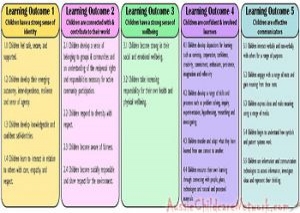 Here is the list of the EYLF Learning Outcomes that you can use as a guide or reference for your documentation and planning. The EYLF
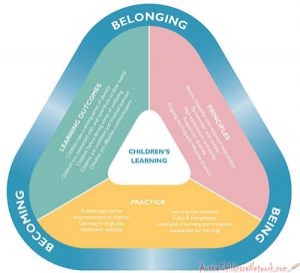 The EYLF is a guide which consists of Principles, Practices and 5 main Learning Outcomes along with each of their sub outcomes, based on identity,
 This is a guide on How to Write a Learning Story. It provides information on What Is A Learning Story, Writing A Learning Story, Sample
 One of the most important types of documentation methods that educators needs to be familiar with are “observations”. Observations are crucial for all early childhood
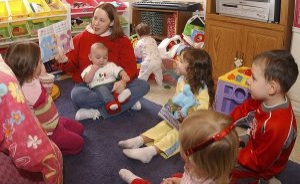 To support children achieve learning outcomes from the EYLF Framework, the following list gives educators examples of how to promote children's learning in each individual
 Reflective practice is learning from everyday situations and issues and concerns that arise which form part of our daily routine while working in an early
 When observing children, it's important that we use a range of different observation methods from running records, learning stories to photographs and work samples. Using
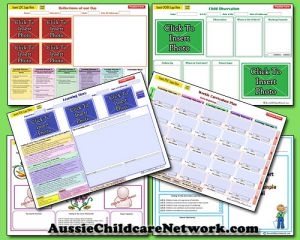 Within Australia, Programming and Planning is reflected and supported by the Early Years Learning Framework. Educators within early childhood settings, use the EYLF to guide
 This is a guide for educators on what to observe under each sub learning outcome from the EYLF Framework, when a child is engaged in
 The Early Years Learning Framework describes the curriculum as “all the interactions, experiences, activities, routines and events, planned and unplanned, that occur in an environment