Quality Area 5 (Relationships with Children) of the NQS focuses on fostering respectful, responsive, and meaningful interactions that nurture children’s sense of belonging, security, and wellbeing. While assessors often rely on observation and discussion, many services find it helpful to collate supporting documentation in a dedicated evidence folder. This provides clarity, consistency, and confidence when demonstrating compliance, while also celebrating the quality of relationships within the service.
Why Use Evidence Folders?
-
Showcase respectful relationships – Evidence that educators build trust and value children’s voices.
-
Demonstrate responsive interactions – Proof of educators tuning into children’s cues and needs.
-
Highlight behaviour guidance – Documentation of positive strategies that support self-regulation.
-
Support compliance – Organised folders make assessment visits smoother and less stressful.
Suggested Evidence for QA 5 Folders
| Category | Examples of Evidence | Notes |
|---|---|---|
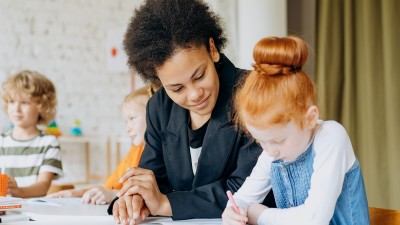
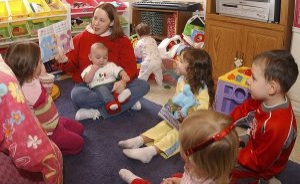
| Relationships with children | Photos of educators greeting children warmly, sitting at eye level, engaging in conversations | Annotate photos to highlight respectful and trusting interactions |
| Responsive interactions | Learning stories showing educators extending play based on children’s ideas; jottings of responsive conversations | Link evidence to EYLF outcomes to show how relationships support learning |
| Behaviour guidance | Incident reports, reflection notes, behaviour guidance policy, examples of positive strategies used | Demonstrate consistency with centre policy and focus on self-regulation |
| Family communication | Records of family meetings, newsletters, communication logs about children’s social-emotional development | Show collaboration with families and shared responsibility for wellbeing |
| Critical reflection | Educator journals, team meeting minutes discussing challenges in relationships and strategies to improve | Highlight ongoing professional reflection and continuous improvement |
| Child voice | Documentation of children’s opinions, choices in play, and participation in decision-making | Evidence should demonstrate children’s agency and respect for their perspectives |
Tips For Educators
-
Keep folders child-focused, evidence should highlight children’s voices and experiences.
-
Use annotated photos to show respectful interactions.
-
Include policy documents (e.g., behaviour guidance policy) alongside practice examples.
-
Add reflective notes to demonstrate ongoing improvement.
-
Cross-reference with QA1 documentation to show how relationships support learning outcomes.
Building QA5 evidence folders are not just about compliance; they are a celebration of relationships. By organising documentation thoughtfully, educators can highlight the warmth, respect, and responsiveness that underpin quality practice.
Further Reading
Building QA 1 Evidence Folders: A Practical Guide for Educators
Building QA 2 Evidence Folders: A Practical Guide for Educators
Building QA 3 Evidence Folders: A Practical Guide for Educators
Building QA 4 Evidence Folders: A Practical Guide for Educators




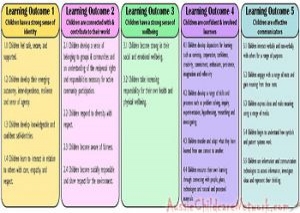 Here is the list of the EYLF Learning Outcomes that you can use as a guide or reference for your documentation and planning. The EYLF
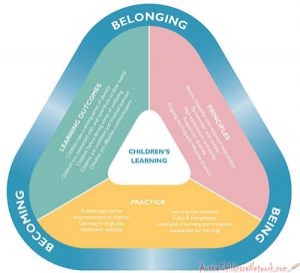 The EYLF is a guide which consists of Principles, Practices and 5 main Learning Outcomes along with each of their sub outcomes, based on identity,
 This is a guide on How to Write a Learning Story. It provides information on What Is A Learning Story, Writing A Learning Story, Sample
 One of the most important types of documentation methods that educators needs to be familiar with are “observations”. Observations are crucial for all early childhood
 To support children achieve learning outcomes from the EYLF Framework, the following list gives educators examples of how to promote children's learning in each individual
 Reflective practice is learning from everyday situations and issues and concerns that arise which form part of our daily routine while working in an early
 When observing children, it's important that we use a range of different observation methods from running records, learning stories to photographs and work samples. Using
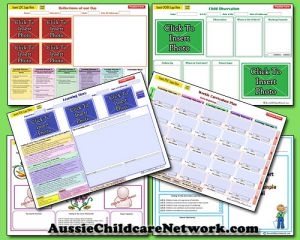 Within Australia, Programming and Planning is reflected and supported by the Early Years Learning Framework. Educators within early childhood settings, use the EYLF to guide
 This is a guide for educators on what to observe under each sub learning outcome from the EYLF Framework, when a child is engaged in
 The Early Years Learning Framework describes the curriculum as “all the interactions, experiences, activities, routines and events, planned and unplanned, that occur in an environment