


Reggio Emilia documentation is a cornerstone of the Reggio philosophy. It’s not just record-keeping—it’s a way of making children’s learning visible, meaningful, and valued.

Indoor sand play is a sensory-rich, imaginative activity where children explore sand in contained environments such as trays, tubs, or sand tables. It offers opportunities for creativity, problem-solving, and emotional regulation while minimizing the mess of outdoor sandpits.

Early childhood education is guided by philosophy—the beliefs and values that shape how we teach, care, and create environments for children. But philosophy is not just words on paper. When we talk about “philosophy in action", we mean bringing those values to life in everyday practice so children, families, and educators experience them meaningfully.

Mark-making refers to the earliest forms of visual expression—scribbles, lines, dots, and patterns—that children create to explore ideas, communicate meaning, and experiment with representation. Within the Reggio Emilia approach, these marks are not seen as mere preparation for writing but as a powerful language of childhood, embodying thought, emotion, and identity.

Lunar New Year (17th February 2026) is a vibrant celebration observed across many Asian cultures, symbolizing renewal, family, and hope for the year ahead. In early childhood settings, it offers a rich opportunity to honor cultural diversity, foster inclusion, and spark joy through sensory experiences, storytelling, and creative play. By tailoring activities to babies, toddlers, and preschoolers, educators can create meaningful, age-appropriate engagements that respect traditions while nurturing curiosity and belonging.

The home corner is more than a play space—it’s a mirror of children’s lived experiences and a stage for imagination, identity, and social learning. By re-enacting routines, caring for “family members,” and experimenting with roles, children build empathy, language, and problem-solving skills. For educators, the home corner is a window into children’s understanding of relationships, culture, and community.

Sensory bottles are simple yet powerful tools for children’s play, regulation, and learning. They are clear containers (usually plastic bottles or jars) filled with materials that stimulate the senses—sight, sound, and touch.

A writing area in a preschool room is more than a corner with pencils and paper—it’s a space where children begin to see themselves as authors, communicators, and creators. By offering diverse tools and meaningful prompts, educators can nurture early literacy skills while celebrating children’s voices and identities. This area encourages mark-making, storytelling, and playful exploration, laying the foundation for confident communication.

Children love bright colours. Rainbow science experiments engage curiosity, teach absorption, density, and refraction, and make learning fun.

Outdoor sandpit setups in early childhood are best designed as open-ended, sensory-rich environments that encourage creativity, social interaction, and physical development. The most effective setups combine natural materials, loose parts, and flexible structures to allow children to dig, build, and imagine freely.
 The Children’s Services Award introduces a streamlined classification system and updated pay rates designed to better recognise the skills, qualifications, and responsibilities of early childhood… Read More
 The Children’s Services Award has 8 clear levels. These levels make it easier to understand where you fit, based on your experience, qualifications, and responsibilities.… Read More
 When working as a qualified early childhood teacher (with a university degree) within a service, your rate of pay will come from the Educational Services… Read More
 Diploma-qualified educators play a vital role in early childhood services, taking on responsibilities that range from supporting children’s learning and development to leading rooms and… Read More
 Certificate III qualified educators form the backbone of early childhood services, providing essential care and learning support for children across all settings. Their wages under… Read More
 Early Childhood Teachers (ECTs) play a vital role in leading curriculum and pedagogy in early learning settings. Regulation 272 of the Education and Care Services… Read More
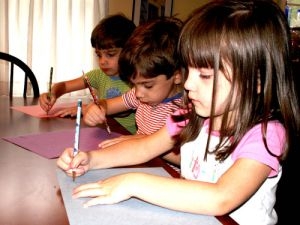 Discover how school readiness programs support children’s independence, confidence, and skills for a successful transition into primary school.
Read More
Discover how school readiness programs support children’s independence, confidence, and skills for a successful transition into primary school.
Read More
 When an Educator is not performing their tasks or responsibilities at best practice, these issues need to be addressed for the Educator to understand where… Read More
 Educators can maximise tax deductions by claiming classroom supplies, training, union fees, and home office costs this financial year.
Read More
Educators can maximise tax deductions by claiming classroom supplies, training, union fees, and home office costs this financial year.
Read More
 A staff appraisal is a formal, systematic process of determining and reviewing the performance of early childhood educators over a period of time, usually a… Read More
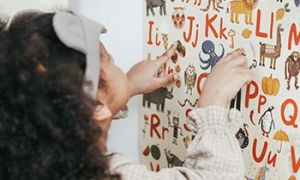
In early childhood education, the decision to defer a child’s school entry by a year...
See more...
Rest time in preschool settings has traditionally been associated with sleep. Yet, many children—especially as...
See more...
In early childhood education, minimum ratios is one of the most insidious drivers of burnout...
See more...