Prewriting skills build fine motor strength, coordination, and confidence, essential foundations for children’s writing success.
Prewriting skills are the foundational fine motor and cognitive abilities children develop before they begin formal writing. These include grip strength, hand‑eye coordination, visual perception, and the ability to make controlled marks on paper.
When to Start
-
Toddlers: Scribbling, finger painting, and large arm movements build early control.
-
Preschoolers: Begin tracing, copying shapes, and using crayons or markers with more precision.
-
School readiness: By age 4–5, children should be experimenting with lines, circles, and simple patterns that lead into letter formation.
How to Support Prewriting Skills
Fine Motor Play
- Threading beads, pasta, or buttons onto string.
- Using tweezers or tongs to pick up pom‑poms.
- Pegboards and geoboards for shape creation.
- Playdough rolling, pinching, and cutting with child‑safe scissors.
- Sticker peeling and placement
- Clothespin clipping games.
- Lacing cards and sewing practice with yarn.
- Small construction toys (LEGO, magnetic tiles).
- Water transfer with droppers or syringes.
Gross Motor Integration
- Climbing frames and monkey bars for upper‑body strength.
- Ball games (throwing, catching, bouncing).
- Animal walks (bear crawl, crab walk, frog jumps).
- Obstacle courses with crawling, balancing, and jumping.
- Yoga poses for children (tree, downward dog).
- Wheelbarrow walks with a partner.
- Ribbon dancing or scarf play for arm control.
- Swinging and sliding for core stability.
- Hopscotch for balance and coordination.
Mark‑Making Activities
- Chalk drawing on pavement.
- Painting with brushes, sponges, or cotton balls.
- Finger painting and handprint art.
- Tracing shapes in sand, rice, or salt trays.
- Water painting with large brushes outdoors.
- Whiteboard doodling with markers.
- Stamping with potatoes or foam shapes.
- Drawing with sticks in dirt.
- Rainbow writing (layering colors over letters).
Grip Development
- Using short crayons or broken chalk to encourage tripod grip.
- Triangular pencils or pencil grips.
- Clothespin games to strengthen pinch.
- Squeezing stress balls or therapy putty.
- Cutting with scissors along lines and shapes.
- Using eyedroppers or pipettes for water play.
- Peg puzzles with knobs.
- Drawing on vertical surfaces (easels, walls with paper).
- Tracing mazes and dot‑to‑dot sheets.
Why Prewriting Skills Are Important
-
School readiness: Strong prewriting skills reduce frustration when formal writing begins.
-
Cognitive growth: Supports sequencing, memory, and symbolic thinking.
-
Confidence building: Children feel capable when they can control their tools and express ideas.
Practical Activities for Educators
-
Tracing patterns: Zigzags, waves, spirals, and mazes.
-
Sensory writing: Writing in sand, shaving cream, or rice.
-
Creative play: Drawing treasure maps, making shopping lists in role play.
-
Dot marker sheets: Fun, low‑pressure way to practice control.
-
Playdough mats: Strengthen hand muscles while linking to themes (animals, dinosaurs, nature).
Building strong prewriting skills is not just about preparing children to write letters; it’s about nurturing confidence, independence, and joy in expression. Through fine motor play, gross motor integration, mark‑making activities, and grip development, educators and families can provide rich opportunities that make writing readiness a natural, enjoyable progression.
By embedding these practices into everyday routines, we set children up for success not only in literacy but across all areas of learning. The journey begins with playful exploration, and every scribble, squeeze, and swirl is a step toward confident communication.
Further Reading
Pre-Writing Worksheets
Pre-Writing Skills


 Open ended questions cannot be responded to with one word answers such as yes or no. These types of questions enables a child to provide
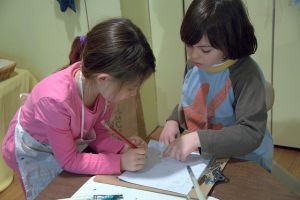 During your child’s preschool years, an important milestone begins to emerge. This is the development of pre-writing skills. Pre-writing skills are used to encourage, develop
 An Acknowledgment of the Country is a way of showing respect for the Traditional Owners and can be given by both non-Indigenous people and Aboriginal
 Open ended materials enables children to play freely. They are objects that have no rules to follow, use or function. Raw materials that can be
 Language plays an important role in a child’s development. It enables a child to communicate effectively with their family, learn at school, socialize with friends,
 Like adults, children have to deal with their own stress in life. Moving house, starting a new school, preparing for a new sibling - these are
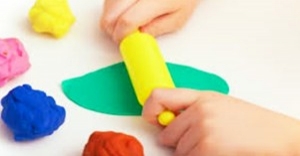 Playdough is such a versatile material. It provides numerous benefits to children as they manipulate it, it is safe and soothing and provides children with
 Teaching children about sustainability enables them to appreciate and respect the natural environment. Early childhood services can provide meaningful hand on learning experiences in order
 Recycling is an important concept that teaches children to care for the environment. It encourages children to be responsible and show a growing appreciating for
 Incursions provide children with the opportunity to explore meaningful learning experiences in the comfort of their early childhood service. The following provides a directory of