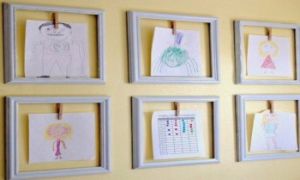
In early childhood services, spaces dedicated to books and storytelling are often referred to as reading areas. Educators may also call them book corners or reading nooks, depending on the size, design, and atmosphere of the space. While the terminology varies, the purpose remains the same: to provide children with safe, inspiring environments where they can explore language, imagination, and connection. This article uses “reading areas” as the umbrella term while acknowledging the warmth and familiarity of book corners and reading nooks in everyday practice.
Benefits of Reading Areas
-
Language Development: Builds vocabulary, comprehension, and communication skills.
-
Emotional Safety: Provides a calm retreat for self-regulation.
-
Imagination & Creativity: Sparks symbolic play and creative thinking.
-
Social Connection: Encourages bonding between educators, children, and peers.
-
Early Literacy Skills: Supports print awareness, sequencing, and narrative understanding.
Reading Areas for Babies (0–18 months)
Practical Ideas
-
Soft rugs, cushions, and low baskets with board or cloth books.
-
High-contrast picture books and sensory books with textures.
-
Gentle lighting and soothing background music.
Strategies
-
Lap reading with educators pointing to pictures and naming objects.
-
Repetition of favorite books for comfort and familiarity.
Tips
-
Rotate books weekly to maintain interest.
-
Keep books at baby’s eye level in baskets or shelves.
Reading Areas for Toddlers (18 months–3 years)
Practical Ideas
-
Small armchairs or beanbags for independence.
-
Interactive books with flaps, sounds, or textures.
-
Face-out book displays to encourage choice.
Strategies
-
Encourage toddlers to turn pages themselves.
-
Use props like puppets or soft toys to act out stories.
-
Model expressive reading with tone, rhythm, and gestures.
Tips
-
Create themed baskets (animals, transport, family).
-
Offer bilingual books to reflect community diversity.
Reading Areas for Preschoolers (3–5 years)
Practical Ideas
-
Cozy nooks with canopies, fairy lights, or tent frames.
-
Shelves with a mix of fiction, nonfiction, poetry, and cultural stories.
-
Story mats or cushions for group reading circles.
Strategies
-
Invite children to retell stories in their own words.
-
Use story maps, sequencing cards, or felt boards.
-
Encourage peer reading and storytelling.
Tips
-
Link books to curriculum themes (seasons, science, cultural festivals).
-
Provide writing materials nearby for story extension.
-
Rotate displays with children’s book reviews or favorites of the week.
General Strategies Across Ages
-
Accessibility: Books at child’s height, covers visible.
-
Inclusivity: Represent diverse cultures, abilities, and family structures.
-
Environment: Quiet, cozy, well-lit, with minimal distractions.
-
Engagement: Pair reading with songs, rhymes, and movement breaks.
-
Family Involvement: Invite parents to donate or read favorite books.
Creative Touches
-
Seasonal Themes: Winter “cozy corner” with blankets and animal stories.
-
Nature Integration: Wooden shelves, plants, and natural light.
-
Symbolic Displays: Bee-themed literacy corner or rainbow cushions for diversity.
-
DIY Hacks: Pool noodles or hula hoops for canopy frames, crates for book storage.
Photo Ideas

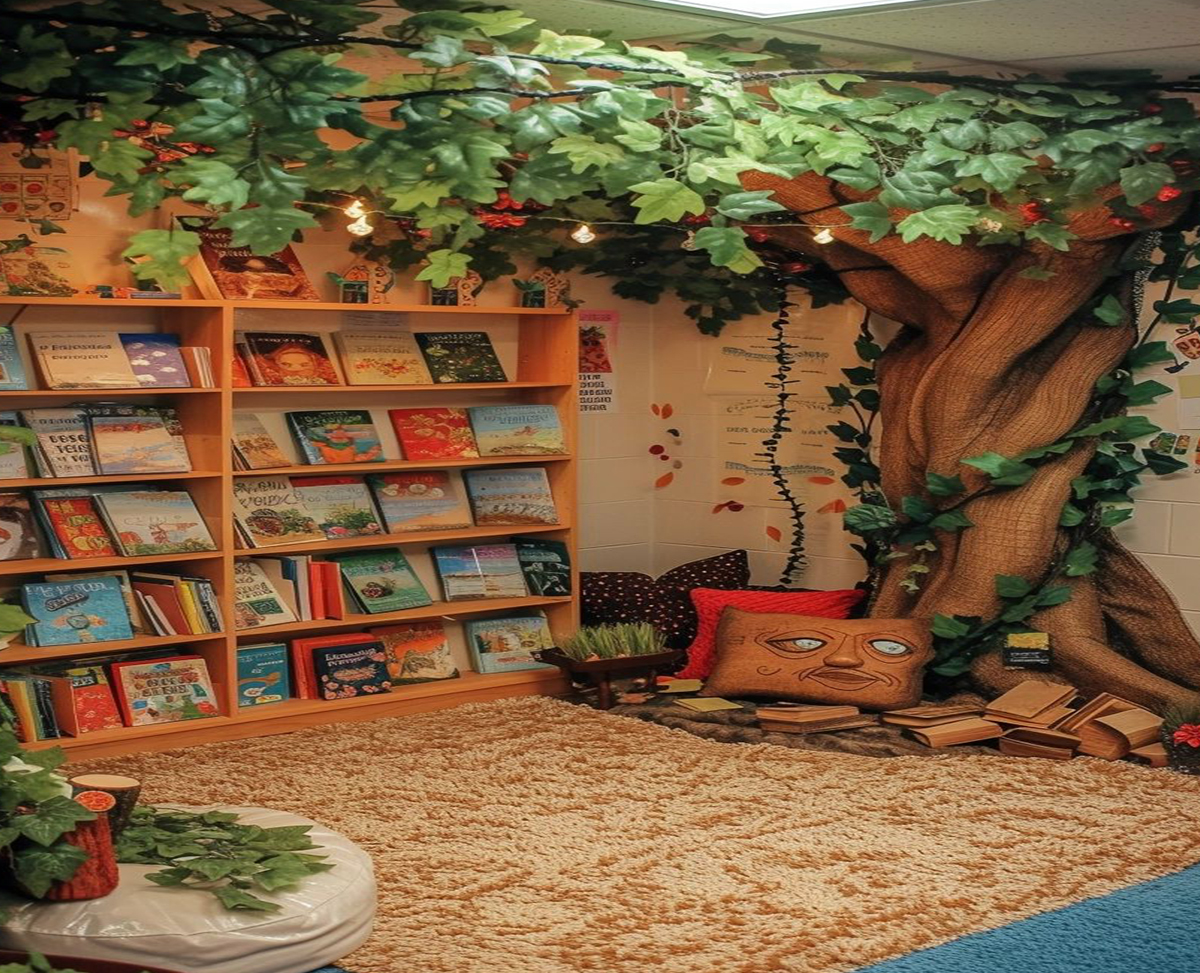


What Do We Call These Spaces?
-
Reading Area: A professional umbrella term often used in documentation, compliance, and curriculum frameworks.
-
Book Corner: Everyday educator language; usually a small, defined space with shelves and cushions.
-
Reading Nook: A cozy, intimate setup (like under a canopy or tent) that emphasizes comfort and retreat.
Whether called book corners, reading nooks, or reading areas, these spaces are essential in early childhood services. They offer children safe, inspiring places to explore stories, language, and imagination. By thoughtfully designing and adapting these areas for different age groups, educators can transform simple corners into powerful literacy hubs that enrich children’s learning journeys.
Image References:
Image 1 - Edda Padilla, Pinterest
Image 2 - No Name, Pinterest
Image 3 - Popyella, Pinterest
Image 4 - Henna Ahmed, Pinterest
Image 5 - Miss Elliott, Pinterest
Image 6 - Nicky Chapman, Pinterest
Image 7 - Filipa, Pinterest
Image 8 - A, Pinterest
Image 9 - Aurora Aguilar, Pinterest
Image 10 - Rena Taylor, Pinterest
Image 11 - Crisel Ruiz, Pinterest
Image 12 - Claire Mills, Pinterest
Image 13 - Storybox Tales, Pinterest
Image 14- Kate Bigelow, Pinterest




 The Children’s Services Award introduces a streamlined classification system and updated pay rates designed to better recognise the skills, qualifications, and responsibilities of early childhood
 The Children’s Services Award has 8 clear levels. These levels make it easier to understand where you fit, based on your experience, qualifications, and responsibilities.
 When working as a qualified early childhood teacher (with a university degree) within a service, your rate of pay will come from the Educational Services
 Diploma-qualified educators play a vital role in early childhood services, taking on responsibilities that range from supporting children’s learning and development to leading rooms and
 Certificate III qualified educators form the backbone of early childhood services, providing essential care and learning support for children across all settings. Their wages under
 Early Childhood Teachers (ECTs) play a vital role in leading curriculum and pedagogy in early learning settings. Regulation 272 of the Education and Care Services
 Discover how school readiness programs support children’s independence, confidence, and skills for a successful transition into primary school.
 When an Educator is not performing their tasks or responsibilities at best practice, these issues need to be addressed for the Educator to understand where
 Educators can maximise tax deductions by claiming classroom supplies, training, union fees, and home office costs this financial year.
 A staff appraisal is a formal, systematic process of determining and reviewing the performance of early childhood educators over a period of time, usually a