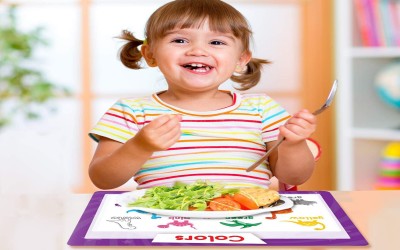
A: Placemats are not mandatory, but they can be a useful tool when implemented thoughtfully.
Mealtime in ECEC settings is more than just an opportunity for nutrition; it is a social, relational, and educational experience. Educators often explore tools and routines that can support safety, independence, and smooth transitions. One such practice is the use of placemats with children’s names or photos. While seemingly simple, this strategy has prompted lively debate among educators about its value, practicality, and alignment with the principles of the EYLF and Quality Area 5.
Educator Perspectives
Across sector discussions, educators have shared a range of views:
- Workload & Autonomy - Some feel placemats add unnecessary tasks and limit children’s freedom to choose where they sit.
- Safety & Allergy Management - Others value placemats as a clear visual tool for identifying allergies and dietary needs, especially for casual or agency staff.
- Child Participation - Many highlight that children can collect and place their own mats, reinforcing independence and routine.
- Sustainability & Hygiene – Concerns are raised about laminated placemats being unhygienic or unsustainable.
- Positive Engagement - Centres that allow children to decorate their placemats report pride, ownership, and family connection.
Practical Strategies
If a service chooses to use placemats, here are ways to make them effective:
- Child‑Led Routine - Children collect their placemat after handwashing and place it with their water bottle.
- Progressive Mealtimes - Children eat when ready, finding their placemat and seat independently.
- Visual Allergy - Indicators Use icons or colour coding on placemats for quick recognition of dietary needs.
- Creative Ownership - Invite children to design or decorate their placemats, fostering identity and pride.
- Shared Responsibility - Children help set and clear placemats, embedding responsibility and hygiene practices.
- Flexible Seating - Allow children to move placemats to their chosen spot, balancing safety with autonomy.
EYLF & QA Links
- EYLF Outcome 3 – Wellbeing: Supports health routines and allergy safety.
- EYLF Outcome 4 – Learning: Involvement in setting tables fosters problem‑solving and independence.
- QA5 – Relationships with Children: Respecting choice and encouraging participation strengthens autonomy and collaboration.
The most effective practice of using placements is child‑led use—where placemats support safety, independence, and engagement without becoming a rigid or burdensome routine.
Further Reading
Progressive Mealtimes In Early Childhood Settings
Mealtimes & Nutrition: Observation Starters
Implementing Progressive Mealtimes in Early Childhood Programs




 The Children’s Services Award introduces a streamlined classification system and updated pay rates designed to better recognise the skills, qualifications, and responsibilities of early childhood
 The Children’s Services Award has 8 clear levels. These levels make it easier to understand where you fit, based on your experience, qualifications, and responsibilities.
 When working as a qualified early childhood teacher (with a university degree) within a service, your rate of pay will come from the Educational Services
 Diploma-qualified educators play a vital role in early childhood services, taking on responsibilities that range from supporting children’s learning and development to leading rooms and
 Certificate III qualified educators form the backbone of early childhood services, providing essential care and learning support for children across all settings. Their wages under
 Early Childhood Teachers (ECTs) play a vital role in leading curriculum and pedagogy in early learning settings. Regulation 272 of the Education and Care Services
 Discover how school readiness programs support children’s independence, confidence, and skills for a successful transition into primary school.
 When an Educator is not performing their tasks or responsibilities at best practice, these issues need to be addressed for the Educator to understand where
 Educators can maximise tax deductions by claiming classroom supplies, training, union fees, and home office costs this financial year.
 A staff appraisal is a formal, systematic process of determining and reviewing the performance of early childhood educators over a period of time, usually a