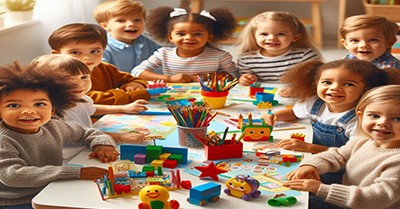
Play‑based learning builds social, emotional, and academic skills, preparing children with confidence and resilience for school readiness.
Play‑based learning nurtures the skills children need to thrive at school while preserving curiosity and joy. Rather than checklist skills, readiness is about social confidence, resilience, and holistic development.
Emotional and Social Skills
- Through collaborative play, children learn to:
- Share, take turns, and negotiate.
- Resolve conflicts and build empathy.
- Develop resilience and self‑regulation — essential for adapting to structured school environments.
Problem‑Solving and Critical Thinking
- Open‑ended play fosters:
- Creative decision‑making.
- Independent problem‑solving through puzzles, role play, and construction.
- Persistence and adaptability when faced with challenges.
Language and Communication
- Play strengthens literacy by:
- Role‑playing and storytelling to expand vocabulary.
- Group games that build listening and conversational skills.
- Early mark‑making and symbol recognition in playful contexts.
Academic Foundations
- Children explore concepts naturally:
- Numeracy: Counting blocks, sorting shapes, building patterns.
- Literacy: Singing alphabet songs, tracing letters in sand, recognising symbols.
- Spatial awareness through block play and puzzles.
Motor Skills Development
- Fine motor: Drawing, cutting, playdough, threading beads.
- Gross motor: Obstacle courses, ball games, climbing.
These prepare children for writing, sitting attentively, and classroom participation.
Confidence and Independence
Play encourages risk‑taking, experimentation, and self‑esteem. Children learn routines, follow instructions, and adapt to group settings, all vital for school readiness.
Examples of Play‑Based Learning
- Pretend play: Kitchens, doctor’s office, supermarkets.
- Emotion charades: Acting out feelings.
- Storytelling games: Puppets and props.
- Alphabet hunts: Finding letters around the room.
- Sorting and matching: Colours, shapes, sizes.
- Art exploration: Open‑ended painting and collage.
- Music and movement: Singing, dancing, rhythm games.
- Practical life play: Dress‑up, cooking, fastening buttons.
Play‑Based vs Learning Through Play
- Play‑Based Learning: Educator‑designed, intentional, linked to EYLF outcomes.
- Learning Through Play: Child‑led, spontaneous, discovery‑focused.
Both value play as central to development; the difference lies in structure and intent.
Play‑based learning is the bridge between early childhood and school readiness. It fosters holistic growth, emotional, social, cognitive, and physical, while embedding joy and curiosity. By intentionally designing play experiences, educators ensure children enter school confident, capable, and eager to learn.
Further Reading
The Value of Play Based Learning In Early Childhood
Benefits Of Play Posters
Spontaneous Play In Early Childhood
Play Principles
Inquiry Based Learning For Toddlers
School Readiness Program
Supporting Children's Transition To School
Development Of School Readiness Skills Posters
 Open ended questions cannot be responded to with one word answers such as yes or no. These types of questions enables a child to provide
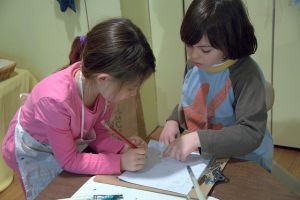 During your child’s preschool years, an important milestone begins to emerge. This is the development of pre-writing skills. Pre-writing skills are used to encourage, develop
 An Acknowledgment of the Country is a way of showing respect for the Traditional Owners and can be given by both non-Indigenous people and Aboriginal
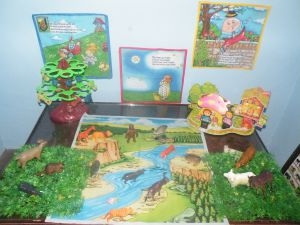 Open ended materials enables children to play freely. They are objects that have no rules to follow, use or function. Raw materials that can be
 Language plays an important role in a child’s development. It enables a child to communicate effectively with their family, learn at school, socialize with friends,
 Like adults, children have to deal with their own stress in life. Moving house, starting a new school, preparing for a new sibling - these are
 Playdough is such a versatile material. It provides numerous benefits to children as they manipulate it, it is safe and soothing and provides children with
 Teaching children about sustainability enables them to appreciate and respect the natural environment. Early childhood services can provide meaningful hand on learning experiences in order
 Recycling is an important concept that teaches children to care for the environment. It encourages children to be responsible and show a growing appreciating for
 Incursions provide children with the opportunity to explore meaningful learning experiences in the comfort of their early childhood service. The following provides a directory of