
Families often ask whether children need to be able to write their names before starting school. It’s a common belief, but according to ACECQA and the Early Years Learning Framework (EYLF), school readiness is not measured by this single skill.
EYLF Perspective
-
Outcome 5: Children are effective communicators highlights literacy as a broad concept.
-
Literacy includes mark‑making, recognising symbols, experimenting with print, and expressing identity through play.
-
Writing a name may emerge naturally, but it is not a mandated milestone. The EYLF values the process of exploration more than the product.
ACECQA Guidance
ACECQA’s role is to ensure services meet the National Quality Framework, which prioritises developmentally appropriate practice. Their guidance makes clear that school readiness is about dispositions — curiosity, resilience, and social confidence — rather than checklist skills like handwriting.
-
ACECQA emphasises developmentally appropriate practice and learning through play.
-
School readiness is about dispositions (curiosity, resilience, social confidence), not checklist skills.
-
Emergent literacy — recognising their name, attempting letters, enjoying books — is encouraged, but no compliance requirement exists for name writing.
What School Readiness Really Means
School readiness is best understood as a holistic concept. It encompasses social skills, emotional regulation, curiosity, and independence. Recognising their name and feeling proud of it is more important than perfect handwriting.
-
Holistic development: Social skills, emotional regulation, curiosity, and independence.
-
Identity and belonging: Recognising their name and feeling proud of it is more important than perfect handwriting.
-
Variation is normal: Some children may write their names at 4–5, others later. Both are within typical development.
Practical Strategies for Educators
Educators can support emergent literacy by embedding name recognition and mark‑making into playful, everyday routines. The goal is to celebrate attempts and foster identity, not to pressure children into formal writing before they are ready.
-
Provide name cards for sign‑in routines.
-
Encourage children to label artwork with marks or letters.
-
Use playful contexts (sand trays, playdough, painting) for mark‑making.
-
Celebrate attempts — whether scribbles, initials, or full names — as steps in emergent literacy.
The essential message for families is that children do not need to write their names to be "school-ready". Readiness is about being curious, confident, socially capable, and eager to learn. Writing their name is a skill that will develop in time, supported by play and meaningful experiences.
Children thrive when families and educators focus on confidence, curiosity, and belonging rather than checklist skills.
Further Reading
Rethinking Name Writing Practices for Three-Year-Olds
Following Children's Interests Into Early Writing




 The Children’s Services Award introduces a streamlined classification system and updated pay rates designed to better recognise the skills, qualifications, and responsibilities of early childhood
 The Children’s Services Award has 8 clear levels. These levels make it easier to understand where you fit, based on your experience, qualifications, and responsibilities.
 When working as a qualified early childhood teacher (with a university degree) within a service, your rate of pay will come from the Educational Services
 Diploma-qualified educators play a vital role in early childhood services, taking on responsibilities that range from supporting children’s learning and development to leading rooms and
 Certificate III qualified educators form the backbone of early childhood services, providing essential care and learning support for children across all settings. Their wages under
 Early Childhood Teachers (ECTs) play a vital role in leading curriculum and pedagogy in early learning settings. Regulation 272 of the Education and Care Services
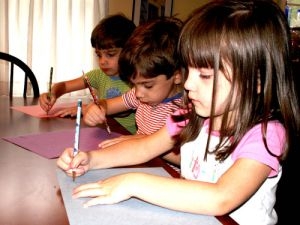 Discover how school readiness programs support children’s independence, confidence, and skills for a successful transition into primary school.
 When an Educator is not performing their tasks or responsibilities at best practice, these issues need to be addressed for the Educator to understand where
 Educators can maximise tax deductions by claiming classroom supplies, training, union fees, and home office costs this financial year.
 A staff appraisal is a formal, systematic process of determining and reviewing the performance of early childhood educators over a period of time, usually a