Evaluating children’s goals is more than ticking boxes; it’s about noticing growth, reflecting on what supported it, and planning the next steps with intention. The framework reminds us that outcomes are not abstract; they are lived through everyday routines, play, and relationships. By using a simple cycle of Observation, Reflection, and Next Step, educators can make progress visible, adapt strategies responsively, and document learning in ways that honour each child’s journey.
EYLF Outcome 1: Identity
Goal: Child will separate confidently from family at drop-off.
Evaluation:
- Observation: Child now enters the room without distress and greets peers.
- Reflection: Strategy of using a consistent educator at drop-off was effective.
- Next Step: Encourage child to initiate play with peers to deepen social confidence.
EYLF Outcome 2: Community
Goal: Child will participate in group routines (tidy-up, mealtimes).
Evaluation:
- Observation: Child joins tidy-up when prompted but still needs reminders.
- Reflection: Visual cues (song, picture cards) supported engagement.
- Next Step: Introduce peer modeling to strengthen independence in routines.
EYLF Outcome 3: Wellbeing
Goal: Child will practice self-help skills (washing hands independently).
Evaluation:
- Observation: Child washes hands before meals with minimal assistance.
- Reflection: Routine practice and the visual handwashing chart were effective.
- Next Step: Extend self-help skills to dressing tasks (putting on shoes).
EYLF Outcome 4: Learning
Goal: Child will persist with challenging tasks (puzzles).
Evaluation:
- Observation: Child completes 6-piece puzzles independently and attempts 12-piece puzzles with support.
- Reflection: Encouragement and scaffolding helped build persistence.
- Next Step: Provide more complex puzzles and introduce collaborative problem-solving.
EYLF Outcome 5: Communication
Goal: Child will expand vocabulary by naming objects in the environment.
Evaluation:
- Observation: Child now names familiar classroom objects and uses descriptive words.
- Reflection: Daily naming games and storybook reading supported vocabulary growth.
- Next Step: Encourage child to use new words in sentences during group discussions.
Easy Evaluation Framework
When evaluating goals, educators can use a simple cycle:
- Observation – What did the child achieve?
- Reflection – What strategies worked or didn’t?
- Next Step – How will we extend or adapt the goal?
Evaluation isn’t just about recording progress; it’s about recognising the small steps that lead to big growth. By using the cycle of Observation, Reflection, and Next Step, educators can make children’s learning journeys visible, adapt strategies with confidence, and celebrate achievements in ways that connect directly to the outcomes.
When documentation is clear and consistent, it becomes more than a record; it becomes a tool for collaboration, reflection, and planning. Most importantly, it honours each child’s unique pathway of Belonging, Being, and Becoming.
Further Reading
EYLF Learning Outcomes Version 2.0
How Children Achieve EYLF Learning Outcomes Version 2.0
Practical Examples Of EYLF Outcomes
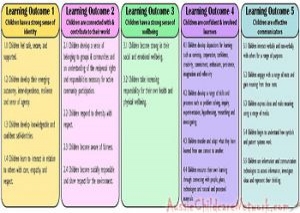 Here is the list of the EYLF Learning Outcomes that you can use as a guide or reference for your documentation and planning. The EYLF
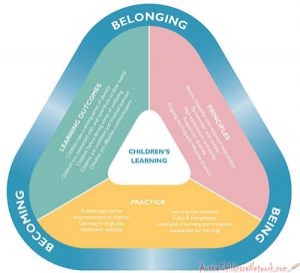 The EYLF is a guide which consists of Principles, Practices and 5 main Learning Outcomes along with each of their sub outcomes, based on identity,
 This is a guide on How to Write a Learning Story. It provides information on What Is A Learning Story, Writing A Learning Story, Sample
 One of the most important types of documentation methods that educators needs to be familiar with are “observations”. Observations are crucial for all early childhood
 To support children achieve learning outcomes from the EYLF Framework, the following list gives educators examples of how to promote children's learning in each individual
 Reflective practice is learning from everyday situations and issues and concerns that arise which form part of our daily routine while working in an early
 When observing children, it's important that we use a range of different observation methods from running records, learning stories to photographs and work samples. Using
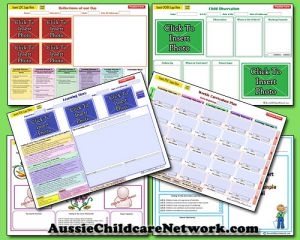 Within Australia, Programming and Planning is reflected and supported by the Early Years Learning Framework. Educators within early childhood settings, use the EYLF to guide
 This is a guide for educators on what to observe under each sub learning outcome from the EYLF Framework, when a child is engaged in
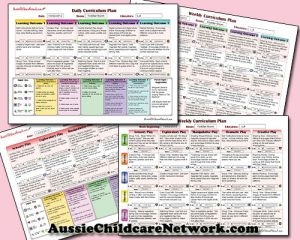 The Early Years Learning Framework describes the curriculum as “all the interactions, experiences, activities, routines and events, planned and unplanned, that occur in an environment