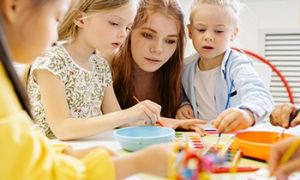
For OOSH (Out of School Hours) children, Reconciliation Week topics should focus on identity, respect, caring for Country, storytelling, friendship, and truth-telling. These themes help children understand Australia’s shared history and celebrate Aboriginal and Torres Strait Islander cultures in age‑appropriate ways.
Core Topics to Cover
Acknowledgement of Country
- Teach children what it means to acknowledge Traditional Owners.
- Practice child‑friendly versions at the start of sessions.
- Discuss the importance of Elders past, present, and emerging.
Caring for Country
- Explore how we look after nature, playgrounds, and local environments.
- Link to sustainability practices like recycling and gardening.
- Connect with Aboriginal perspectives on land stewardship.
Storytelling & Symbols
- Share Dreamtime stories such as The Rainbow Serpent or Big Rain Coming.
- Introduce Aboriginal symbols and let children create “story stones.”
- Encourage children to retell stories through art or drama.
Friendship & Respect
- Discuss what it means to be “All In” together.
- Use collaborative art projects (murals, handprints) to show unity.
- Play games that emphasize sharing and turn‑taking.
Truth‑Telling & History
- Introduce age-appropriate discussions about the 1967 Referendum and Mabo decision.
- Use visual timelines or simple storytelling to explain why these events matter.
- Highlight the importance of listening to First Nations voices.
Practical Reconciliation Week Ideas for OOSH
Indigenous Art Projects
-
Dot painting, sand art, or collaborative murals inspired by Aboriginal symbolism.
-
Use natural materials (sticks, stones, ochre tones) to connect with Country.
-
Encourage children to reflect on the meaning of colours and patterns.
Dreamtime Storytelling
-
Read stories authored by Aboriginal and Torres Strait Islander writers.
-
Pair storytelling with sensory experiences (e.g., drawing symbols in sand).
-
Discuss themes of respect, belonging, and caring for Country.
Music & Dance Workshops
-
Use tapping sticks, clapsticks, or simple percussion to explore rhythm.
-
Play songs by Indigenous artists like Geoffrey Gurrumul Yunupingu.
-
Teach children traditional dances or lullabies such as Inanay.
Acknowledgment of Country Rituals
-
Begin sessions with a child‑friendly Acknowledgment of Country.
-
Encourage children to write or draw their own versions.
-
Reinforce respect for Elders past, present, and emerging.
Community Connections
-
Invite local Elders, artists, or storytellers to share experiences.
-
Partner with Aboriginal organisations for workshops or excursions.
-
Display children’s work in a “Reconciliation Wall” for families to view.
Suggested Weekly Flow for OOSH
| Day | Topic | Example Activity |
|---|---|---|
| Monday | Acknowledgement of Country | Group circle acknowledgment + flag colours |
| Tuesday | Caring for Country | Nature walk + recycled art |
| Wednesday | Storytelling & Symbols | Dreamtime story + story stones |
| Thursday | Friendship & Respect | Collaborative mural + sharing games |
| Friday | Truth‑Telling & History | Timeline activity + reflection wall |
Key Considerations
- Authenticity: Use books and resources authored by Aboriginal and Torres Strait Islander people.
- Sensitivity: Keep discussions age‑appropriate; focus on respect and empathy.
- Family Engagement: Share newsletters or displays so families can continue conversations at home.
- Ongoing Practice: Link activities to your service’s Reconciliation Action Plan.
For OOSH services, Reconciliation Week is a chance to embed cultural respect into everyday routines. The most impactful ideas include hands-on art projects, storytelling with Dreamtime narratives, music and dance workshops, and community connections such as inviting Elders or local Aboriginal artists. These activities help children explore identity, diversity, and reconciliation in age‑appropriate, engaging ways.

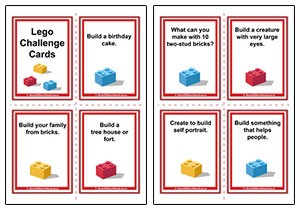


 The Children’s Services Award introduces a streamlined classification system and updated pay rates designed to better recognise the skills, qualifications, and responsibilities of early childhood
 The Children’s Services Award has 8 clear levels. These levels make it easier to understand where you fit, based on your experience, qualifications, and responsibilities.
 When working as a qualified early childhood teacher (with a university degree) within a service, your rate of pay will come from the Educational Services
 Diploma-qualified educators play a vital role in early childhood services, taking on responsibilities that range from supporting children’s learning and development to leading rooms and
 Certificate III qualified educators form the backbone of early childhood services, providing essential care and learning support for children across all settings. Their wages under
 Early Childhood Teachers (ECTs) play a vital role in leading curriculum and pedagogy in early learning settings. Regulation 272 of the Education and Care Services
 Discover how school readiness programs support children’s independence, confidence, and skills for a successful transition into primary school.
 Floorbook is a documentation approach that uses a large book with blank pages for children to record different aspects of their learning in small groups
 When an Educator is not performing their tasks or responsibilities at best practice, these issues need to be addressed for the Educator to understand where
 Educators can maximise tax deductions by claiming classroom supplies, training, union fees, and home office costs this financial year.