Preschool aggression: practical strategies for educators to protect children, uphold duty of care, and follow limited physical contact policies.
Practice Example
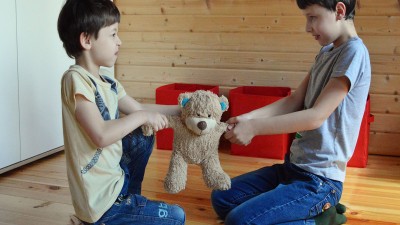
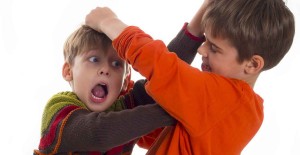
During block play, two preschoolers both reach for the same piece. Voices rise, hands grab, and one child begins swinging their arm towards the other’s face. Despite the educator’s calm verbal prompts to stop, the behaviour escalates and light contact is made.
The educator must act immediately to protect both children while respecting the service’s “limited physical contact” policy.
Policy Link
- National Law – Regulation 167: Services must take all reasonable steps to protect children from physical, emotional, and psychological harm.
- Service Policy – Limited Physical Contact: Educators should avoid restraining or applying force to children’s bodies.
- Duty of Care: Educators are legally and ethically responsible for ensuring children’s safety in the moment.
Educator Response Strategies
Immediate Safety
- Position yourself between the children to block further strikes without restraining.
- Use a firm, clear voice: “Stop. I cannot let you hit.”
- Direct the other child to step back, creating space.
Environmental Control
- Remove the disputed block or toy.
- Redirect each child to separate play areas for calming down.
Verbal Guidance
- Acknowledge emotions: “You both wanted the same block. That made you upset.”
- Offer alternatives: “I will hold the block until we can solve this together.”
Documentation
- Record the incident factually: what occurred, educator actions, and outcomes.
- Notify leadership and follow family communication protocols.
Reflection
- Discuss with the team whether policies allow protective blocking in emergencies.
- Identify training needs in conflict resolution and non‑physical intervention.
Reflective Questions
- How can educators balance “limited physical contact” policies with Regulation 167’s requirement to protect children?
- What non‑physical strategies can be strengthened in your service to prevent escalation?
- How might educators prepare children with social stories or role play to manage frustration before it becomes physical?
- Does your team have a shared understanding of “least intrusive protective measures”?
Aggression in preschool settings is often a product of frustration and developing self‑regulation skills. Educators must respond swiftly, prioritising safety while modelling calm, respectful behaviour. By combining clear policies, practical strategies, and reflective practice, services can ensure compliance with regulation while supporting children’s social and emotional growth.
Further Reading
Strategies For Dealing With Physical Aggression In Children
Stages Of Behaviour
Behaviour Management In Childcare
Supporting Children With Challenging Behaviour
Behaviour Management Plan



 Working as a childcare professional can be a challenge especially when dealing with behavioural problems which may arise. The techniques we use when dealing with
 There are different types of behaviour that children can display and sometimes it can be hard to manage, especially if a child is having behavioural
 As Educators, there will be many instances where you will need to write about a child's behaviour. For a behaviour management plan, assessments, half-yearly or
 As a parent, your behavioural expectations of your child can be higher than what is actually developmentally appropriate for your child's age.
 As Educators when communicating with Parents (through verbal or non-verbal communication), there will be times where we need to discuss issues or concerns that may
 Challenging Behaviour is when a child does something that hurts themselves and/or other people.
 It's always difficult to bring up behavioural issues with parents, it can be nerve wrecking to tell a parent that their child misbehaves but that
 As part of your child's development it is normal for your child to have anxiety and fears. A baby commonly shows a fearful sign to
 All children deal with anger on a daily basis. Thinking about it as a child, there is a lot to be angry about. Elder people
 It is important to understand that your child behaviour problems could not just be from attention seeking. There are many factors to take into consideration