Is a school readiness program necessary? Explore how skills and dispositions are built through play, programs, and balanced approaches in early childhood.
Why Programs Add Value
- Structure for families—Parents often want clear evidence of skills being developed.
- Consistency across educators—A program provides a shared framework for staff.
- Documentation support — Linking activities to readiness outcomes supports QA1 and QA5 compliance.
Example: A service runs a “Lunchbox Practice Week” as part of its readiness program. Families see the skill focus, while educators document independence outcomes.
Why Readiness Is Embedded in Play
- Natural learning — Skills like turn‑taking, problem‑solving, and resilience emerge organically.
- Child‑led exploration — Play allows children to practice readiness skills in authentic contexts.
- Less pressure — Avoids turning readiness into a checklist that stresses children.
Example: A group game in the playground builds cooperation and listening skills without being labelled “school readiness.”
Practical Strategies for Educators
- Blend approaches — Use a readiness program as a framework, but embed skills into play.
- Highlight dispositions — Document confidence, curiosity, and resilience alongside practical skills.
- Role‑play routines — Practice lining up, carrying bags, or classroom expectations through playful scenarios.
- Family partnerships — Share realistic expectations with parents to reduce pressure.
- Flexible programming — Allow readiness activities to evolve from children’s interests.
Tips & Hints
- Avoid comparing children — readiness looks different for each child.
- Use storytime and group games to build listening and cooperation naturally.
- Document social‑emotional growth, not just academic skills.
- Celebrate small steps — independence in toileting or confidence in speaking up.
Pair readiness articles with printables or templates to make programming easier.
School readiness is not only a program, nor only embedded in play—it's both. A structured program can reassure families and support documentation, while play ensures readiness remains authentic and child‑centered. The key is balance: readiness should be visible but never forced.
Further Reading
School Readiness Program
School Readiness Guide For Educators
Deferring School Entry: A Strengths-Based Approach to Readiness
School Readiness and Name Writing: What ACECQA and the EYLF Really Say
Critical Reflection Questions For School Readiness
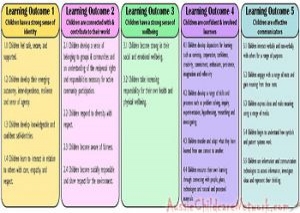 Here is the list of the EYLF Learning Outcomes that you can use as a guide or reference for your documentation and planning. The EYLF
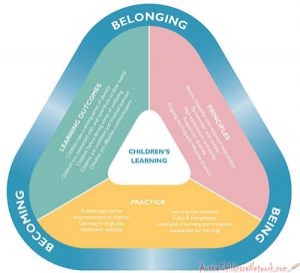 The EYLF is a guide which consists of Principles, Practices and 5 main Learning Outcomes along with each of their sub outcomes, based on identity,
 This is a guide on How to Write a Learning Story. It provides information on What Is A Learning Story, Writing A Learning Story, Sample
 One of the most important types of documentation methods that educators needs to be familiar with are “observations”. Observations are crucial for all early childhood
 To support children achieve learning outcomes from the EYLF Framework, the following list gives educators examples of how to promote children's learning in each individual
 Reflective practice is learning from everyday situations and issues and concerns that arise which form part of our daily routine while working in an early
 When observing children, it's important that we use a range of different observation methods from running records, learning stories to photographs and work samples. Using
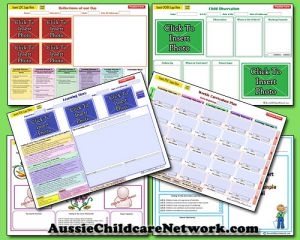 Within Australia, Programming and Planning is reflected and supported by the Early Years Learning Framework. Educators within early childhood settings, use the EYLF to guide
 This is a guide for educators on what to observe under each sub learning outcome from the EYLF Framework, when a child is engaged in
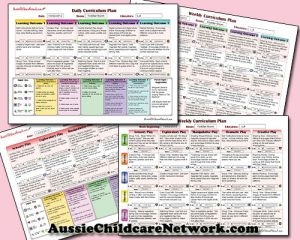 The Early Years Learning Framework describes the curriculum as “all the interactions, experiences, activities, routines and events, planned and unplanned, that occur in an environment