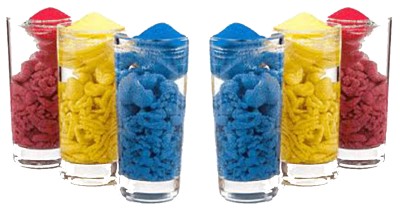
Aqua Sand is a fun preschool sensory activity, perfect for circle time, STEM play, and teaching fine motor skills through underwater sand creations.
Materials Needed
- Coloured Play sand
- Fabric Protector (like Scotch Guard)
- Wax paper
- A clear bowl
- Water
What To Do
- Lay coloured sand in piles on wax paper (the amount depends on how much sand you want to use).
- Spray each of the sand piles with the fabric protector.
- Mix the fabric protector into the sand, adding more protector until all the sand is fully saturated.
- Allow the sand to dry. This does not take long (about an hour).
- Once the sand is dry, pour it into containers that are easy for the children to pour.
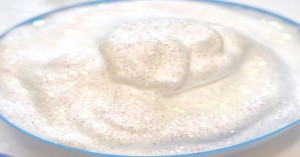
- Give each child or group of children a clear bowl with water and encourage them to pour the sand inside to create unique sculptures.
Hints and Tips
- You will want to do this in a well-ventilated area.
- When playtime is over, scoop the sand from the water and lay it out so that the water surrounding the sand dries.
- The sand itself should already be dry.
- Once dry, store your aqua sand in containers, and it can be used again & again!
- If your sand does not work properly after a few playtimes, you can re-spray it with fabric protector to restore it. Ours worked fine for about 5 play times, and then we had to restore the sand by spraying it again.
Extension Ideas
- STEM exploration: Introduce concepts of waterproofing, absorption, and materials science by comparing treated vs untreated sand.
- Fine motor practice: Encourage children to scoop, pour, and shape underwater structures to strengthen hand muscles.
- Colour mixing: Provide different coloured sands and let children experiment with layering or blending underwater.
- Counting and sorting: Add shells or beads to the water and have children count or sort them alongside their sand creations.
- Underwater landscapes: Children can build “oceanscapes” with sand, toy fish, and plants.
- Storytelling play: Invite children to narrate a story about their underwater world while building.
- Art integration: Photograph their creations and use them in collage or digital art projects.
- Science enquiry: Explore “Why does the sand stay dry?” and record observations.
- Math connections: Measure how much sand fits in different containers underwater.
- Language development: Introduce descriptive vocabulary like "grainy", "smooth", "floating", and "sinking".
Reference:
One Little Project