


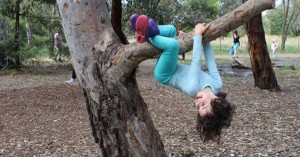
Early education care services are increasingly making bush kinders part of their educational programs. These involve excursions to sites in the midst of nature and away from structured service settings. The following article provides information about the Benefits of Bush Kinders, Supervision, Planning and more.
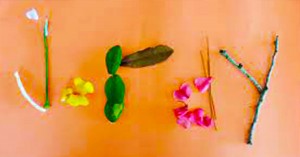
For children who are beginning to learn to write their names, this experience is a great way for children to practice writing their name with natural materials.
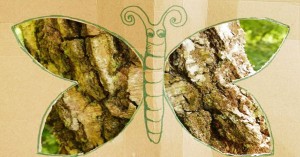
Nature art see-through frames are a simple and creative art experience that enables children to create frames to view their natural environment.
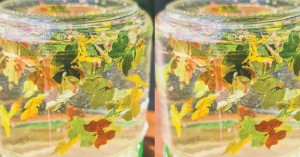
This is an excellent idea for children to create a keepsake of natural leaves they have collected from different types of trees.

Leaf printing is an easy art experience for young children to engage in. It's a great way for young children to discover patterns, lines, and colours of different leaves.

Using recycled plastic bottles, these leaf lanterns are mess free and showcase the colours and shapes of different types of leaves around us.
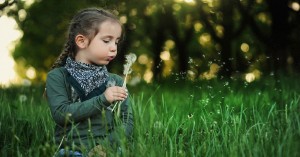
Outdoor spaces hold great significance in early education and care settings which is why they are highlighted in Learning Environments, one of eight pedagogical practices put forward in the EYLF. It further says that Outdoor learning is a feature of Australian learning environments. They offer a vast array of possibilities not available indoors. One of the ways that outdoor spaces do this is by allowing children access to elements of Nature. The following article provides the importance of natural elements and strategies educators can use to enrich children’s play and learning experiences.
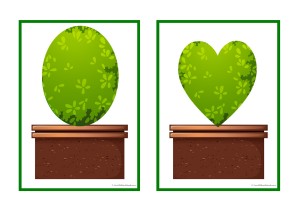
The Grass Pot Matching Shapes is a fun matching activity for children that enables them to learn 2d shapes. Children should match the grass shape to the correct shapes plant pot. This is a fun way to incorporate nature into the learning too.
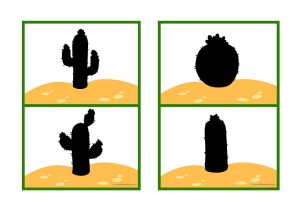
Cactus Shadow Match Cut and Paste is a great activity for children to identify the right shadow cactus with their matching image. This activity enables children to develop visual discrimination skills, hand-eye coordination and learning to analyse the shapes of images to match.
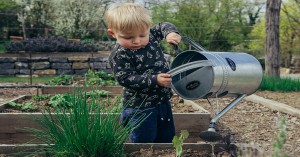
The NQS mandates services to take an active role in caring for the environment and contributing to a sustainable future. According to NQS Standard 3, Element 3.2.3, “The service cares for the environment and supports children to become environmentally responsible.” The following article provides information on Understanding Sustainability, Sustainability Ideas For Early Childhood Services and Sustainability Learning For Children.
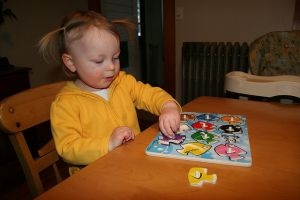 Toddlers have a greater understanding of the world around them by this stage. Their cognitive development (also known as intellectual development and thinking skills) continues… Read More
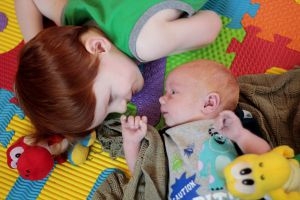 Infants begin to develop trust when parents begin to fulfil their needs. Such as changing an infant's nappy when needed, feeding on request and holding… Read More
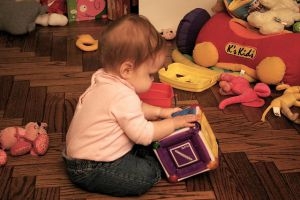 Beginning at birth the construction of thought processes, such as memory, problem solving, exploration of objects etc, is an important part of an infant’s cognitive… Read More
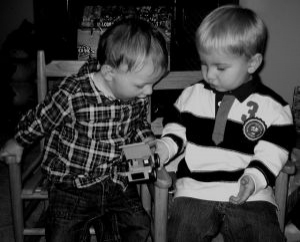 Toddlers want to do more on their own and do not like it when you begin to establish limits on their behaviour. Tantrums can become… Read More
 Your preschooler is now able to focus their attention more accurately and is less influenced by distractions. The intensity of questions increase as your child… Read More
 John Dewey is often seen as the proponent of learning by doing – rather than learning by passively receiving. He believed that each child was active,… Read More
 Erik Erikson developed a psychosocial theory to understand how we each develop our identities through eight stages of psychosocial development from infancy to adulthood. The… Read More
 Toddler advance and gains new skills in Gross Motor Development milestones achieved throughout earlier years. Co-ordination and challenges that could not be performed before such… Read More
 At this point preschoolers begin to interact effectively with others. Play becomes more innovative and organized and “boyfriend” or “girlfriend” begins to emerge. Preschoolers have… Read More
 From now, babies begin to identify and respond to their own feelings, understanding other's feelings & needs and interact positively with others. A baby's social and… Read More
Anger is an emotion that we all feel that is a natural response to certain...
See more...
In OSHC, language plays a powerful role in shaping the culture of the environment. Inappropriate...
See more...
Piaget discovered that all children’s cognitive development progressed through four stages, beginning in infancy and...
See more...