


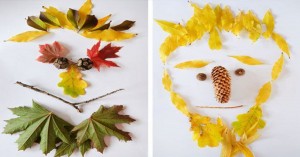
Go nature hunting with children and let them search for various objects in nature.. Make them collect as much natural objects as they can. With their collection children will be making nature people with the items they have collected. Apart from this, they will be learning a lot about their own family and parts of their face.
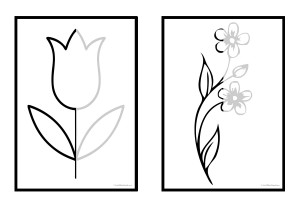
The Flower Tracing printables enable children to draw flowers by tracing over the light coloured lines on one half of the flower. This is great for young children to gain control over their hand movements through tracing which will, in turn, develop their pre-writing skills. For older children, this will assist them in learning to draw flowers. The flowers can be decorated and coloured once traced.
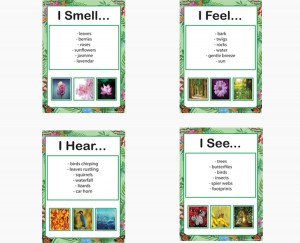
This template is for children to complete while going on a nature walk. Each page is of a child's senses and using these senses what they have observed in nature. For preschoolers, they can draw what they have seen and for the older ones they can write what they observe in nature.
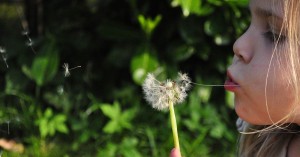
Learning with nature in early childhood services enriches every interest area from literacy corners to outdoor play by fostering curiosity, wellbeing, and environmental awareness. Integrating natural elements into classrooms and play spaces supports children’s physical, cognitive, and emotional development while cultivating a lifelong connection to the environment.
On Thursday 19 May Educators, Teachers and Children have the opportunity to try learning outside the classroom as we celebrate Outdoor Classroom Day. Outdoor Classroom Day is a global campaign to celebrate and inspire outdoor learning and play. On the day, thousands of schools around the world take lessons outdoors and prioritise playtime.
 Toddlers have a greater understanding of the world around them by this stage. Their cognitive development (also known as intellectual development and thinking skills) continues… Read More
 Infants begin to develop trust when parents begin to fulfil their needs. Such as changing an infant's nappy when needed, feeding on request and holding… Read More
 Beginning at birth the construction of thought processes, such as memory, problem solving, exploration of objects etc, is an important part of an infant’s cognitive… Read More
 Toddlers want to do more on their own and do not like it when you begin to establish limits on their behaviour. Tantrums can become… Read More
 Your preschooler is now able to focus their attention more accurately and is less influenced by distractions. The intensity of questions increase as your child… Read More
 John Dewey is often seen as the proponent of learning by doing – rather than learning by passively receiving. He believed that each child was active,… Read More
 Erik Erikson developed a psychosocial theory to understand how we each develop our identities through eight stages of psychosocial development from infancy to adulthood. The… Read More
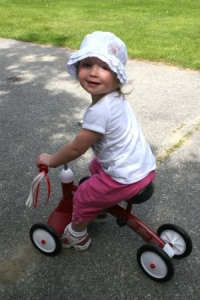 Toddler advance and gains new skills in Gross Motor Development milestones achieved throughout earlier years. Co-ordination and challenges that could not be performed before such… Read More
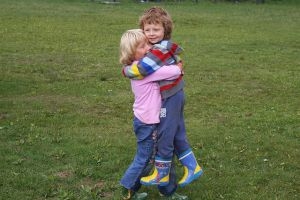 At this point preschoolers begin to interact effectively with others. Play becomes more innovative and organized and “boyfriend” or “girlfriend” begins to emerge. Preschoolers have… Read More
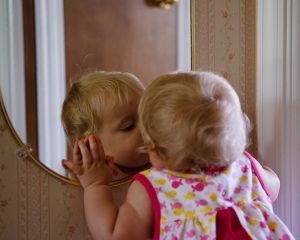 From now, babies begin to identify and respond to their own feelings, understanding other's feelings & needs and interact positively with others. A baby's social and… Read More
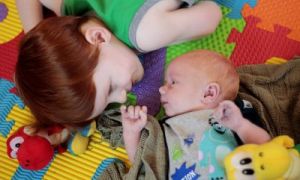
Infants begin to develop trust when parents begin to fulfil their needs. Such as changing...
See more...
When a child becomes violent in an early childhood setting, de-escalation isn’t just about calming...
See more...
Supporting children in OSHC with regulation techniques means creating safe, predictable environments and teaching strategies...
See more...