



In practice, it has been found that educational resources like story books, often fall short of representing such gender equity. In respect to this, a study titled ’Gender Equity in Early Childhood Picture Books: A Cross-Cultural Study Of Frequently Read Picture Books In Early Childhood Classrooms in Australia and the United States", investigated the nature of gender representation in children’s literature in eight early learning centres in Australia and the United States. The following article provides information on the Research, Data Analysis, Research Findings, What Services Can Do and more.
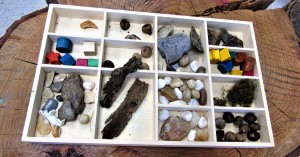
Loose parts is a term used in early childhood learning to include such objects and materials that kids can move, control and change in numerous ways. Loose parts provided an opportunity for children to express creativity through the use of materials that can be manipulated, transformed, and created through self-guided play. The following article provides information of Examples of Loose Parts, The Benefits of Loose Parts, Links To Theorists and The EYLF, Loose Parts Activity Ideas and more.

Writing observations for babies and young children enables us to observe the countless opportunities for growth and development that take place. The following article provides information on Writing Observations For Babies, What To Observe, Sample Observation For A Baby, Methods For Documenting and more.

On 26th May 2022 at 12 PM, join Dr Mary Anne Hall as she provides practical strategies for Directors, Group Leaders, NDIS providers and supervisors, who are required to promote employee wellbeing, and children and family engagement.
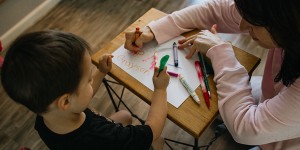
The Early Years Learning Framework outlines Intentional Teaching as one of the major practice guidelines to promote children’s learning. Intentional teaching involves actively planning and acting with specific goals or outcomes for children’s learning in mind. The following provides information on Intentional Teaching Definition, Intentional Teaching Strategies, Intentional Teaching Examples and Benefits Of Intentional Teaching.

There may be times when despite giving your best, your service might have to face complaints. However, instead of getting demotivated, it is possible to use complaints as opportunities for critical reflection. The following article provides information on Complaints Management, Positive Approaches To Complaints, Effective Complaints Management systems, Identifying Areas Of Improvement, Effective Documentation and more.
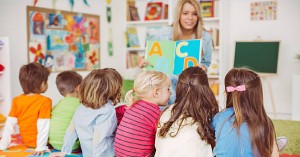
For services in the process of developing or reviewing their service philosophy, the following article provides information on the Importance Of A Service Philosophy, Links To The NQS, a Sample Of A Service Philosophy, Reviewing The Service Philosophy and more.
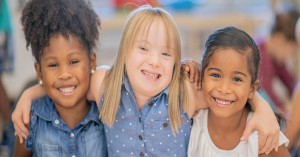
As an Early Childhood Educator, it enables you to acknowledge and embrace conversations around disability and inclusion with children. The following article provides strategies to discuss inclusion and disability with children.

As the words indicate, Open-ended questions have no right or wrong answers and thus cannot be answered with a simple, ‘yes’ or ‘no’. Open-ended questions figure in several of the pedagogical practices outlined in the EYLF, like ‘being responsive to children, ‘learning through play and most of all, ‘intentional teaching’. The following article provides the major benefits of using open-ended questions in the early childhood education context.

Inquiry-based learning is an experiential educational approach in which learners are encouraged to explore, question and arrive at their own conclusions. Asking questions is an important aspect of an inquiry-based approach but toddlers and very young children may not have the language to frame and ask such questions. Here are then a few tips on planning inquiry-based experiences for toddlers.
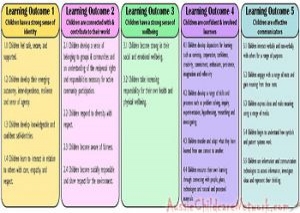 Here is the list of the EYLF Learning Outcomes that you can use as a guide or reference for your documentation and planning. The EYLF… Read More
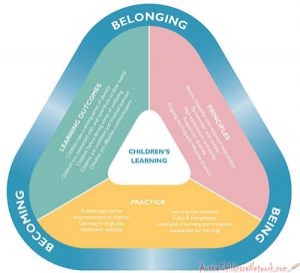 The EYLF is a guide which consists of Principles, Practices and 5 main Learning Outcomes along with each of their sub outcomes, based on identity,… Read More
 This is a guide on How to Write a Learning Story. It provides information on What Is A Learning Story, Writing A Learning Story, Sample… Read More
 One of the most important types of documentation methods that educators needs to be familiar with are “observations”. Observations are crucial for all early childhood… Read More
 To support children achieve learning outcomes from the EYLF Framework, the following list gives educators examples of how to promote children's learning in each individual… Read More
 Reflective practice is learning from everyday situations and issues and concerns that arise which form part of our daily routine while working in an early… Read More
 When observing children, it's important that we use a range of different observation methods from running records, learning stories to photographs and work samples. Using… Read More
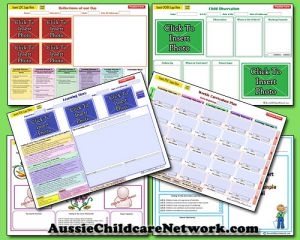 Within Australia, Programming and Planning is reflected and supported by the Early Years Learning Framework. Educators within early childhood settings, use the EYLF to guide… Read More
 This is a guide for educators on what to observe under each sub learning outcome from the EYLF Framework, when a child is engaged in… Read More
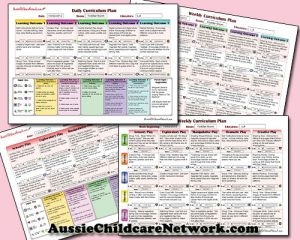 The Early Years Learning Framework describes the curriculum as “all the interactions, experiences, activities, routines and events, planned and unplanned, that occur in an environment… Read More

A resume is your first impression in a one to two page document that sums...
See more...
Though children are not physically ready to write before school, there are certain skills that...
See more...
Walking Together, developed by the Victorian Aboriginal Education Association, is a free inclusion support and...
See more...