


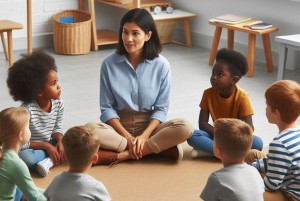
While the function of a learning curriculum is to lay out what is going to be taught to children, pedagogical approaches covers all the ways how such a curriculum can be taught. In the early childhood context, the most effective pedagogical approaches are learner centered, active and permit a scaffolding of learning. The following article provides information on EYLF and Pedagogical Approaches, Examples Of Pedagogical Approaches, How To Implement Pedagogical Approaches In Early Childhood, and more.
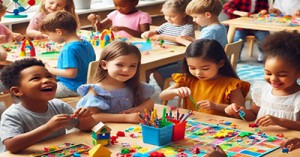
Activities and experiences both play crucial roles in early childhood education, but they have distinct characteristics. The following article provides information on What Are Activities, What Are Experiences, Examples Of Experiences, Examples Of Activities, Integrating Both in Early Childhood Education and more.

Effective communication is key to building positive relationships with children and facilitating their learning. However, if our words are to have the desired impact, they need to be adequately complemented with non-verbal cues. This is even more pertinent in the early childhood contexts when young children are yet to fully acquire language. The following article provides strategies for using non-verbal communication with children.
When children are confident, it means they can recognise the things they are good at and are happy to try out new things. Confidence is so important that it forms part of two learning outcomes in the EYLF Outcome 1.3: “Children develop knowledgeable and confident self-identities” as well as Outcome 4: “Children are confident and involved learners”. The following article provides strategies that Educators can use to build confidence in children so that they can achieve the best life and learning outcomes.
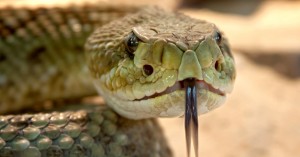
As part of their educational programmes, early education and care services may be situated in or travel to bush environments where it is known that snakes may be active and present. Although they are more common in the spring or summer, snakes can be found throughout the year, especially on sunny days. The following article provides information on What Attracts Snakes Into The Outdoor Area or Early Childhood Service, How Can We Snake-proof Our Service, Strategies to Implement To Minimise The Risk Of Snakes and more.
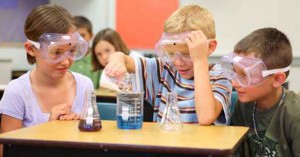
Children are naturally curious about their surroundings; this is most often expressed in the way they tinker with things, explore what happens next and ask questions about the world. Such innate inquisitiveness provides the ideal base to build hands-on exploration activities so that children not only have fun discovering but learn concepts and theories by applying them in real life. The following article provides information on leading children in hands-on exploration.

The Health and safety of children are among the prime concerns of early childhood services when planning the learning environment. The safest way to combat such issues is to opt for organic formulations which replace harmful chemicals with nature-based ones. The following article provides information on using green cleaning products in an early childhood service.
Hosting a fundraising event can be a great way to meet additional or unexpected costs incurred at your service. What’s more, it helps children to learn to be giving and provides a sense of accomplishment at contributing to an event. The following article provides a variety of fundraiser ideas for your early learning service.

Holistic learning gives as much importance to the emotional, social and physical growth of the child as the intellectual. Among the many benefits of holistic learning is that it enhances a child's subjective sense of well-being or simply put, makes them happier. The following article provides information on Nurturing Emotional Learning, Fostering Social Skills, Facilitiatiing Physical Movement and more.
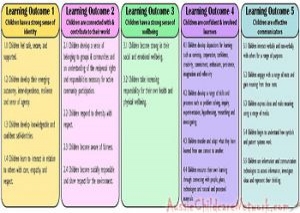 Here is the list of the EYLF Learning Outcomes that you can use as a guide or reference for your documentation and planning. The EYLF… Read More
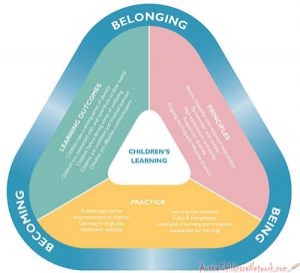 The EYLF is a guide which consists of Principles, Practices and 5 main Learning Outcomes along with each of their sub outcomes, based on identity,… Read More
 This is a guide on How to Write a Learning Story. It provides information on What Is A Learning Story, Writing A Learning Story, Sample… Read More
 One of the most important types of documentation methods that educators needs to be familiar with are “observations”. Observations are crucial for all early childhood… Read More
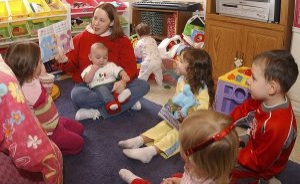 To support children achieve learning outcomes from the EYLF Framework, the following list gives educators examples of how to promote children's learning in each individual… Read More
 Reflective practice is learning from everyday situations and issues and concerns that arise which form part of our daily routine while working in an early… Read More
 When observing children, it's important that we use a range of different observation methods from running records, learning stories to photographs and work samples. Using… Read More
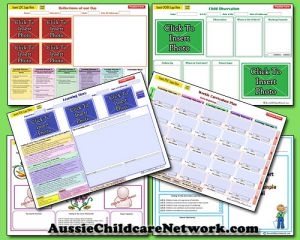 Within Australia, Programming and Planning is reflected and supported by the Early Years Learning Framework. Educators within early childhood settings, use the EYLF to guide… Read More
 This is a guide for educators on what to observe under each sub learning outcome from the EYLF Framework, when a child is engaged in… Read More
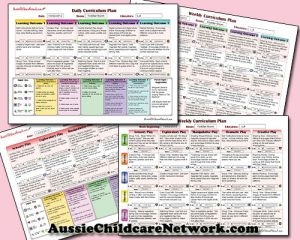 The Early Years Learning Framework describes the curriculum as “all the interactions, experiences, activities, routines and events, planned and unplanned, that occur in an environment… Read More

NSW Health has advised that people who are symptomatic or are household contacts of a...
See more...
Fostering independence in children is one of the greatest gifts we can give them. A...
See more...
Between programming, documentation, and daily routines, educators juggle more tasks than most realise. These simple...
See more...