


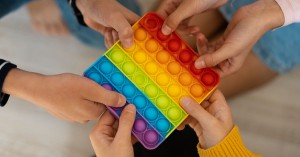
Children like adults are usually predisposed to a particular way of processing information. Those who best do this by experiencing it or acting it out are known as tactile learners. A learning style that helps kids physically touch or try something in order to learn the concept best is known as tactile learning or kinaesthetic learning. The following article provides information on identifying tactile learners and how to use tactile learning within the learning environment.

Self-regulation can be understood as a suite of skills needed to control and manage one’s own emotions and behaviours in a wide range of setting. Learning self-regulation in the early years has been consistently linked to not just better adjusted adults but also higher levels of academic achievement in later life. The following provides strategies to support children’s self-regulation in the learning environment.
In early childhood, positive relationships with teachers are extremely important for intellectual, social and emotional development. Indeed research shows that secure attachments formed in early years do not just prepare the foundations for positive relationships in adulthood but predict positive life outcomes as well. The following article provides strategies on how Educators can build relationships with children.
Confidence is crucial for setting and achieving goals in all stages and areas of life. However, confidence is not something that one child is born with more than others; rather confidence grows as a result of positive experiences and adult guidance. The following provides strategies to boost confidence in children.

The assessment and rating process for early childhood education and care services involves several key steps to ensure quality and compliance with standards. The following article provides information on Steps In The Assessment and Rating Process, Steps In Self Assessment, Assessment Visit, Follow Up and Continuous Improvement and more.
Learning styles, according to Howard Gardner, are the ways in which an individual approaches a range of tasks. The following provides information on Gardner's learning styles.
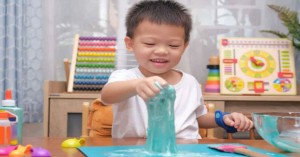
Sensory Play is an early childhood educational approach that allows children to use all their senses when exploring their learning environment. The following article provides the benefits of sensory play and how you can incorporate it into the learning environment.
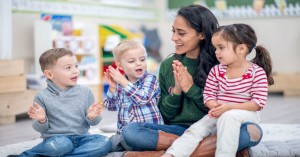
Routines and rituals are an integral aspect of growing up. They not only teach young children the skills needed to function in the adult world but impart a measure of control over their immediate environment. The following article provides strategies for using rituals and routines in an early childhood setting.
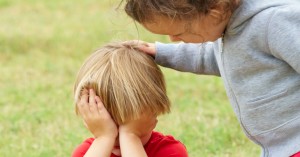
Empathy can be understood as the experience of understanding another person's condition from their perspective. The trait is considered one of the most important life skills that children can learn since it not only nurtures interpersonal relationships, thereby making for a strong support network in adulthood but has been linked to positive life outcomes too. The following article provides strategies for promoting empathy in children.
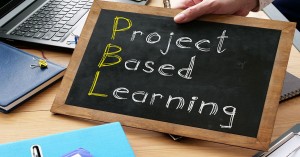
Project-based learning is an educational approach in which students acquire knowledge and skills by working for an extended time on a project or task. The following article provides information on What Is Project Based Learning, the Key Elements of Project Based Learning and the fundamentals of project-based learning and how you can use it in the learning environment.
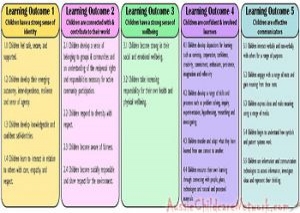 Here is the list of the EYLF Learning Outcomes that you can use as a guide or reference for your documentation and planning. The EYLF… Read More
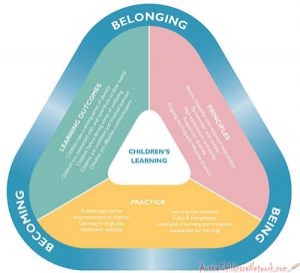 The EYLF is a guide which consists of Principles, Practices and 5 main Learning Outcomes along with each of their sub outcomes, based on identity,… Read More
 This is a guide on How to Write a Learning Story. It provides information on What Is A Learning Story, Writing A Learning Story, Sample… Read More
 One of the most important types of documentation methods that educators needs to be familiar with are “observations”. Observations are crucial for all early childhood… Read More
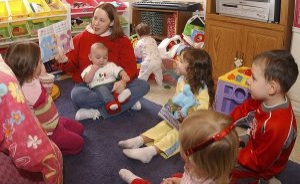 To support children achieve learning outcomes from the EYLF Framework, the following list gives educators examples of how to promote children's learning in each individual… Read More
 Reflective practice is learning from everyday situations and issues and concerns that arise which form part of our daily routine while working in an early… Read More
 When observing children, it's important that we use a range of different observation methods from running records, learning stories to photographs and work samples. Using… Read More
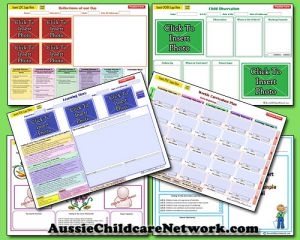 Within Australia, Programming and Planning is reflected and supported by the Early Years Learning Framework. Educators within early childhood settings, use the EYLF to guide… Read More
 This is a guide for educators on what to observe under each sub learning outcome from the EYLF Framework, when a child is engaged in… Read More
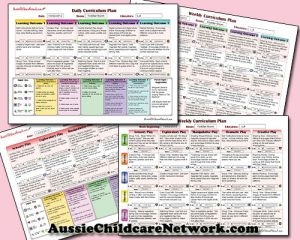 The Early Years Learning Framework describes the curriculum as “all the interactions, experiences, activities, routines and events, planned and unplanned, that occur in an environment… Read More
In late 2024, the Australian Government announced a 15% wage increase for early childhood educators. The...
See more...
Here's a practical educator cheat sheet tailored for writing summative assessments in early childhood settings—designed...
See more...
One year on, childcare safety reforms show progress in reporting and training, but true safeguarding...
See more...