


Negative framing and brain-building language shape how children perceive themselves, their abilities, and their learning experiences. The way educators communicate can either foster confidence and curiosity or create self-doubt and hesitation.

Educators are encouraged to shift away from asking "What are you making?" in early childhood settings because it can limit children's creativity and self-expression. Instead, open-ended questions that invite deeper thinking and exploration are recommended.

Self-care is essential for early childhood educators in Australia, as their work can be emotionally and physically demanding. Prioritizing well-being helps prevent burnout and enhances the quality of care provided to children. The following article provides information on Practical Self-Care Tips, Self-Care Activities, Self Care Routines, Self Care During Lunch Breaks, Self Care During Different Stress Levels and more.

A: The essence of reflection lies in its depth and authenticity—a well-articulated reflection can transport the reader into the moment, spark emotions, and leave lasting lessons. The joy of learning, perseverance, discovery, and growth breathe life into the concept of reflection, the kind that celebrates the humanity and unpredictability of education and development. It’s not about ticking boxes; it’s about telling tales of triumphs, struggles, and the endless curiosity that fuels progress. Here are some ideas to make reflections more inspiring and impactful:

Mother’s Day can be a sensitive time for families without mothers, but it’s also an opportunity to celebrate all caregivers and loved ones who nurture and support children. Here are some inclusive ways to honour the day.

Numeracy indicators are tools or benchmarks used to assess and support the development of numeracy skills in children. They help educators recognize, plan for, and evaluate a child's understanding and application of mathematical concepts.

It's not necessary—or even always advisable—to celebrate every significant cultural event on the calendar each month. Instead, think of your seasonal or monthly celebrations as a curated tapestry, where each thread is carefully chosen for its relevance, impact, and ability to resonate with the children and their communities. The following article provides Key Considerations when selecting monthly celebrations, When Does It Become Tokenistic, Questions To Ask To Decide Which Significant Monthly Cultural Event To Celebrate and more.

A: Dealing with negative behaviors such as passive aggressiveness, negativity, gossiping, cliques, favoritism, and a lack of motivation within an educator team is a challenging yet critical leadership task. These behaviours not only disrupt team cohesion but can also trickle down and impact the learning environment provided for the children. Drawing on experiences shared within the Educational Leaders and EYLF/NQS support groups, here are some strategies and points to consider:

Higher duties in the Children's Services Award refer to situations where an educator temporarily performs tasks or responsibilities that belong to a higher classification or position than their usual role. During this time, appropriate compensation should be awarded.

Rotation schema refers to a pattern of engagement where spinning, twirling, and circular motions tap into a child's innate fascination with movement and rhythm. It’s a developmental window into how children explore and understand the world around them.
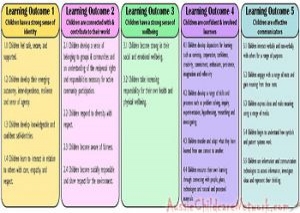 Here is the list of the EYLF Learning Outcomes that you can use as a guide or reference for your documentation and planning. The EYLF… Read More
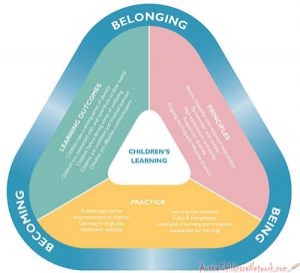 The EYLF is a guide which consists of Principles, Practices and 5 main Learning Outcomes along with each of their sub outcomes, based on identity,… Read More
 This is a guide on How to Write a Learning Story. It provides information on What Is A Learning Story, Writing A Learning Story, Sample… Read More
 One of the most important types of documentation methods that educators needs to be familiar with are “observations”. Observations are crucial for all early childhood… Read More
 To support children achieve learning outcomes from the EYLF Framework, the following list gives educators examples of how to promote children's learning in each individual… Read More
 Reflective practice is learning from everyday situations and issues and concerns that arise which form part of our daily routine while working in an early… Read More
 When observing children, it's important that we use a range of different observation methods from running records, learning stories to photographs and work samples. Using… Read More
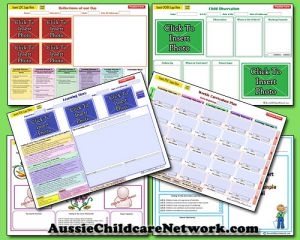 Within Australia, Programming and Planning is reflected and supported by the Early Years Learning Framework. Educators within early childhood settings, use the EYLF to guide… Read More
 This is a guide for educators on what to observe under each sub learning outcome from the EYLF Framework, when a child is engaged in… Read More
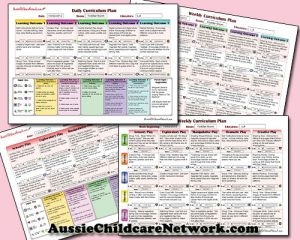 The Early Years Learning Framework describes the curriculum as “all the interactions, experiences, activities, routines and events, planned and unplanned, that occur in an environment… Read More
On April 22 is Earth Day. This year's campaign is to End Plastic Pollution. As...
See more...
Hosting a fundraising event can be a great way to meet additional or unexpected costs...
See more...
This is a guide for educators on what to observe under each sub-learning outcome from...
See more...