



By creating an inclusive and supportive environment for children, families and educators by recognising and addressing mental health proactively makes such a difference. The following article provides information on Strategies To Support Mental Health, Supporting Mental Health Of Children, Communicating With Families About Mental Health, Techniques For Discussing Mental Health, Supporting Mental Health Of Families, Supporting Mental Health Of Educators, What To Do If An Educator Is Depressed, Resources For Mental Health and more.

Risk assessments are a critical part of ensuring the safety and well-being of children in early learning services across Australia. They help identify potential hazards, assess the level of risk, and implement strategies to minimize or eliminate those risks. The following article provides information on Key Steps in Risk Assessments, Mandatory Risk Assessments, Why Risk Assessments Are Necessary, Key Roles in Risk Management, How Often Do Services Need To Conduct Risk Assessments?, Risk Matrix, Completing A Risk Assessment and more.

Boosting team spirit and showing appreciation in a meaningful way can really make a difference. The following article provides a List Of Ideas to foster connection and gratitude among educators, Benefits Of Showing Appreciation, Embedding Appreciation Practices in Team Culture, and more.

The Education and Care Services National Regulations emphasise that children's individual needs, including sleep and rest, must be met. The overarching goal is to ensure that children feel safe, secure, and supported during sleep and rest times. The following article provides information on Can Educators Wake Up A Child During Sleep, What To Do If Parents Want To Wake Their Child Early And The Child Is Tired, Strategies For Sleep Requests, How To Respectfully Wake Up A Child, What Is The Minimum Rest Requirement For 3 - 4 year Olds, Resources For Parents and more.

There is often a debate on whether colouring pages should be used in early childhood services. Do they limit creativity? Or foster creativity? Do they restrict children from thinking freely? Or can it they be used as inspiration? The following article provides information on the Pro and Cons Of Colouring Pages, Does Colouring Pages Hinder Creativity, Using Colouring Pages To Complement Open Ended Activities, Colouring Pages and the EYLF and more.
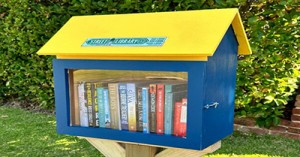
Street Libraries are small houses for books, installed outside your early learning service, accessible to the community, where people within the community can simply reach in and borrow a book that interests them; when they are done, they can return them back to the Street Library or pass them on to friends. The following article provides information on How Does A Street Library Work, Setting Up A Street Library, Getting Children Involved and more.

Positive phrases play a crucial role in children's growth because they help nurture their emotional, social, and cognitive development. The following article lists 30 positive phrases that educators should say to children.

MYTH: You have to attend work meetings after hours for free. FACT: You should be paid. MYTH: You need to pay for training. FACT: You are paid for those hours. Your employer must pay you for all hours you work and any compulsory time spent for work, including meetings and training.


Nature programs in early childhood settings are a fantastic way to connect children with the natural world and promote holistic development. The following article provides information on Key Aspects Of Nature Programs, Benefits of Nature Programs, How To Start A Nature Program, Nature Programs and The EYLF, Nature Activity Ideas and more.
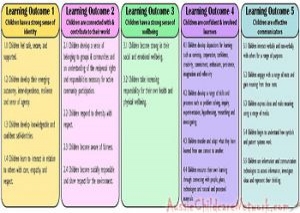 Here is the list of the EYLF Learning Outcomes that you can use as a guide or reference for your documentation and planning. The EYLF… Read More
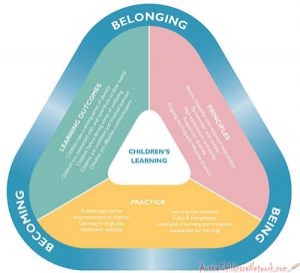 The EYLF is a guide which consists of Principles, Practices and 5 main Learning Outcomes along with each of their sub outcomes, based on identity,… Read More
 This is a guide on How to Write a Learning Story. It provides information on What Is A Learning Story, Writing A Learning Story, Sample… Read More
 One of the most important types of documentation methods that educators needs to be familiar with are “observations”. Observations are crucial for all early childhood… Read More
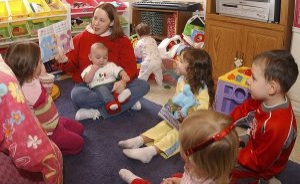 To support children achieve learning outcomes from the EYLF Framework, the following list gives educators examples of how to promote children's learning in each individual… Read More
 Reflective practice is learning from everyday situations and issues and concerns that arise which form part of our daily routine while working in an early… Read More
 When observing children, it's important that we use a range of different observation methods from running records, learning stories to photographs and work samples. Using… Read More
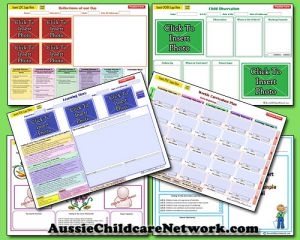 Within Australia, Programming and Planning is reflected and supported by the Early Years Learning Framework. Educators within early childhood settings, use the EYLF to guide… Read More
 This is a guide for educators on what to observe under each sub learning outcome from the EYLF Framework, when a child is engaged in… Read More
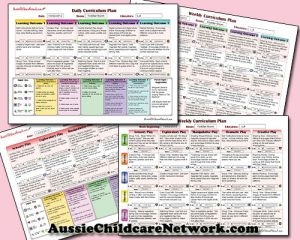 The Early Years Learning Framework describes the curriculum as “all the interactions, experiences, activities, routines and events, planned and unplanned, that occur in an environment… Read More

Under regulation 126 of the National Regulations, qualification requirements for educators at a centre-based service...
See more...
Language and literacy experiences for preschoolers aged 3 to 5 are all about sparking curiosity...
See more...
The Early Years Learning Framework (EYLF) is guided by the concepts of "Belonging, Being, and...
See more...