



In the heart of every early learning center, educators hold a uniquely powerful role—not just as teachers, but as advocates for children's safety and well-being. When unsafe, inappropriate, or unethical practices arise, educators are often the first to witness them. But too often, they feel powerless to act. It's time to shift that narrative.
The “under the roof” rule allows childcare centres to meet staffing ratios by counting all educators on-site, regardless of whether they are physically present in rooms with children. This means a centre may appear compliant on paper, even if individual rooms are understaffed.While originally intended to offer flexibility, educators say it’s now being used to cut corners—leaving children without adequate supervision and educators stretched beyond capacity.

An opt-in intimate care waiver is a formal consent form offered by some early childhood education and care (ECEC) services that allows families to choose whether male educators can perform intimate care tasks—such as nappy changes, toileting, or dressing—for their child. On the surface, this seems like a reasonable compromise: empower families, protect children, and avoid blanket bans on male staff. But scratch beneath the surface, and a deeper question emerges: Are we quietly institutionalizing gender discrimination?

In early childhood education, advocacy is not just about policy—it’s about protection. It’s about standing up for safe supervision, ethical staffing, and professional respect. When educators are unsupported, children are at risk. When educators are silenced, quality suffers. That’s why now, more than ever, we must speak. This article is a call to action. It’s a guide for educators who care deeply, who speak bravely, and who protect fiercely. Whether you're raising a concern for the first time or supporting a colleague who feels unheard, this resource will help you advocate with confidence, professionalism, and purpose—backed by the National Quality Standard, the Education and Care Services National Law and Regulations, and the Early Childhood Australia Code of Ethics.

The Four Eyes Policy—also known as the Four Eyes Principle or Two-Person Rule—is a safeguarding and accountability measure that requires two adults to be present or able to observe during certain activities involving children. In childcare, especially in high-risk contexts like intimate care or one-on-one interactions, this principle helps protect both children and educators.

The recent tragedy is a stark reminder that compliance alone is not enough. Despite holding a valid Working with Children Check, the alleged offender was able to exploit systemic gaps. It calls for a renewed commitment to proactive safeguarding, transparent communication, and a culture where children’s rights and voices are at the centre of everything we do. The The following article provides information on: Beyond Background Checks: Rethinking Recruitment, Active Supervision and Safe Environments, Clear Codes of Conduct, Mandatory and Ongoing Training, Empowering Children and Elevating Their Voices, Reassuring and Engaging Families, Leadership and Accountability, Advocating for Systemic Reform and more.

In light of the recent events, it's important for services to reassure families that this incident should not deter them from sending their child to care and from trusting in early childhood education.

In the wake of disturbing child abuse allegations at a Melbourne early learning centre, families across the country have been left shaken. These events cast long shadows—not just over the centre involved but over the broader early childhood education community. Understandably, parents are seeking clarity, reassurance, and transparency. The following article provides information on Why Reassurance is Crucial, Strategies to Reassure Families About Their Child Safety Concerns, Letter to Families, Creating a Safety Culture Beyond the Headlines and more.

Mindsets in early childhood are foundational beliefs children form about themselves, their abilities, and how they relate to the world. These beliefs begin to take shape through everyday experiences, interactions, and the language used by adults around them. The following article provides information on Key Mindsets, How Do These Mindsets Relate To The EYLF Outcomes, What Activities Can Foster These Mindsets In Children and more.

Beyond regulatory checks, recognising and responding to grooming behaviours is pivotal to protecting children’s well-being—something deeply anchored in EYLF Outcome 3: Children have a strong sense of well-being.
This guide supports educators to develop professional judgment, apply trauma-informed thinking, and foster environments where all children feel safe, secure, and respected.
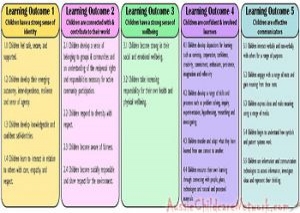 Here is the list of the EYLF Learning Outcomes that you can use as a guide or reference for your documentation and planning. The EYLF… Read More
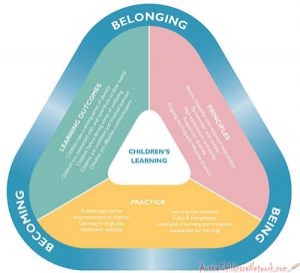 The EYLF is a guide which consists of Principles, Practices and 5 main Learning Outcomes along with each of their sub outcomes, based on identity,… Read More
 This is a guide on How to Write a Learning Story. It provides information on What Is A Learning Story, Writing A Learning Story, Sample… Read More
 One of the most important types of documentation methods that educators needs to be familiar with are “observations”. Observations are crucial for all early childhood… Read More
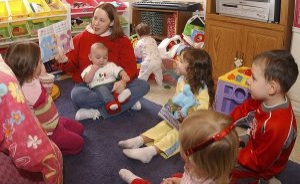 To support children achieve learning outcomes from the EYLF Framework, the following list gives educators examples of how to promote children's learning in each individual… Read More
 Reflective practice is learning from everyday situations and issues and concerns that arise which form part of our daily routine while working in an early… Read More
 When observing children, it's important that we use a range of different observation methods from running records, learning stories to photographs and work samples. Using… Read More
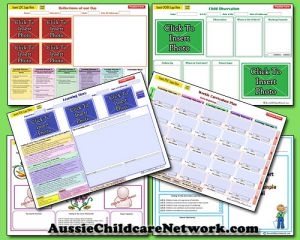 Within Australia, Programming and Planning is reflected and supported by the Early Years Learning Framework. Educators within early childhood settings, use the EYLF to guide… Read More
 This is a guide for educators on what to observe under each sub learning outcome from the EYLF Framework, when a child is engaged in… Read More
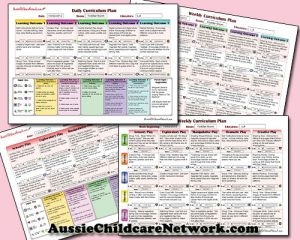 The Early Years Learning Framework describes the curriculum as “all the interactions, experiences, activities, routines and events, planned and unplanned, that occur in an environment… Read More

Play is more than just fun; it is a fundamental right enshrined in UNCRC Article...
See more...
The following provides a list of activity ideas for each sub-outcome of MTOP Outcome 2:...
See more...
A Montessori method is an educational approach characterised by learner choice, an enriching environment and...
See more...