


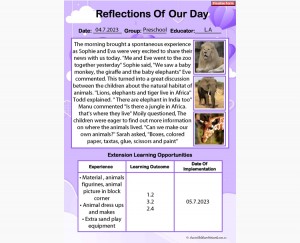
This template is used to evaluate planned and unplanned experiences which occurred throughout the day.
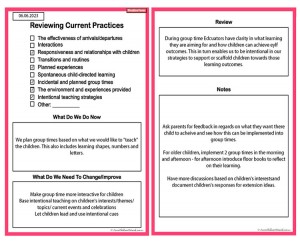
This template is for Educators to review practices within the learning environment.
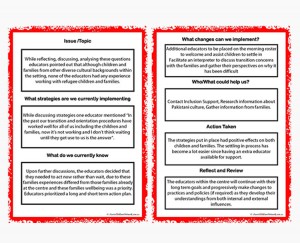
This template enables Educators to reflect, plan, act and review an issue or topic in order to guide decision-making.
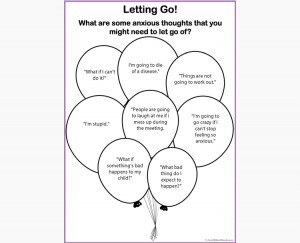
This template is for Educators who are having a tough day and need to "let go" of any negative thoughts that they may be having.
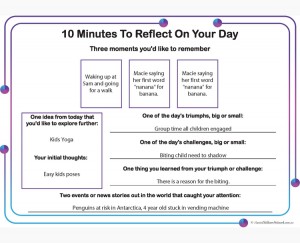
This template is for Educators to reflect on their day, to give themselves 10 minutes for reflection.

Critical reflection has been explained in the EYLF as reflective practices that focus on implications for equity and social justice. In the context of childcare, it involves examining and analysing events, experiences and practices from a range of perspectives to inform future planning and decision-making. The following article provides information on Engaging In Critical Reflections, Questions For Critical Reflections, Practicing Critical Reflections and more.
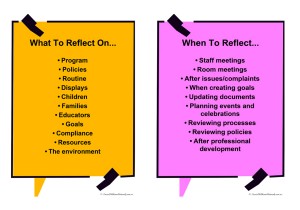
The Reflections In Action Posters provide reminders to educators about the process of reflecting. The posters give educators guidance on the reflection and include what to reflect on when to reflect, how to reflect and reflection recommendations. These are great to add to the staff room for Educators. Reflective practice is learning from everyday situations and issues and concerns that arise which form part of our daily routine while working in an early childhood setting.
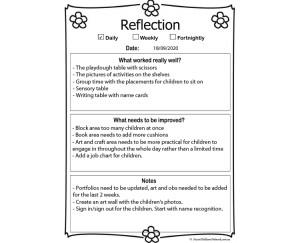
This template can be used by Educators to reflect on their practices.
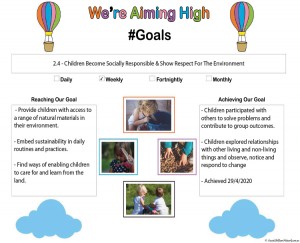
This template can be used to write the goals for children based on the approved frameworks.

As an Educator, it's important to assess and document children's learning. This refers to gathering and analysing information about what children know, can do and understand. It is part of a cycle that includes planning, documenting and evaluating children’s learning.
 The Children’s Services Award introduces a streamlined classification system and updated pay rates designed to better recognise the skills, qualifications, and responsibilities of early childhood… Read More
 The Children’s Services Award has 8 clear levels. These levels make it easier to understand where you fit, based on your experience, qualifications, and responsibilities.… Read More
 When working as a qualified early childhood teacher (with a university degree) within a service, your rate of pay will come from the Educational Services… Read More
 Diploma-qualified educators play a vital role in early childhood services, taking on responsibilities that range from supporting children’s learning and development to leading rooms and… Read More
 Certificate III qualified educators form the backbone of early childhood services, providing essential care and learning support for children across all settings. Their wages under… Read More
 Early Childhood Teachers (ECTs) play a vital role in leading curriculum and pedagogy in early learning settings. Regulation 272 of the Education and Care Services… Read More
 Children need safe and positive environments to learn and grow. To ensure this, services and educators need to ensure effective supervision at all times. The… Read More
 Floorbook is a documentation approach that uses a large book with blank pages for children to record different aspects of their learning in small groups… Read More
 In Norway and most other Scandinavian countries, children nap in the outdoors. According, to research outdoor sleeping not only promotes better daytime sleeping, but it… Read More
 From 2026, every educator covered by the Children’s Services Award will move into a new, simplified classification structure. Instead of navigating 30 different levels, educators… Read More

The "Health" theme introduces children to essential practices like washing hands, brushing teeth, and eating balanced...
See more...
The Community Child Care Fund (CCCF) includes Special Circumstances funding to support child care providers...
See more...
In early childhood education, our relationships with families are foundational but they’re not always easy...
See more...