



Early childhood services often require staff to arrive before their rostered start time, to set up rooms, prepare learning materials, or ensure safety checks are complete. But when does this preparation count as paid work?

When children are pressured to immediately say “sorry” after causing harm, they often learn that apologies are just words, a quick escape from discomfort. This teaches compliance, not compassion. It can unintentionally encourage dishonesty, as children may say the words without truly meaning them.

The Department of Education has introduced partial assessment and rating as a streamlined way to keep service ratings current under the NQS. This approach reduces preparation burden, allows quicker recognition of improvements, and ensures families have confidence in the quality of education and care services.

Family celebrations in early childhood services, Mother’s Day, Father’s Day, and Grandparents’ Day are more than just dates on the calendar. They are cultural anchors that help children express gratitude and build identity. Yet, as inclusivity policies evolve, services face a pressing question: should we rename these days to avoid exclusion or preserve them as distinct recognitions of caregiving roles?

The childcare sector in Australia includes both for‑profit providers (like G8 Education) and nonprofit services (often community or council‑run). While families often focus on fees and convenience, educators experience the differences most directly in their daily work, professional development, and job security.

Educators in early childhood services often carry immense responsibility, balancing compliance, pedagogy, and family engagement. While many appear resilient during peak stress periods, the effects often surface later. This phenomenon, known as a delayed stress response, can have significant consequences for well-being, service quality, and career longevity.

In recent weeks, many centres have begun noticing a new pressure point: educators struggling to attend shifts due to the rising cost of fuel. While this is completely understandable given the current economic climate, it is creating ripple effects across teams: coverage gaps, increased stress, and added strain on those stepping in to fill the roster.

Every time a shocking case of child abuse surfaces, the sector braces for another wave of reactionary policies. Device bans, endless training modules, and compliance paperwork pile up on educators who already uphold professional standards. Yet none of these measures address the core issue: ratios.

Bluey Listen Along offers audio-only versions of favorite episodes, mixed by Bluey’s sound designer, Dan Brumm. With twenty new episodes now available, including Markets, Taxi, Squash, Grandad, Pizza Girls, and Faceytalk. Educators have a fresh toolkit for creating calm, imaginative rest-time environments. Available free on the ABC KIDS Listen app.

From 27 February 2026, it is now a legal requirement that every decision and action in early childhood education and care services must put the safety, rights, and best interests of children first. This change elevates what was once a guiding principle under the NQF into a statutory duty.
 Open ended questions cannot be responded to with one word answers such as yes or no. These types of questions enables a child to provide… Read More
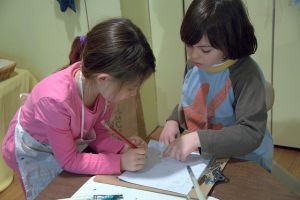 During your child’s preschool years, an important milestone begins to emerge. This is the development of pre-writing skills. Pre-writing skills are used to encourage, develop… Read More
 An Acknowledgment of the Country is a way of showing respect for the Traditional Owners and can be given by both non-Indigenous people and Aboriginal… Read More
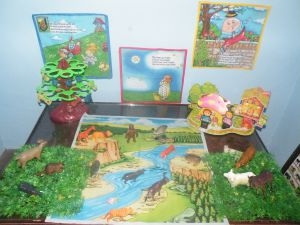 Open ended materials enables children to play freely. They are objects that have no rules to follow, use or function. Raw materials that can be… Read More
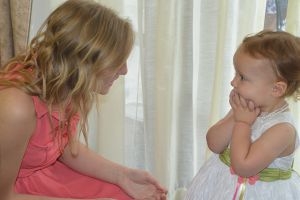 Language plays an important role in a child’s development. It enables a child to communicate effectively with their family, learn at school, socialize with friends,… Read More
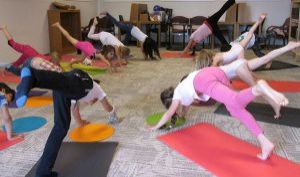 Like adults, children have to deal with their own stress in life. Moving house, starting a new school, preparing for a new sibling - these are… Read More
 Playdough is such a versatile material. It provides numerous benefits to children as they manipulate it, it is safe and soothing and provides children with… Read More
 Teaching children about sustainability enables them to appreciate and respect the natural environment. Early childhood services can provide meaningful hand on learning experiences in order… Read More
 Recycling is an important concept that teaches children to care for the environment. It encourages children to be responsible and show a growing appreciating for… Read More
 Incursions provide children with the opportunity to explore meaningful learning experiences in the comfort of their early childhood service. The following provides a directory of… Read More

In the rhythm of early childhood education, weekly programs often become the heartbeat of practice—a...
See more...
The following is a collection of science-themed “potion recipes” that blend sensory exploration, symbolic meaning...
See more...
In early childhood education, qualifications are often seen as the benchmark of quality. Diplomas, degrees...
See more...