



Effective communication can be understood as communication between two or more persons wherein the intended message is successfully delivered, received and understood. Since so much of the work in an early childhood education and care setting consists of listening, understanding and exchanging insights, effective communication makes up one of the key tools in the skill set for anyone running and/or leading a centre. The following article provides information on How Effective Communication Help, Basic Steps Of Effective Communication, Modes Of Communication, Difficult Conversations and more.
Emotional or physical distress can add to the challenges of caring for children in a service setting. Toddlers' brains are not yet developed to rationalize situations and regulate the emotions they feel. The following article provides strategies you can use to comfort and soothe a toddler.

A staff appraisal is a formal, systematic process of determining and reviewing the performance of early childhood educators over a period of time, usually a year.
Discover practical strategies, examples, and benefits of working with mixed‑age groups in early childhood settings to support learning and care.

The EYLF explains literacy as the children’s “capacity, confidence and disposition to use language in all its forms”. Thus literary includes not only talking, listening, viewing, reading and writing but a range of modes of communication including music, movement, dance, storytelling, visual arts, media and drama. The following provides information on the Literacy Rich Environment, Characteristics Of A Literacy-rich Environment, Components Of A Literacy-rich Environment, Strategies and more!

A waiver enables a service that is non-compliant with the National Regulations or an element of the National Quality Standard to be taken to be compliant, or not required to comply, during the period that the waiver is in force.

Among all the changes that impact a child’s early life, one of the most significant is the move from early education and care setting to a full-time school. The following article provides Educators with a guide on planning supportive transition practices for preschoolers going to primary school the following year including practical ideas to involve children, partnering with families, collaborating with other professionals, planning transition programs and more.
In practice, it has been found that educational resources like story books, often fall short of representing such gender equity. In respect to this, a study titled ’Gender Equity in Early Childhood Picture Books: A Cross-Cultural Study Of Frequently Read Picture Books In Early Childhood Classrooms in Australia and the United States", investigated the nature of gender representation in children’s literature in eight early learning centres in Australia and the United States. The following article provides information on the Research, Data Analysis, Research Findings, What Services Can Do and more.
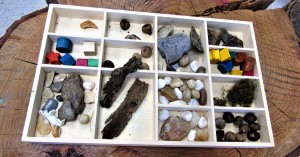
Loose parts is a term used in early childhood learning to include such objects and materials that kids can move, control and change in numerous ways. Loose parts provided an opportunity for children to express creativity through the use of materials that can be manipulated, transformed, and created through self-guided play. The following article provides information of Examples of Loose Parts, The Benefits of Loose Parts, Links To Theorists and The EYLF, Loose Parts Activity Ideas and more.

Writing observations for babies and young children enables us to observe the countless opportunities for growth and development that take place. The following article provides information on Writing Observations For Babies, What To Observe, Sample Observation For A Baby, Methods For Documenting and more.
 Open ended questions cannot be responded to with one word answers such as yes or no. These types of questions enables a child to provide… Read More
 During your child’s preschool years, an important milestone begins to emerge. This is the development of pre-writing skills. Pre-writing skills are used to encourage, develop… Read More
 An Acknowledgment of the Country is a way of showing respect for the Traditional Owners and can be given by both non-Indigenous people and Aboriginal… Read More
 Open ended materials enables children to play freely. They are objects that have no rules to follow, use or function. Raw materials that can be… Read More
 Language plays an important role in a child’s development. It enables a child to communicate effectively with their family, learn at school, socialize with friends,… Read More
 Like adults, children have to deal with their own stress in life. Moving house, starting a new school, preparing for a new sibling - these are… Read More
 Playdough is such a versatile material. It provides numerous benefits to children as they manipulate it, it is safe and soothing and provides children with… Read More
 Teaching children about sustainability enables them to appreciate and respect the natural environment. Early childhood services can provide meaningful hand on learning experiences in order… Read More
 Recycling is an important concept that teaches children to care for the environment. It encourages children to be responsible and show a growing appreciating for… Read More
 Incursions provide children with the opportunity to explore meaningful learning experiences in the comfort of their early childhood service. The following provides a directory of… Read More

Q: A strengths-based approach focuses on what children can do, rather than what they lack...
See more...
Whether you are reflecting on yourself or reflecting on others, reflective practices provide you with...
See more...
Learning about insects in an early childhood environment offers numerous benefits for young children. The...
See more...