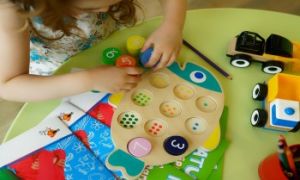
The home corner is more than a play space—it’s a mirror of children’s lived experiences and a stage for imagination, identity, and social learning. By re-enacting routines, caring for “family members,” and experimenting with roles, children build empathy, language, and problem-solving skills. For educators, the home corner is a window into children’s understanding of relationships, culture, and community.
Why It Matters
- Familiarity & Comfort: Children often gravitate to the home corner because it mirrors their everyday life. It offers a sense of security, especially during transitions or when everything feels new.
- Imaginative Play: It allows children to reenact familiar routines (cooking, cleaning, caring for babies) while also inventing new scenarios. This builds creativity and problem-solving skills.
- Social Development: Role-play fosters cooperation, negotiation, and empathy. Children learn to share roles, take turns, and understand perspectives.
- Language Growth: Everyday dialogue—“Can you make me tea?” or “I’ll be the baby”—helps expand vocabulary and communication.
- Cultural Identity: A well-resourced home corner can reflect diverse family structures, traditions, and routines, helping children see themselves represented.
Key Features of an Effective Home Corner
| Element | Why It’s Important | Examples |
|---|---|---|
| Play Kitchen | Central to role play, encourages cooking and serving scenarios | Stove, sink, pots, pans |
| Soft Furnishings | Creates comfort and realism | Cushions, small table, chairs |
| Props & Accessories | Sparks imagination and extends play | Phones, shopping bags, food items |
| Dress-Up Clothes | Supports role play and identity exploration | Aprons, scarves, hats |
| Cultural Representation | Promotes inclusion and belonging | Utensils, foods, fabrics from different cultures |
| Open-Ended Materials | Encourages creativity |
Cardboard boxes, recycled containers |
Practical Strategies for Educators
- Rotate Props Regularly
Keep play fresh by introducing seasonal items (picnic sets in summer, blankets in winter) or thematic props (menus, shopping lists, recipe cards). - Include Real-Life Materials
Add recycled containers, grocery catalogues, or cooking utensils to connect play with literacy and numeracy. - Reflect Diversity
Provide culturally inclusive items—different cooking tools, fabrics, or food models—to represent the families in your community. - Encourage Role Flexibility
Invite children to swap roles (parent, child, visitor, shopkeeper) to broaden their perspective and negotiation skills. - Link to Curriculum
Use the home corner to explore EYLF outcomes: identity (belonging), communication (being), and contribution (becoming).
Photo Ideas

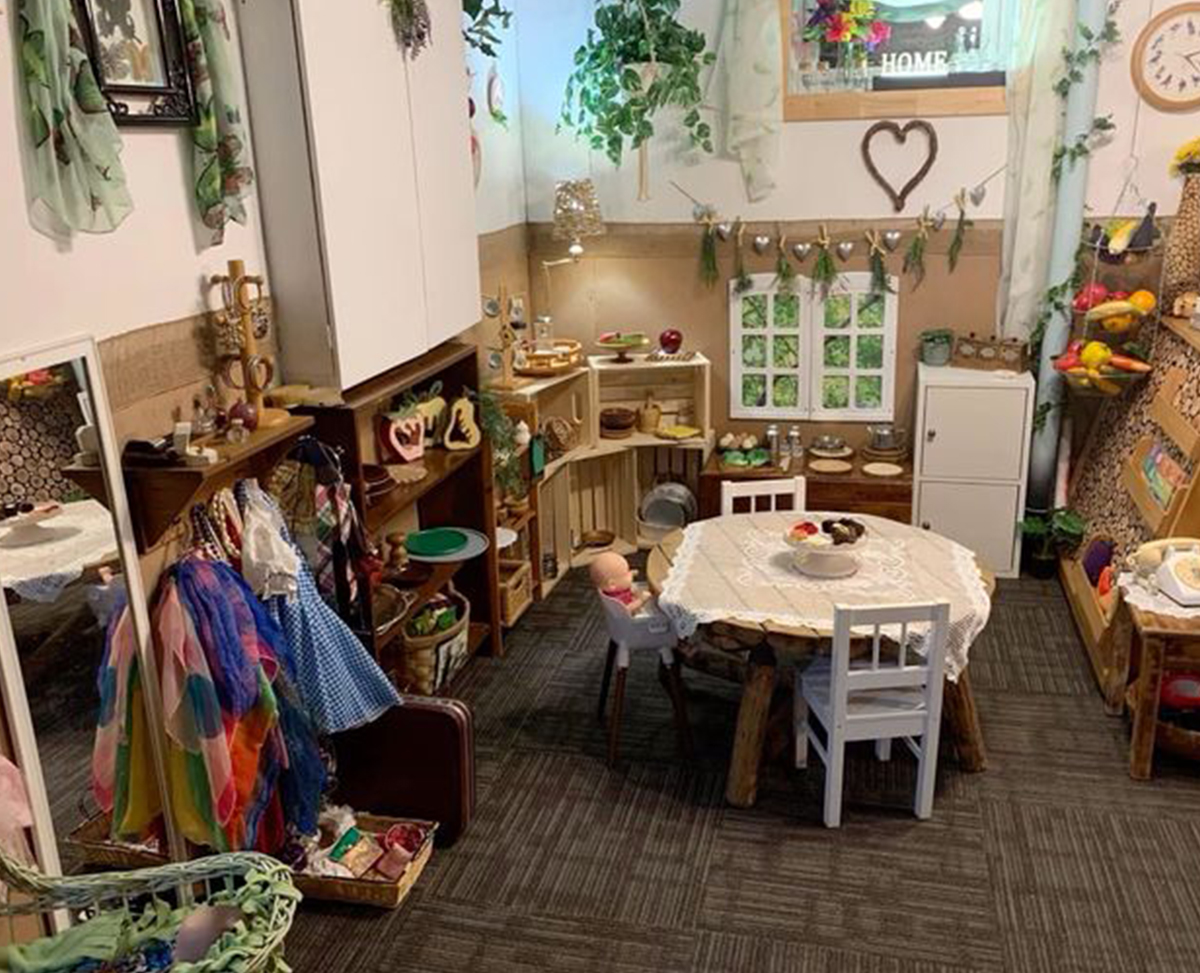

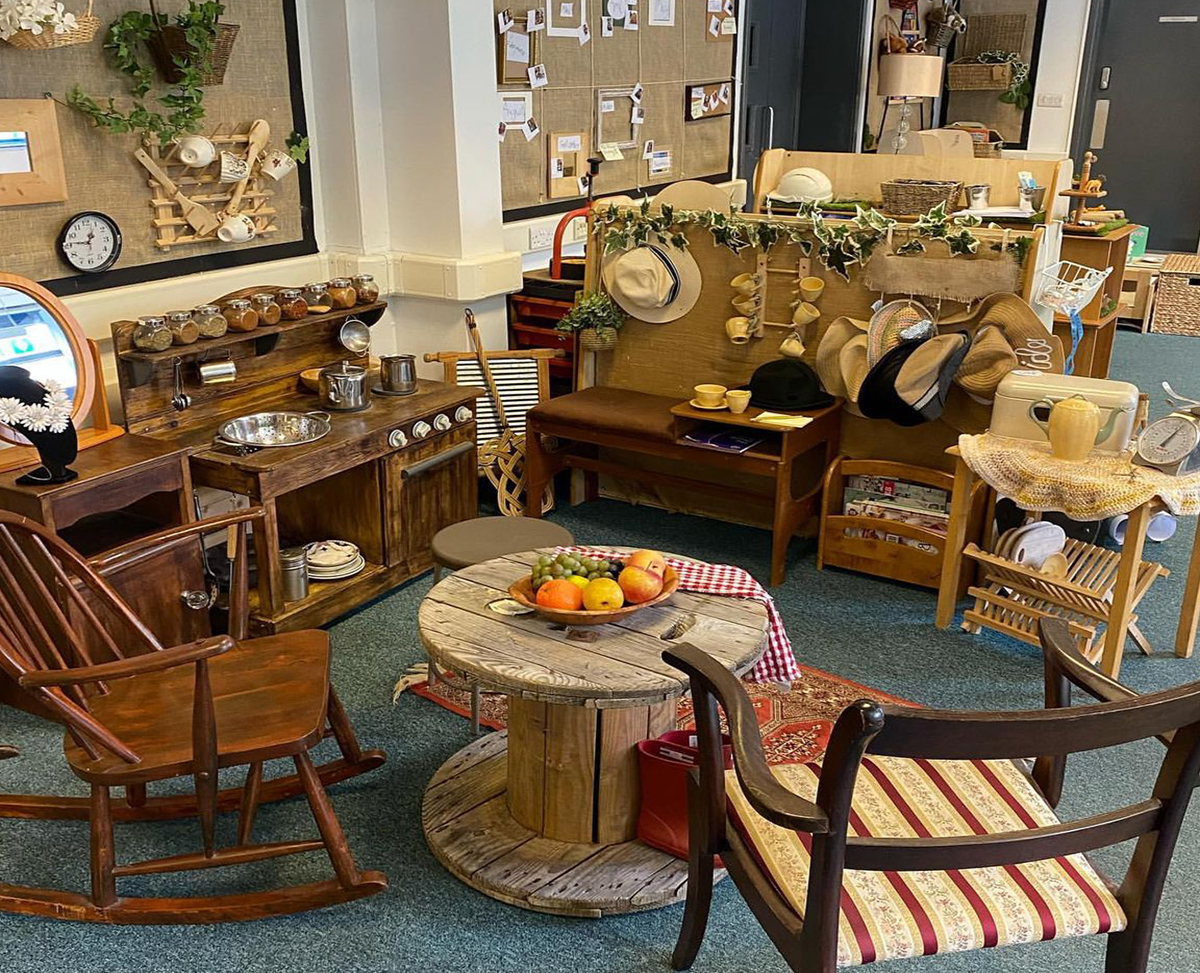
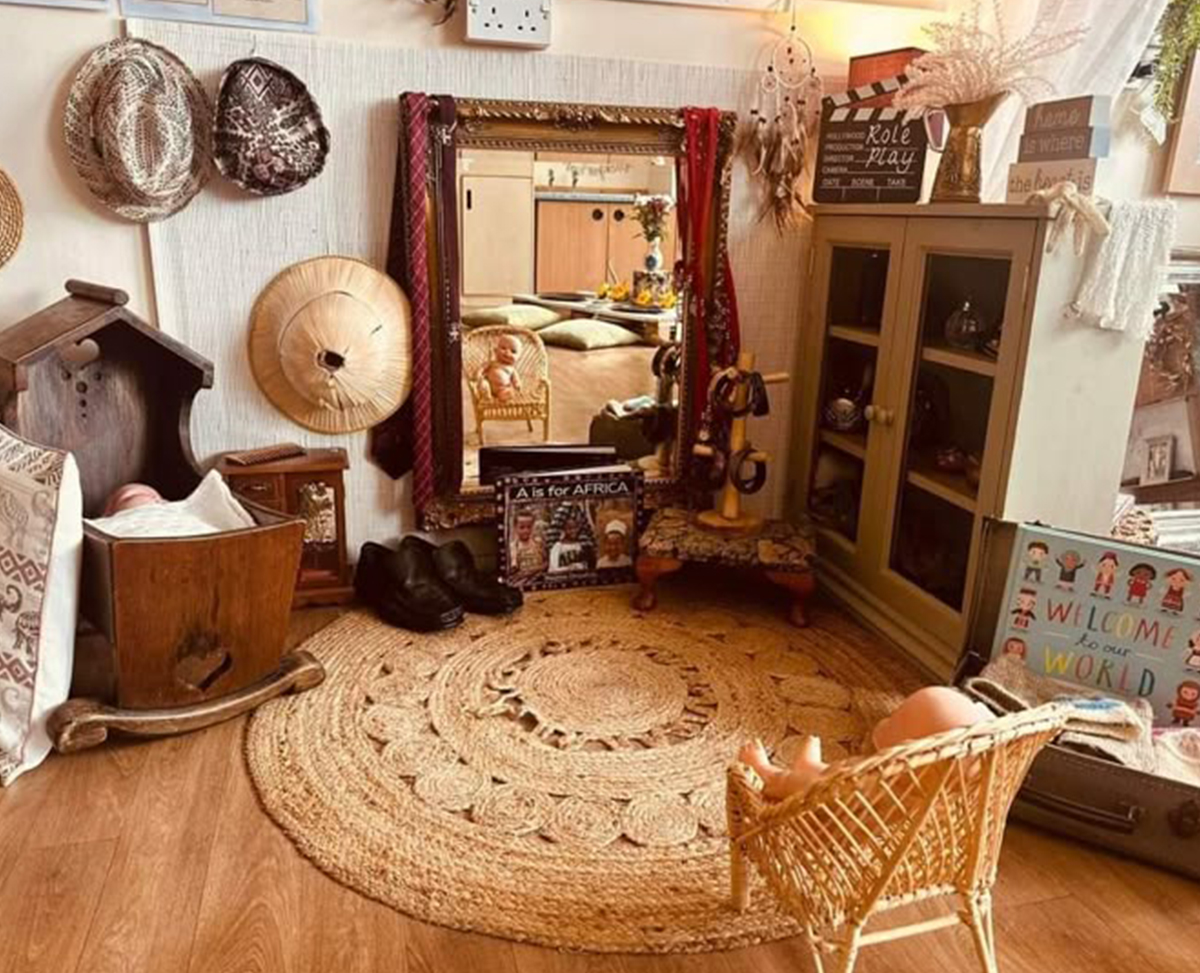


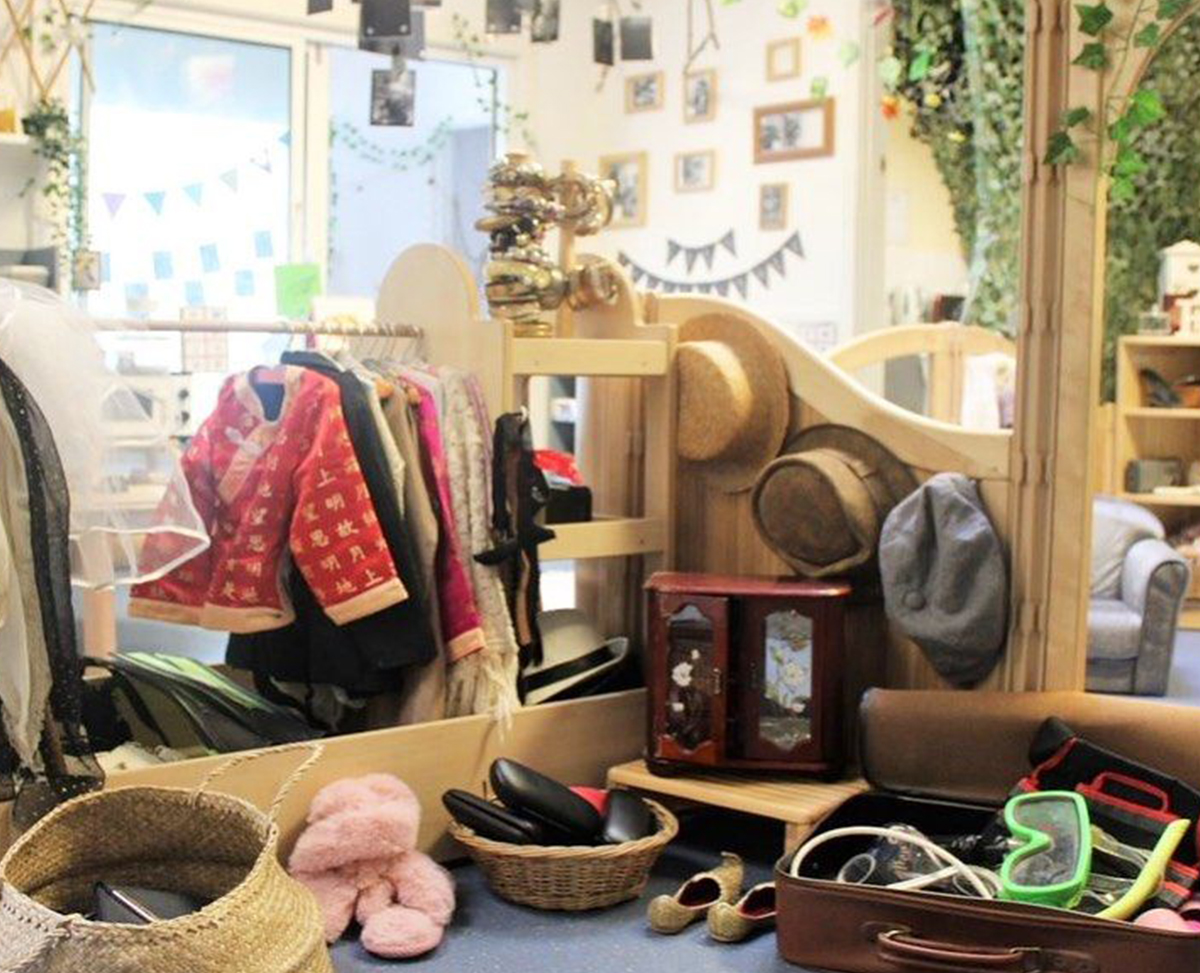


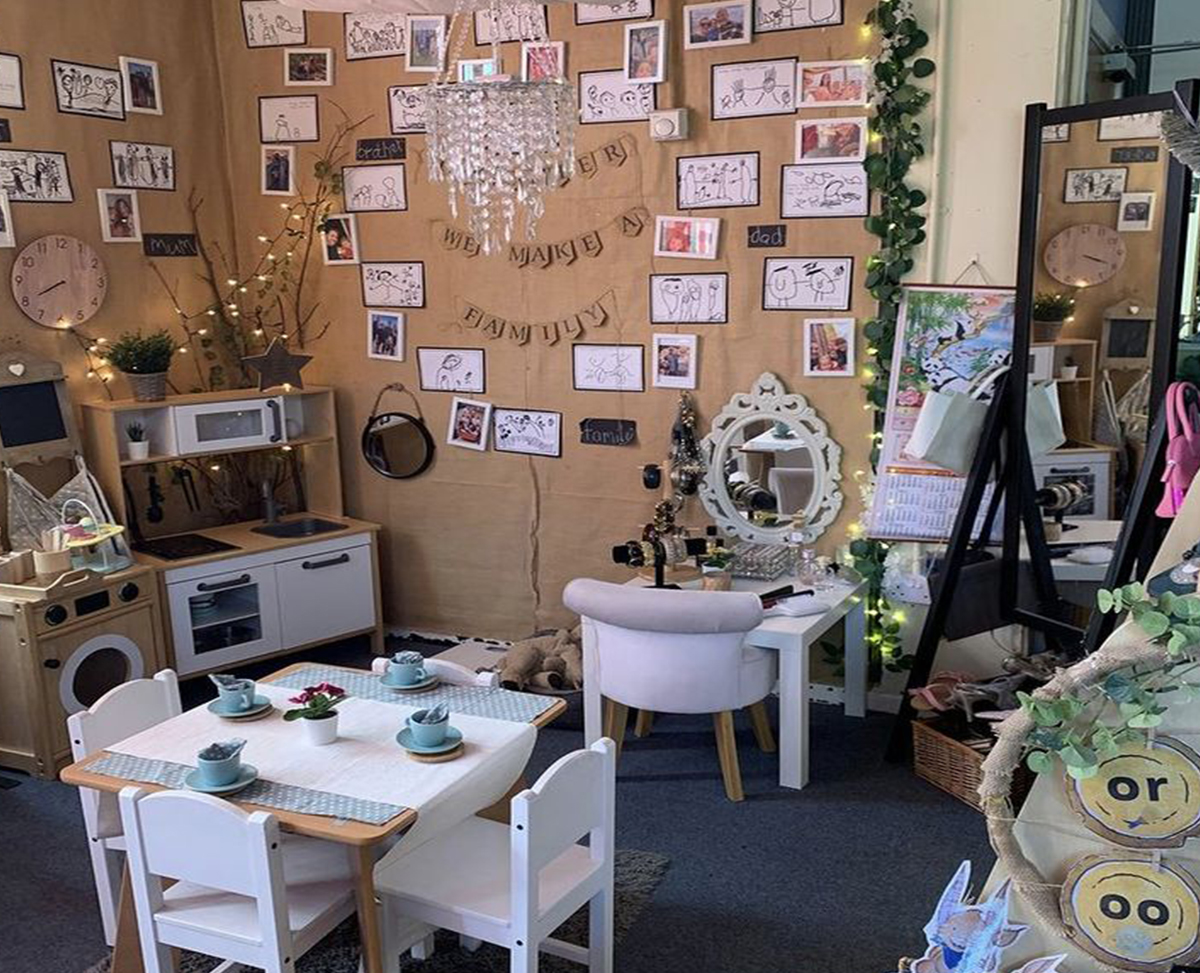
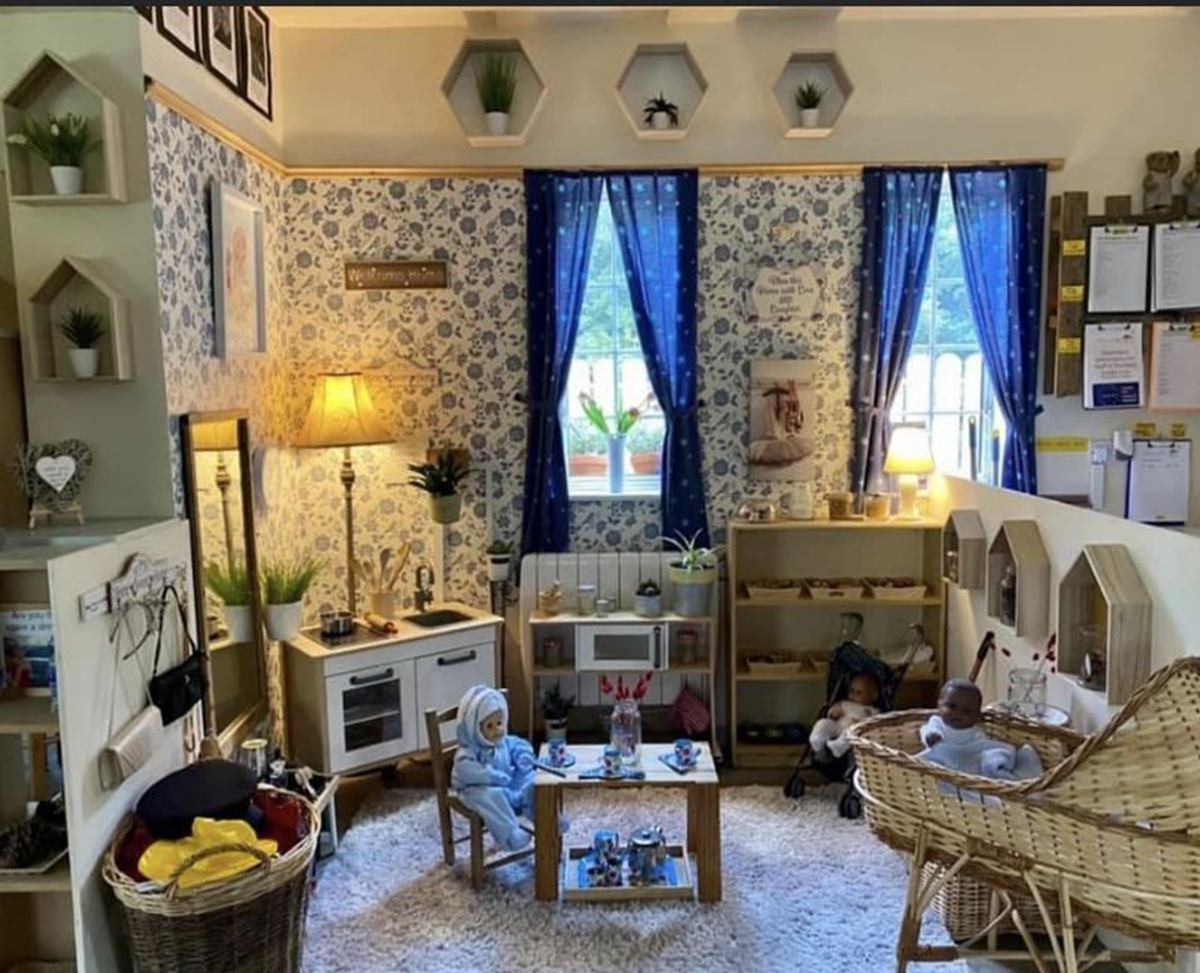


Hints for Extending Play
- Add Literacy Links: Place recipe cards, shopping lists, or “family diaries” in the corner.
- Numeracy in Action: Use play money, measuring cups, or timers to embed maths concepts.
- Community Connections: Transform the home corner into a café, doctor’s surgery, or post office to explore wider social roles.
- Sustainability Focus: Include reusable bags, compost bins, or pretend recycling stations to model eco-friendly practices.
Reflection Prompts for Educators
- How does the home corner reflect the diversity of families in your service?
- What language opportunities are emerging during role play?
- How can you scaffold children’s play to deepen empathy and cooperation?
- Are props and resources inclusive, sustainable, and representative of your community?
The home corner is a living curriculum space where children rehearse life, test ideas, and build relationships. With thoughtful design and intentional educator support, it becomes a powerful tool for identity, inclusion, and joyful learning.
Image Credits:
Image 1 - Marleen Roelofsen, Pinterest
Image 2 - Pre-K Printable Fun, Pinterest
Image 3 - GypseyDiva, Pinterest
Image 4 - Shauna Smith, Pinterest
Image 5 - Emma Garcia, Pinterest
Image 6 - Rose McInnes, Pinterest
Image 7 - Liz L., Pinterest
Image 8 - Marie S, Pinterest
Image 9 - Rose McInnes, Pinterest
Image 10 - Rose McInnes, Pinterest
Image 11 – Kirstine Beeley Planning For Potential, Pinterest
Image 12 - Rose McInnes, Pinterest
Image 13 - No Name, Pinterest
Image 14 - Tamara Ritenberg, Pinterest
Image 15 - Rose McInnes, Pinterest
Image 16 - Sylvie, Pinterest
Further Reading
Benefits Of Home Corner
Interest Areas In Childcare
How Pretend Play Supports Children's Learning
Incorporating Creative Play In The EYLF Learning Outcomes
Resources For Dramatic Play Centre




 The Children’s Services Award introduces a streamlined classification system and updated pay rates designed to better recognise the skills, qualifications, and responsibilities of early childhood
 The Children’s Services Award has 8 clear levels. These levels make it easier to understand where you fit, based on your experience, qualifications, and responsibilities.
 When working as a qualified early childhood teacher (with a university degree) within a service, your rate of pay will come from the Educational Services
 Diploma-qualified educators play a vital role in early childhood services, taking on responsibilities that range from supporting children’s learning and development to leading rooms and
 Certificate III qualified educators form the backbone of early childhood services, providing essential care and learning support for children across all settings. Their wages under
 Early Childhood Teachers (ECTs) play a vital role in leading curriculum and pedagogy in early learning settings. Regulation 272 of the Education and Care Services
 Discover how school readiness programs support children’s independence, confidence, and skills for a successful transition into primary school.
 When an Educator is not performing their tasks or responsibilities at best practice, these issues need to be addressed for the Educator to understand where
 Educators can maximise tax deductions by claiming classroom supplies, training, union fees, and home office costs this financial year.
 A staff appraisal is a formal, systematic process of determining and reviewing the performance of early childhood educators over a period of time, usually a