


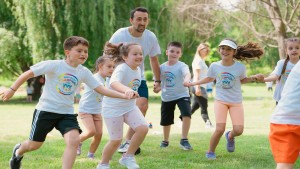
Play in OOSH settings is more than just fun; it is a powerful tool for children’s social, emotional, and cognitive growth. As educators, reflecting on play experiences helps us understand how children are learning, interacting, and developing in these settings.
Critical reflection ensures that play opportunities are inclusive, meaningful, and aligned with both developmental needs and program goals. By asking thoughtful questions, educators can evaluate the quality of play and make informed decisions to enhance children’s experiences.
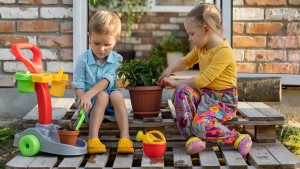
Sustainability isn’t just about recycling; it’s about helping children understand their role as caretakers of the planet. In OOSH settings, educators have a unique opportunity to weave eco-friendly practices into everyday routines, turning play and learning into powerful lessons about responsibility and respect for the environment.
The following mapped activities are grouped into five key areas: Recycling & Reuse, Energy & Resources, Nature & Gardening, Biodiversity & Care, and Creative & Reflective, each with six practical ideas to inspire children and educators alike.

At present, “under the roof” ratios are not yet formally abolished in law, but Education Ministers announced in February 2026 that they intend to remove this practice. ACECQA has flagged that ratios will soon be required per room, with educators counted only when physically present and supervising children.
Until the National Law and Regulations are officially amended and ACECQA issues binding guidance, services using service‑wide calculations are not breaching current regulations, provided they maintain adequate supervision.

On July 15, educators are once again being called to walk off the job, demanding a 15% wage increase. It’s a familiar rallying cry, one we’ve heard in previous years, with little lasting change. Yet while wages matter, the government has already acted through the gender pay equity evaluation, with increases scheduled over the next five years. The real crisis isn’t pay. It’s ratios.
Every abuse case, every supervision failure, every moment when educators are stretched too thin points to one undeniable truth: without safe ratios, children are at risk and educators are set up to fail. Walking off for wages already promised risks missing the bigger fight. If we want to transform early childhood education, protect children, and restore trust, our collective energy must shift toward demanding ratio reform.

Negotiation is not just about money; it’s about recognition. As an ECT, you bring expertise, leadership, and stability to services. By approaching wage discussions with confidence and professionalism, you can ensure their contributions are valued and sustained.

Risky play in OOSH services is encouraged as a way to build children’s confidence, resilience, and risk-assessment skills, but it must be balanced with structured risk management and compliance practices.
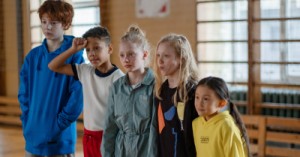
In Out of School Hours care, educators manage large groups of children in dynamic environments where safety, belonging, and engagement must coexist. One of the most essential, yet often contested, practices is the roll call and headcount.
This article explores practical strategies to help OOSH educators balance safety with connection, reduce parent complaints, and transform roll call into a positive ritual.

For OOSH (Out of School Hours) children, Reconciliation Week topics should focus on identity, respect, caring for Country, storytelling, friendship, and truth-telling. These themes help children understand Australia’s shared history and celebrate Aboriginal and Torres Strait Islander cultures in age‑appropriate ways.

Reconciliation in early childhood is not a one‑week event; it’s a daily practice. Embedding reconciliation means weaving respect, truth‑telling, and cultural awareness into routines, environments, and relationships. For educators, this is about creating spaces where Aboriginal and Torres Strait Islander perspectives are visible, valued, and celebrated.

In early childhood, the playground is more than a place to play; it's a living classroom. Caring for Country invites children to see the land as a friend, not just a space. Through simple, sensory experiences, educators can nurture respect for nature and embed Aboriginal and Torres Strait Islander perspectives in everyday play.
 Open ended questions cannot be responded to with one word answers such as yes or no. These types of questions enables a child to provide… Read More
 During your child’s preschool years, an important milestone begins to emerge. This is the development of pre-writing skills. Pre-writing skills are used to encourage, develop… Read More
 An Acknowledgment of the Country is a way of showing respect for the Traditional Owners and can be given by both non-Indigenous people and Aboriginal… Read More
 Open ended materials enables children to play freely. They are objects that have no rules to follow, use or function. Raw materials that can be… Read More
 Language plays an important role in a child’s development. It enables a child to communicate effectively with their family, learn at school, socialize with friends,… Read More
 Like adults, children have to deal with their own stress in life. Moving house, starting a new school, preparing for a new sibling - these are… Read More
 Playdough is such a versatile material. It provides numerous benefits to children as they manipulate it, it is safe and soothing and provides children with… Read More
 Teaching children about sustainability enables them to appreciate and respect the natural environment. Early childhood services can provide meaningful hand on learning experiences in order… Read More
 Recycling is an important concept that teaches children to care for the environment. It encourages children to be responsible and show a growing appreciating for… Read More
 Incursions provide children with the opportunity to explore meaningful learning experiences in the comfort of their early childhood service. The following provides a directory of… Read More
When children move into early childhood settings they broaden their experiences as participants in different...
See more...
Inquiry-based learning sparks curiosity, critical thinking, and collaboration in early childhood through hands-on exploration and...
See more...
Creating a supportive environment where children feel safe to express their emotions is crucial for...
See more...