If observations aren’t meant to be long, complicated, and constant, the next logical question is, why does the rest of the planning cycle feel so heavy?
Just like observations, the planning cycle itself is not the workload. The National Quality Framework gives us a simple, elegant loop: notice, plan, implement, and reflect.
What’s blown out of proportion are the performance tasks we’ve layered on top—multiple formats, duplicated evidence, tick‑box extensions, and reflections written to impress assessors rather than support children.
The problem isn’t Observe → Plan → Implement → Reflect.
The problem is everything we’ve added on top.
What Planning Actually Requires (And What It Doesn’t)
At its core, planning is simply
- Using what you’ve noticed about children’s learning and interests
- Deciding how you’ll respond
- Putting that response into practice
- Checking how it went and what’s next
That’s it.
You do not need:
- A separate “extension” form for every observation
- Multiple learning outcomes listed for every experience
- A new activity for every child, every week
- Colour‑coded webs, plus mind maps, plus group plans, plus individual plans
- Three different versions of the same plan (room program, ILP/PLP, digital platform)
If the plan shows what you’ll do differently because of what you saw, it’s enough.
The Minimal Planning Cycle in Practice
In the first article, we simplified observations. Let’s now simplify the whole loop:
-
Observe
A brief, meaningful note.- “Aria is pretending to be a vet—rich role play, language.”
-
Plan
One simple response.- “Add vet props to dramatic play + animal x‑rays.”
-
Implement
Do it. No extra form required. -
Reflect
A short comment.- “Aria led peers in role play—extend with appointment book.”
This can live:
- On the program
- On a weekly “Noticing → Planning” sheet
- On a whiteboard photo you save
- In a simple digital note
No extra templates needed.
Where We’re Over‑Complicating Things
Educators aren’t overwhelmed because the planning cycle is complex. They’re overwhelmed because:
- Every observation becomes a “must‑have” extension, even when the learning is ongoing, not incomplete.
- Every plan is expected to hit multiple outcomes instead of one clear purpose.
- Every part of the cycle is documented separately—observation, analysis, plan, implementation, evaluation—when one or two joined‑up records would do.
- Room programs are written for assessors, not for the team that actually uses them.
The result? Educators spend more time proving they’ve planned than actually planning together.
What Assessors Really Need to See
Just as assessors accept minimal observations, they also accept streamlined planning when it’s:
- Linked to real observations or group needs
- Clearly intentional (not random activities)
- Implemented in practice
- Reflected on in some way (even briefly)
- Ongoing, not one‑off
They are not looking for:
- Four versions of the same plan
- Perfectly formatted boxes
- A follow‑up for every single jotting
- “Extensions” that exist only on paper
They’re looking for a living cycle, not a pile of forms.
How to Lighten the Load Without Losing Quality
You can keep quality high and paperwork low by:
- Combining steps
- Observation, interpretation, and plan in one short note.
- Using group planning where it makes sense
- One experience can respond to several children’s needs.
- Dropping automatic follow‑ups
- Not every observation needs a written extension; sometimes the response is “continue—this is working.”
- Letting the program be the “plan”
- If your weekly program clearly shows how you’re responding to children, you don’t need separate extension sheets.
- Reflecting in short bursts
- A quick daily/weekly reflection is enough: “What worked? What didn’t? What’s next?”
Less documenting the cycle. More living the cycle.
From Compliance‑Driven to Child‑Driven
When we strip back performance tasks and return to the core cycle, something important happens:
- Planning meetings shorten
- Programs become clearer
- Educators recognise their own thinking in the documentation
- Children’s voices stand out more than the formatting
- Teams feel more in control, less behind
The planning cycle stops being a burden and starts doing what it was always meant to do: support thoughtful, responsive practice.
Where This Leaves Us
If “Observations Aren’t the Workload, Over‑Documentation Is” was the first step, this is the second:
- The planning cycle is not the enemy.
- Our add‑ons are.
By trusting professional judgment, combining steps, and letting one piece of evidence do more work, we can meet every regulatory requirement without burying educators in paperwork.
Less proving. More thinking.
Less performing. More planning.
Less paper, more presence with children.
Further Reading
Observations in Childcare
Different Types Of Observation Methods
Observations in Childcare
Different Types Of Observation Methods
Q: What Is A Narrative Observation
Q: How Do I Come Up With Extension Ideas During Observations
Q: Do All Observations and Learning Stories Require a Follow-Up?
Simplified Observation & Planning Cycles
Q: How Do I Write An Observation?
Step-by-Step Guide to Writing an Observation


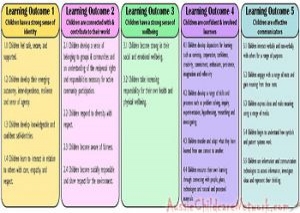 Here is the list of the EYLF Learning Outcomes that you can use as a guide or reference for your documentation and planning. The EYLF
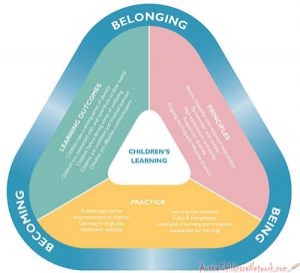 The EYLF is a guide which consists of Principles, Practices and 5 main Learning Outcomes along with each of their sub outcomes, based on identity,
 This is a guide on How to Write a Learning Story. It provides information on What Is A Learning Story, Writing A Learning Story, Sample
 One of the most important types of documentation methods that educators needs to be familiar with are “observations”. Observations are crucial for all early childhood
 To support children achieve learning outcomes from the EYLF Framework, the following list gives educators examples of how to promote children's learning in each individual
 Reflective practice is learning from everyday situations and issues and concerns that arise which form part of our daily routine while working in an early
 When observing children, it's important that we use a range of different observation methods from running records, learning stories to photographs and work samples. Using
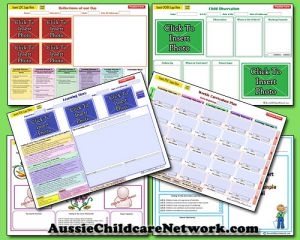 Within Australia, Programming and Planning is reflected and supported by the Early Years Learning Framework. Educators within early childhood settings, use the EYLF to guide
 This is a guide for educators on what to observe under each sub learning outcome from the EYLF Framework, when a child is engaged in
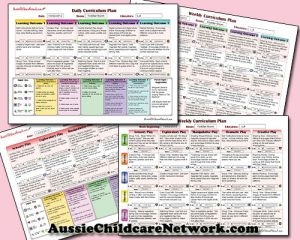 The Early Years Learning Framework describes the curriculum as “all the interactions, experiences, activities, routines and events, planned and unplanned, that occur in an environment