


Discover the childcare planning cycle made simple, from observations to follow-ups, with practical examples for new educators.
National Reconciliation Week (27 May – 3 June) invites children and educators to celebrate the shared story of Australia and deepen understanding of Aboriginal and Torres Strait Islander cultures. In early childhood, this begins with simple, meaningful experiences: listening to stories, exploring nature, creating art, and learning about respect and belonging.
The Reconciliation Week Lesson Plan helps educators embed reconciliation through play‑based learning, group discussions, and interest‑area exploration. Each day builds on the theme “All In," encouraging children to see themselves as part of a caring, respectful community.
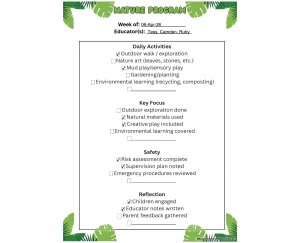
This template is to be used for a nature program.

This template is to be used as an outdoor program plan.

This template can be used in OSHC settings.

If observations aren’t meant to be long, complicated, and constant, the next logical question is, why does the rest of the planning cycle feel so heavy?
Just like observations, the planning cycle itself is not the workload. The National Quality Framework gives us a simple, elegant loop: notice, plan, implement, and reflect.
What’s blown out of proportion are the performance tasks we’ve layered on top—multiple formats, duplicated evidence, tick‑box extensions, and reflections written to impress assessors rather than support children.
The problem isn’t Observe → Plan → Implement → Reflect.
The problem is everything we’ve added on top.
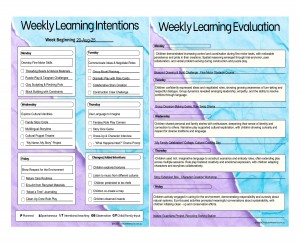
This template can be used as a weekly plan.
In early childhood education, observation and planning cycles are meant to illuminate learning—not drown educators in endless paperwork. Yet for many services, these cycles have become overwhelming, rigid, and detached from everyday practice. The solution isn’t to lower standards but to design systems that reflect real moments, empower educator voice, and prioritize children's growth without burning out the people guiding it.
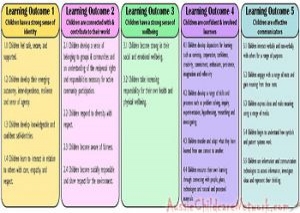 Here is the list of the EYLF Learning Outcomes that you can use as a guide or reference for your documentation and planning. The EYLF… Read More
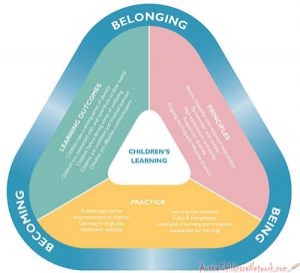 The EYLF is a guide which consists of Principles, Practices and 5 main Learning Outcomes along with each of their sub outcomes, based on identity,… Read More
 This is a guide on How to Write a Learning Story. It provides information on What Is A Learning Story, Writing A Learning Story, Sample… Read More
 One of the most important types of documentation methods that educators needs to be familiar with are “observations”. Observations are crucial for all early childhood… Read More
 To support children achieve learning outcomes from the EYLF Framework, the following list gives educators examples of how to promote children's learning in each individual… Read More
 Reflective practice is learning from everyday situations and issues and concerns that arise which form part of our daily routine while working in an early… Read More
 When observing children, it's important that we use a range of different observation methods from running records, learning stories to photographs and work samples. Using… Read More
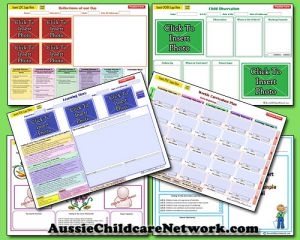 Within Australia, Programming and Planning is reflected and supported by the Early Years Learning Framework. Educators within early childhood settings, use the EYLF to guide… Read More
 This is a guide for educators on what to observe under each sub learning outcome from the EYLF Framework, when a child is engaged in… Read More
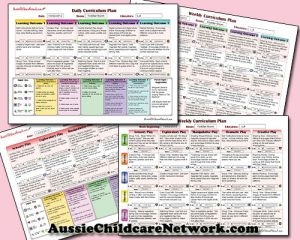 The Early Years Learning Framework describes the curriculum as “all the interactions, experiences, activities, routines and events, planned and unplanned, that occur in an environment… Read More
Duty of care is more than a legal obligation—it is the foundation of safe, ethical...
See more...
Earth Chakra Day is celebrated on the 12th of January. The following provides information About...
See more...
Easter is just around the corner. What can be easier to make them learn about...
See more...