Observing children has never been the problem. Educators are natural noticers—tuned into the small sparks, the emerging skills, the quiet breakthroughs. What drains time and energy isn’t the observing but the unnecessary layers of documentation that have crept into practice over the years. Long stories, duplicated uploads, rigid templates, and quota‑driven expectations have turned a simple professional tool into a paperwork burden.
But the truth is simple: meaningful observations are brief, flexible, and entirely manageable. When we strip away the excess, we return to what the planning cycle was always meant to be—a clear, responsive loop that supports children’s learning and frees educators to do what they do best.
What Counts as an Observation?
An observation is any brief record of what a child did, said, showed, or attempted that helps you understand their learning or interests.
It can be:
- A 1–2 sentence anecdotal note
- A sticky note
- A quick jot on the weekly program
- A photo with a short caption
- A sample of work with a sentence
- A brief quote from the child
- A dot point in your notebook
If it informs planning, it counts.
What Does NOT Count as Required?
You do not need:
- Long learning stories
- Weekly observations per child
- Set quotas
- Paragraphs of analysis
- Photos for every child
- Digital uploads for every moment
- Duplicated evidence across platforms
The National Regulations do not prescribe format, length, or frequency.
The Minimal Observation Cycle (Fully Compliant)
This is the simplest way to meet National Regulations (73–76) and EYLF expectations without unnecessary paperwork:
-
Observe (Noticing)
A brief note capturing what the child did, said, or showed.
Example: “Ava sorted rocks by size — emerging classification skills.” -
Plan (Responding)
Use the observation to plan a simple, intentional next step.
Example: “Extend Ava’s interest → add sorting trays + magnifiers.” -
Implement (Doing)
Offer the planned experience during the week.
(No extra documentation required — it’s simply your practice.) -
Reflect (Reviewing)
A short comment about how the plan went.
Example: “Ava engaged deeply — continue next week.”
If The Above Is Fully Compliant Why Does EYLF State We Need To Use A Variety Of Different Observation Methods?
Why the Minimal Observation Cycle is Fully Compliant
The cycle of Observe → Plan → Implement → Reflect is enough to meet compliance because:
- Regulations require ongoing, meaningful documentation that informs planning.
- They do not prescribe format, length, or frequency.
- A short note, sticky jotting, or brief reflection is sufficient if it shows what the child did, what it means, and how you’ll respond.
So yes—your minimal cycle is fully compliant.
Why EYLF Mentions “Variety of Methods”
The EYLF guidance about using different methods (anecdotal records, jottings, work samples, photos, quotes, etc.) is not about extra paperwork or quotas. It’s about flexibility and responsiveness:
- Children learn in diverse ways → Some learning is best captured in a photo, others in a quick quote, others in a work sample.
- Educators have different styles → One educator may prefer jotting notes, another may use photos or floorbooks.
- Families engage differently → Some parents connect more with visual documentation, others with written notes.
- Professional judgment → EYLF encourages educators to choose the method that best captures the learning moment, not to use all methods at once.
How They Work Together
- The Minimal Observation Cycle shows the process (notice → respond → reflect).
- The variety of methods are simply tools you can use within that process.
- You don’t need long stories or multiple formats—you just need to choose whichever method best captures the learning in that moment.
For example:
- A sticky note with “Leo zipped jacket → fine motor skill emerging” is enough.
- A photo of Ava sorting rocks with a caption is enough.
- A child’s drawing with a one-line note is enough.
Each is a different method, but all serve the same cycle.
The EYLF’s mention of variety is about choice, not obligation. You are not required to produce anecdotal records, jottings, work samples, and photos for every child, every week. Instead, you use whichever method is most efficient and meaningful to capture the learning you’ve noticed.
In short:
- The Minimal Observation Cycle is fully compliant.
- The EYLF’s “variety of methods” is about flexibility, not extra workload.
- You only need to use the methods that make sense for the learning you’re documenting.
What Makes an Observation “Good Enough”?
A minimal observation is sufficient when it shows:
- What the child did
- What it means (learning, interest, behaviour, skill)
- How you will respond
Example: “Leo attempted zipping his jacket — needs fine motor support. Add threading + zipper boards.”
That’s all you need.
Do Assessors Accept Minimal Observations?
Yes, assessors absolutely accept minimal observations—as long as they are meaningful, ongoing, and used to inform planning.
The National Regulations and EYLF do not require long stories, set quotas, or specific formats. What matters is that educators demonstrate intentional practice and responsiveness to children’s learning.
What Assessors Look For
According to ACECQA and the National Quality Framework (NQF), assessors are looking for:
- Evidence of the planning cycle: Observe → Plan → Implement → Reflect
- Documentation that shows learning and wellbeing
- Records that inform future planning
- Professional judgment in choosing methods
They explicitly support streamlining documentation and reducing duplication.
Minimal Observations Are Compliant When They:
- Show what the child did, said, or showed
- Indicate what it means (learning, interest, behaviour, skill)
- Include a planned response or next step
- Are used to guide programming or practice
Example:
“Leo attempted zipping his jacket — needs fine motor support. Add threading + zipper boards.”
This is fully compliant and professionally valid.
Where Can Observations Be Recorded?
Choose the simplest option for your team:
- On the weekly program (add a small “Child Observations / Noticing” box)
- On a shared jotting sheet (one page per week for quick notes)
- On sticky notes (transferred to the program only if needed)
- On a digital platform (only if it doesn’t create duplication)
All are compliant.
Examples of Minimal Observations
- “Mika fascinated by insects → plan bug hunt.”
- “Ella asked to write her name → add name cards.”
- “Kai counted blocks to 10 → extend with counting songs.”
- “Zara avoided messy play → offer sensory tray with tools.”
- “Tom negotiated turn‑taking independently → plan cooperative games.”
Short, meaningful, and actionable.
How Many Observations Are Required?
There is no set number in the National Regulations or EYLF. The requirement is simply that observations are:
- Ongoing
- Meaningful
- Used to inform planning
If you observe a child once and plan from it, you are compliant.
Key Principles
- Less is more when it’s meaningful.
- Avoid duplication — one record is enough.
- Use professional judgment (explicitly supported by ACECQA).
- Focus on learning, not paperwork.
- Observations exist to support children, not to satisfy quotas.
Observations are not about producing endless documentation—they are about noticing children’s learning and responding with intentional practice. By keeping records short, meaningful, and actionable, educators can meet compliance requirements while freeing up time for what matters most: engaging with children.
Less paperwork, more practice.
Further Reading
Observations in Childcare
Different Types Of Observation Methods
Observations in Childcare
Different Types Of Observation Methods
Q: What Is A Narrative Observation
Q: How Do I Come Up With Extension Ideas During Observations
Q: Do All Observations and Learning Stories Require a Follow-Up?
Simplified Observation & Planning Cycles
Q: How Do I Write An Observation?
Step-by-Step Guide to Writing an Observation



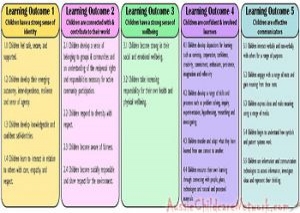 Here is the list of the EYLF Learning Outcomes that you can use as a guide or reference for your documentation and planning. The EYLF
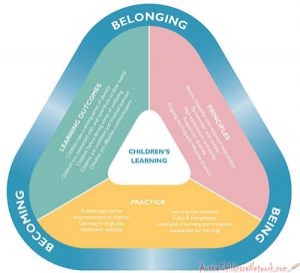 The EYLF is a guide which consists of Principles, Practices and 5 main Learning Outcomes along with each of their sub outcomes, based on identity,
 This is a guide on How to Write a Learning Story. It provides information on What Is A Learning Story, Writing A Learning Story, Sample
 One of the most important types of documentation methods that educators needs to be familiar with are “observations”. Observations are crucial for all early childhood
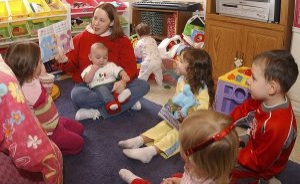 To support children achieve learning outcomes from the EYLF Framework, the following list gives educators examples of how to promote children's learning in each individual
 Reflective practice is learning from everyday situations and issues and concerns that arise which form part of our daily routine while working in an early
 When observing children, it's important that we use a range of different observation methods from running records, learning stories to photographs and work samples. Using
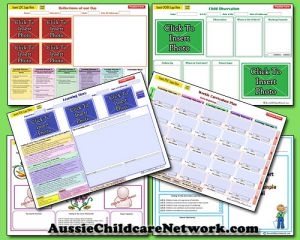 Within Australia, Programming and Planning is reflected and supported by the Early Years Learning Framework. Educators within early childhood settings, use the EYLF to guide
 This is a guide for educators on what to observe under each sub learning outcome from the EYLF Framework, when a child is engaged in
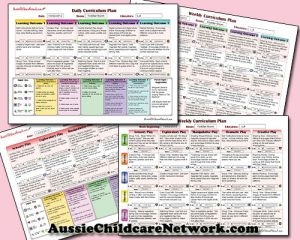 The Early Years Learning Framework describes the curriculum as “all the interactions, experiences, activities, routines and events, planned and unplanned, that occur in an environment