A QIP display board in an early learning service is a fantastic way to make your continuous improvement journey visible, engaging, and collaborative. It helps educators, families, and even children see what the service is working on, why it matters, and how progress is being tracked.
Purpose of a QIP Display Board
- Transparency: Shows families and staff what goals the service is working toward.
- Engagement: Invites input from educators, families, and children.
- Accountability: Keeps the team focused on agreed priorities.
- Celebration: Highlights achievements and milestones along the way.
What to Include
- Current goals: Display 3–5 key improvement priorities from your QIP.
- Action steps: Break down what’s being done to achieve each goal.
- Visual progress trackers: Use charts, timelines, or traffic-light indicators.
- Family voice: Add a section for parent suggestions or feedback slips.
- Children’s contributions: Showcase drawings, photos, or quotes that connect to the goals.
- Celebrations: A “We did it!” space for completed actions.
Design Tips
- Keep it simple: Use clear headings and minimal text.
- Make it visual: Icons, color coding, and photos help everyone understand.
- Interactive elements: Sticky notes, QR codes linking to surveys, or movable markers.
- Child-friendly language: Reframe goals in ways children can relate to.
- Accessible placement: Position the board where families naturally gather (foyer, sign-in area).
Example Layout
| Section | What it Shows | Visual Idea |
|---|---|---|
| Our Goals | 3–5 QIP priorities | Illustrated icons for each |
| Steps We’re Taking | Actions in progress | Flowchart or checklist |
| Family & Child Voice | Suggestions, drawings, quotes | Speech bubbles, sticky notes |
| Progress Tracker | How close we are to completion | Traffic lights or thermometer graphic |
| Celebrations | Achievements | Gold stars, photos of outcomes |
Photo Ideas


Our Quality Improvement Plan is a living journey—shaped by educators, families, and children together. By making our goals visible, we invite everyone to share ideas, celebrate progress, and contribute to the growth of our service. Every step forward reflects our commitment to continuous improvement, inclusion, and excellence in early learning.
Further Reading
Understanding The Quality Improvement Plan In Early Childhood
QIP Action Plan Guide For Educators
QIP Priorities for Early Childhood Services
Self-Assessment, Critical Reflection, and the QIP
Image References:
Image 1 - Dominique Thompson, Pinterest
Image 2 - Prospect Community Early Education and Care, Pinterest
Image 3 - No Name, Pinterest
Image 4 - Natalie Wilson, Pinterest
Image 5 - That Little Kindy, Pinterest
Image 6 - No Name, Pinterest
Image 7 - That Little Kindy !, Pinterest
Image 8 - Tracey Webster, Pinterest
Image 9 - Liesl Rubio, Pinterest
Image 10 - Christine Puetz, Pinterest
Image 11 - Elspeth Marson-Thomas, Pinterest
QIP Action Plan Guide For Educators
QIP Priorities for Early Childhood Services
Self-Assessment, Critical Reflection, and the QIP
Image References:
Image 1 - Dominique Thompson, Pinterest
Image 2 - Prospect Community Early Education and Care, Pinterest
Image 3 - No Name, Pinterest
Image 4 - Natalie Wilson, Pinterest
Image 5 - That Little Kindy, Pinterest
Image 6 - No Name, Pinterest
Image 7 - That Little Kindy !, Pinterest
Image 8 - Tracey Webster, Pinterest
Image 9 - Liesl Rubio, Pinterest
Image 10 - Christine Puetz, Pinterest
Image 11 - Elspeth Marson-Thomas, Pinterest



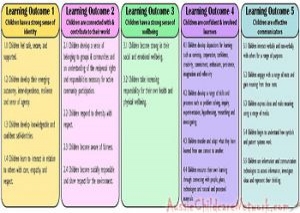 Here is the list of the EYLF Learning Outcomes that you can use as a guide or reference for your documentation and planning. The EYLF
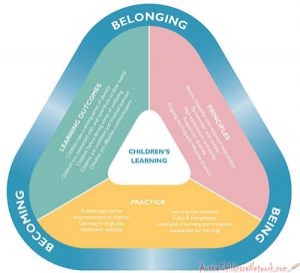 The EYLF is a guide which consists of Principles, Practices and 5 main Learning Outcomes along with each of their sub outcomes, based on identity,
 This is a guide on How to Write a Learning Story. It provides information on What Is A Learning Story, Writing A Learning Story, Sample
 One of the most important types of documentation methods that educators needs to be familiar with are “observations”. Observations are crucial for all early childhood
 To support children achieve learning outcomes from the EYLF Framework, the following list gives educators examples of how to promote children's learning in each individual
 Reflective practice is learning from everyday situations and issues and concerns that arise which form part of our daily routine while working in an early
 When observing children, it's important that we use a range of different observation methods from running records, learning stories to photographs and work samples. Using
 Within Australia, Programming and Planning is reflected and supported by the Early Years Learning Framework. Educators within early childhood settings, use the EYLF to guide
 This is a guide for educators on what to observe under each sub learning outcome from the EYLF Framework, when a child is engaged in
 The Early Years Learning Framework describes the curriculum as “all the interactions, experiences, activities, routines and events, planned and unplanned, that occur in an environment