



Young children today are growing up in digital contexts which range from devices like computers, tablets, smart televisions and smart watches to the internet and apps for recreation, learning and connection. iPads are among those devices which not only make for fun learning experiences but complement intentional learning in important ways. The following provides the benefits and experience ideas on using Ipads for children.
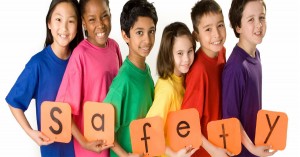
Learning how to keep one’s own self safe and protected is a key aspect of growing up. Even young children can be taught about personal safety with the help of appropriate language and interactive strategies. The following article provides strategies for Educators to talk about personal safety with children.
NAIDOC Week 2022 starts from 3 July to 10 July. NAIDOC Week celebrations are held across Australia to celebrate the history, culture and achievements of Aboriginal and Torres Strait Islander peoples. The following provides Activities, Crafts, Songs and Resources to celebrate NAIDOC Week and incorporate ATSI Communities into your Early Childhood Service.
A co-listening podcast for preschoolers is called Little Yarns. Little Yarns is all about the various languages, tales, and countries of Indigenous Australia and is a great listening resource in early learning services.
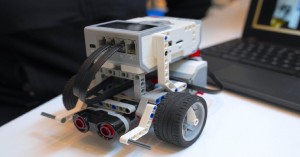
STEM, the word stands for Science, Technology, Engineering, and Mathematics. It is a way of education where the subjects that are mentioned above are taught in coherence with each other instead of in isolation. It focuses to make a bridge between the learning gap and experience through child-centric materials with the aim of making children active learners. The following article provides information on STEM Education, Incorporating STEM Education In Different Ways, Learning Environment and STEM and more!

A Montessori method is an educational approach characterised by learner choice, an enriching environment and educators who facilitate the learner’s natural bent for learning. It was devised during the 1900s by Dr Maria Montessori, a physician, anthropologist and pedagogue over a professional career that spanned over fifty years. Here are some characteristics of an activity that makes it Montessori.

Zones of Regulation help children build emotional literacy, self‑regulation, and resilience through colour‑coded strategies for well‑being.

School readiness has traditionally understood children’s numeracy skills as their ability to count, order and measure before they go on to perform calculations. However, numeracy encompasses a much wider notion than numbers – it can be understood as the suite of knowledge, skills, behaviours and dispositions that students need in order to use mathematics in a wide range of situations. For the early education context, the EYLF defines numeracy as, “the capacity, confidence and disposition to use mathematics in daily life”. Based on this definition, here are some significant takeaways.

Time was when preschool literacy was understood as young children’s ability to read and write in simple ways – like knowing and reading the alphabet and perhaps writing a few However according to recent early education pedagogy, literacy is understood in much broader terms that include children learning to express themselves and communicate through a range of forms and symbols. In keeping with this, the EYLF has defined literacy as the “capacity, confidence and disposition to use language in all its forms. Here are some significant takeaways from the definition.

Writing ability is one of the more complex literacy skills as it depends on a host of physiological, cognitive and communication developments. The following article provides information on the role of drawing and talking in early writing development.
 The Children’s Services Award introduces a streamlined classification system and updated pay rates designed to better recognise the skills, qualifications, and responsibilities of early childhood… Read More
 The Children’s Services Award has 8 clear levels. These levels make it easier to understand where you fit, based on your experience, qualifications, and responsibilities.… Read More
 When working as a qualified early childhood teacher (with a university degree) within a service, your rate of pay will come from the Educational Services… Read More
 Diploma-qualified educators play a vital role in early childhood services, taking on responsibilities that range from supporting children’s learning and development to leading rooms and… Read More
 Certificate III qualified educators form the backbone of early childhood services, providing essential care and learning support for children across all settings. Their wages under… Read More
 Early Childhood Teachers (ECTs) play a vital role in leading curriculum and pedagogy in early learning settings. Regulation 272 of the Education and Care Services… Read More
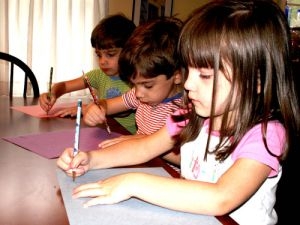 Discover how school readiness programs support children’s independence, confidence, and skills for a successful transition into primary school.
Read More
Discover how school readiness programs support children’s independence, confidence, and skills for a successful transition into primary school.
Read More
 When an Educator is not performing their tasks or responsibilities at best practice, these issues need to be addressed for the Educator to understand where… Read More
 Educators can maximise tax deductions by claiming classroom supplies, training, union fees, and home office costs this financial year.
Read More
Educators can maximise tax deductions by claiming classroom supplies, training, union fees, and home office costs this financial year.
Read More
 A staff appraisal is a formal, systematic process of determining and reviewing the performance of early childhood educators over a period of time, usually a… Read More
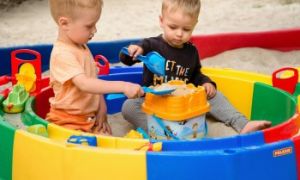
Outdoor sandpit setups in early childhood are best designed as open-ended, sensory-rich environments that encourage...
See more...
A child’s sense of identity is the foundation for all learning, relationships, and wellbeing. Outcome...
See more...
Providers of childcare care or early childhood educational services are required to get their service...
See more...