


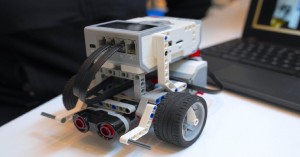
STEM, the word stands for Science, Technology, Engineering, and Mathematics. It is a way of education where the subjects that are mentioned above are taught in coherence with each other instead of in isolation. It focuses to make a bridge between the learning gap and experience through child-centric materials with the aim of making children active learners. The following article provides information on STEM Education, Incorporating STEM Education In Different Ways, Learning Environment and STEM and more!

A Montessori method is an educational approach characterised by learner choice, an enriching environment and educators who facilitate the learner’s natural bent for learning. It was devised during the 1900s by Dr Maria Montessori, a physician, anthropologist and pedagogue over a professional career that spanned over fifty years. Here are some characteristics of an activity that makes it Montessori.

In early childhood, among the most important aspects of learning self-regulation is the ability to identify and label emotions. Unless children are able to understand and manage their emotions, they might end up expressing them through negative and disruptive behaviours. In this context, the Zones of Regulation approach offers valuable support to children’s efforts to recognise and manage their own emotions.

School readiness has traditionally understood children’s numeracy skills as their ability to count, order and measure before they go on to perform calculations. However, numeracy encompasses a much wider notion than numbers – it can be understood as the suite of knowledge, skills, behaviours and dispositions that students need in order to use mathematics in a wide range of situations. For the early education context, the EYLF defines numeracy as, “the capacity, confidence and disposition to use mathematics in daily life”. Based on this definition, here are some significant takeaways.
Time was when preschool literacy was understood as young children’s ability to read and write in simple ways – like knowing and reading the alphabet and perhaps writing a few However according to recent early education pedagogy, literacy is understood in much broader terms that include children learning to express themselves and communicate through a range of forms and symbols. In keeping with this, the EYLF has defined literacy as the “capacity, confidence and disposition to use language in all its forms. Here are some significant takeaways from the definition.

Writing ability is one of the more complex literacy skills as it depends on a host of physiological, cognitive and communication developments. The following article provides information on the role of drawing and talking in early writing development.
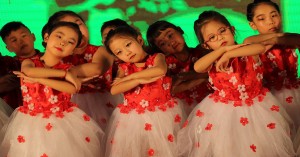
Creative arts offer children - through dance, crafts, music, art or drama – some of the most enjoyable ways to express their ideas and imagination. Along along with providing opportunities for freewheeling thinking, creative pursuits bring many developmental and learning benefits as well.

Learning emotional regulation in the early years is not only important to become better-adjusted adults but has been found directly related to higher levels of academic achievement in later life. An integral step in emotional regulation is the identification of unhelpful or negative emotions like anger.

Holi is celebrated on 18 March. It is an Indian Hindu festival of colours. As it celebrates in spring, it is called the “Festival of Spring.” In India, it is a holiday, celebrated wide across the country. Children also celebrate by applying colour to each other.

STEM refers to an integrated learning approach that introduces Science, Technology, Engineering and Mathematics through play-based activities.
 The Children’s Services Award introduces a streamlined classification system and updated pay rates designed to better recognise the skills, qualifications, and responsibilities of early childhood… Read More
 The Children’s Services Award has 8 clear levels. These levels make it easier to understand where you fit, based on your experience, qualifications, and responsibilities.… Read More
 When working as a qualified early childhood teacher (with a university degree) within a service, your rate of pay will come from the Educational Services… Read More
 Diploma-qualified educators play a vital role in early childhood services, taking on responsibilities that range from supporting children’s learning and development to leading rooms and… Read More
 Certificate III qualified educators form the backbone of early childhood services, providing essential care and learning support for children across all settings. Their wages under… Read More
 Early Childhood Teachers (ECTs) play a vital role in leading curriculum and pedagogy in early learning settings. Regulation 272 of the Education and Care Services… Read More
 Children need safe and positive environments to learn and grow. To ensure this, services and educators need to ensure effective supervision at all times. The… Read More
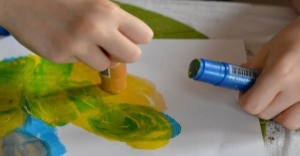 Floorbook is a documentation approach that uses a large book with blank pages for children to record different aspects of their learning in small groups… Read More
 In Norway and most other Scandinavian countries, children nap in the outdoors. According, to research outdoor sleeping not only promotes better daytime sleeping, but it… Read More
 From 2026, every educator covered by the Children’s Services Award will move into a new, simplified classification structure. Instead of navigating 30 different levels, educators… Read More

Lunar New Year is celebrated on the 29th of January 2025. The Lunar New Year in...
See more...
Our thoughts and deepest sympathies are with everyone affected by the tragic events at Bondi...
See more...
Programming time is a cornerstone of quality practice in early childhood education. The Children’s Services...
See more...