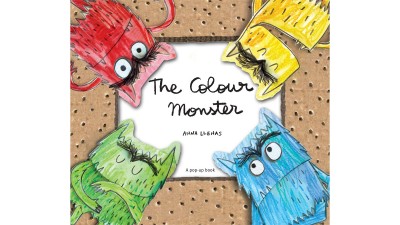
The Colour Monster helps children explore emotions with colours, building empathy and self‑regulation.
The Colour Monster by Anna Llenas is a beloved picture book that helps children understand and manage emotions through simple storytelling and vivid colour associations. It’s widely used in early childhood classrooms and homes to build emotional vocabulary, self-regulation, and empathy.
What the Story Is About
The story begins with a friendly monster who wakes up feeling confused because all his emotions are mixed together. A young girl guides him to sort these feelings into jars, each represented by a different colour. This process helps the monster and the children reading see that emotions are natural and easier to manage when we can name and understand them:
- Yellow – Happiness
- Blue – Sadness
- Red – Anger
- Black/Grey – Fear
- Green – Calm
- Pink – Love (introduced at the end)
By organising feelings, the monster learns that emotions are not overwhelming or "bad"; they are simply part of being human.
Click the link to download the story for FREE: The Colour Monster
How It Helps Children
This book is more than a story; it’s a teaching tool. It helps children build emotional literacy by giving them a concrete language for feelings. It also supports self-regulation by showing that naming emotions can reduce overwhelm.
- Emotional Literacy: Gives children a concrete language for feelings.
- Self-Regulation: Shows that naming emotions reduces overwhelm.
- Empathy: Encourages listening and understanding others’ feelings.
- Reassurance: Normalises emotions, teaching that sadness, anger, or fear are not "bad".
- Social-Emotional Learning (SEL): Builds a shared vocabulary for classrooms and families.
Practical Strategies for Educators
Educators can extend the lessons of The Colour Monster into daily routines. By using colours as emotional cues, children can express themselves in ways that feel safe and accessible.
- Feelings Chart: Use the book’s colours for daily check-ins. Children move their name/peg to show how they feel.
- Feelings Jars: Create jars for each emotion; children draw/write triggers for each.
- Role Play: Act out scenarios (e.g., losing a toy) and link them to colours.
- Circle Time: Read the book and invite children to share “I feel red today” instead of acting out.
- Art & Music: Let children choose colours and movements that match music or feelings.
Why It Works
The success of The Colour Monster lies in its simplicity. Colours are intuitive and memorable, making them perfect for young learners who often struggle with abstract emotional vocabulary. The book’s consistency allows for repeated use in classrooms, building routine emotional check-ins.
- Visual Learning: Colours are intuitive and memorable for young children.
- Developmental Fit: Ages 3–7 often struggle with abstract emotional vocabulary; colour coding bridges the gap.
- Consistency: Repeated use in classrooms builds routine emotional check-ins.
- Therapeutic Value: Used in counselling to help children externalise and discuss feelings.
| Emotion | Colour | Practical Strategy |
|---|---|---|
| Happiness | Yellow | Share kind words, play, and celebrate “sparkle moments". |
| Sadness | Blue | Allow quiet time; encourage reflection. |
| Anger | Red | Teach calming breaths, safe expression |
| Fear | Black | Talk through worries, reassure safety. |
| Calm | Green | Practice mindfulness, gentle care |
| Love | Pink | Encourage connection, hugs, and kind gestures |
The Colour Monster is more than a picture book; it’s a tool for emotional growth. By turning feelings into colours, it empowers children to recognise, express, and regulate emotions in a safe, playful way.
By linking feelings to colours, children gain a simple yet effective way to recognise, express, and manage their emotions. Whether used in classrooms, therapy sessions, or at home, this story encourages empathy, builds emotional vocabulary, and reassures children that all feelings are valid.
Through its playful illustrations and relatable narrative, The Colour Monster continues to inspire educators, parents, and children alike, reminding us that understanding emotions is the first step towards emotional well-being.
Further Reading
Feelings Through Play: Photo Ideas
How Educators Decode Big Feelings with Little Words
Feelings Toolbox
Helping Children Manage Big Feelings: A Guide for Educators
Encouraging Children to Express Emotions Appropriately
30 Emotional Regulation Activities For Toddlers and Preschoolers



 Open ended questions cannot be responded to with one word answers such as yes or no. These types of questions enables a child to provide
 During your child’s preschool years, an important milestone begins to emerge. This is the development of pre-writing skills. Pre-writing skills are used to encourage, develop
 An Acknowledgment of the Country is a way of showing respect for the Traditional Owners and can be given by both non-Indigenous people and Aboriginal
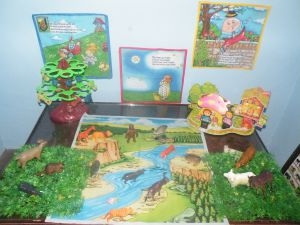 Open ended materials enables children to play freely. They are objects that have no rules to follow, use or function. Raw materials that can be
 Language plays an important role in a child’s development. It enables a child to communicate effectively with their family, learn at school, socialize with friends,
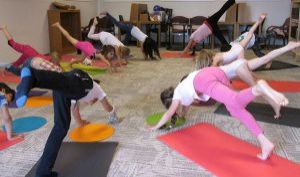 Like adults, children have to deal with their own stress in life. Moving house, starting a new school, preparing for a new sibling - these are
 Playdough is such a versatile material. It provides numerous benefits to children as they manipulate it, it is safe and soothing and provides children with
 Teaching children about sustainability enables them to appreciate and respect the natural environment. Early childhood services can provide meaningful hand on learning experiences in order
 Recycling is an important concept that teaches children to care for the environment. It encourages children to be responsible and show a growing appreciating for
 Incursions provide children with the opportunity to explore meaningful learning experiences in the comfort of their early childhood service. The following provides a directory of