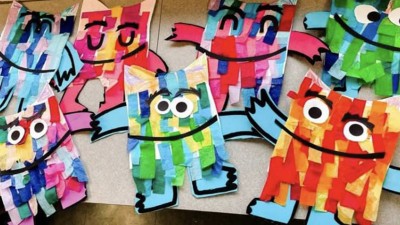
Explore Colour Monster activities with sensory play, crafts, and educator strategies to help children identify, express, and manage emotions.
The Colour Monster Activities Photo Ideas are designed to help children explore emotions in a playful, hands‑on way. Inspired by Anna Llenas’ much‑loved book The Colour Monster: A Story About Emotions, these activities combine sensory play, fine motor practice, and creative expression to support emotional literacy in early childhood settings.
This guide provides photo‑inspired ideas along with educator strategies for implementation, ensuring activities are both fun and purposeful in supporting children’s emotional development.
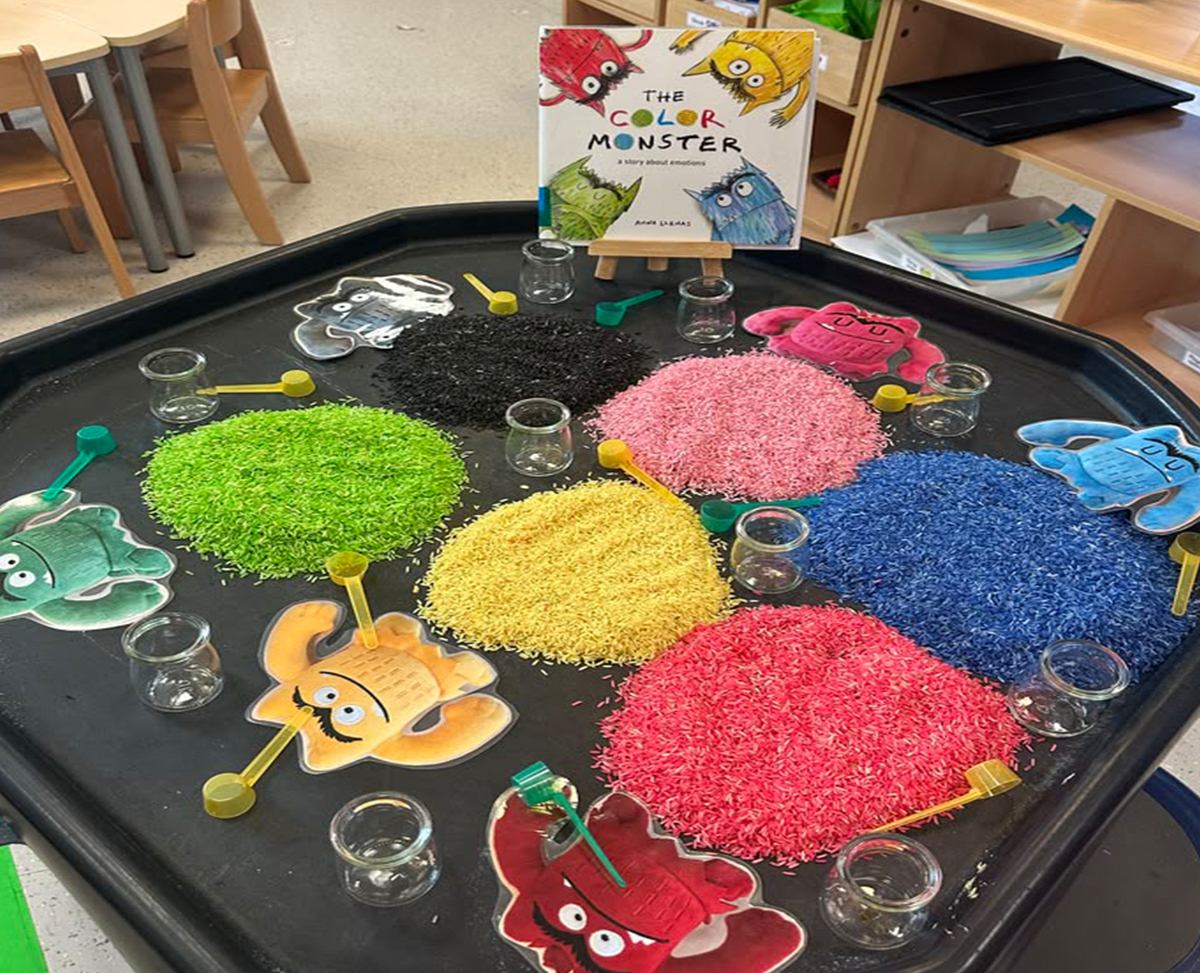
Coloured Rice Emotions Tray
Fill a sensory tray with piles of coloured rice (red for anger, blue for sadness, yellow for happiness, etc.) and matching monster cutouts.
Strategies for Educators:
- Narrate emotions as children scoop rice: “You’re choosing red — that’s anger.”
- Encourage sorting into jars and discuss when they’ve felt that emotion.
- Extend by mixing rice colours and asking children to describe “mixed emotions.”
Pom‑pom Sorting Monster
Provide tweezers and bowls for sorting pom‑poms onto a monster outline, reinforcing fine motor skills and emotional vocabulary.
Strategies for Educators:
- Scaffold fine motor skills by modelling tweezer use.
- Link colours to classroom scenarios (e.g., blue pom‑pom for feeling sad when missing a parent).
- Encourage peer collaboration by having children sort together and explain choices.
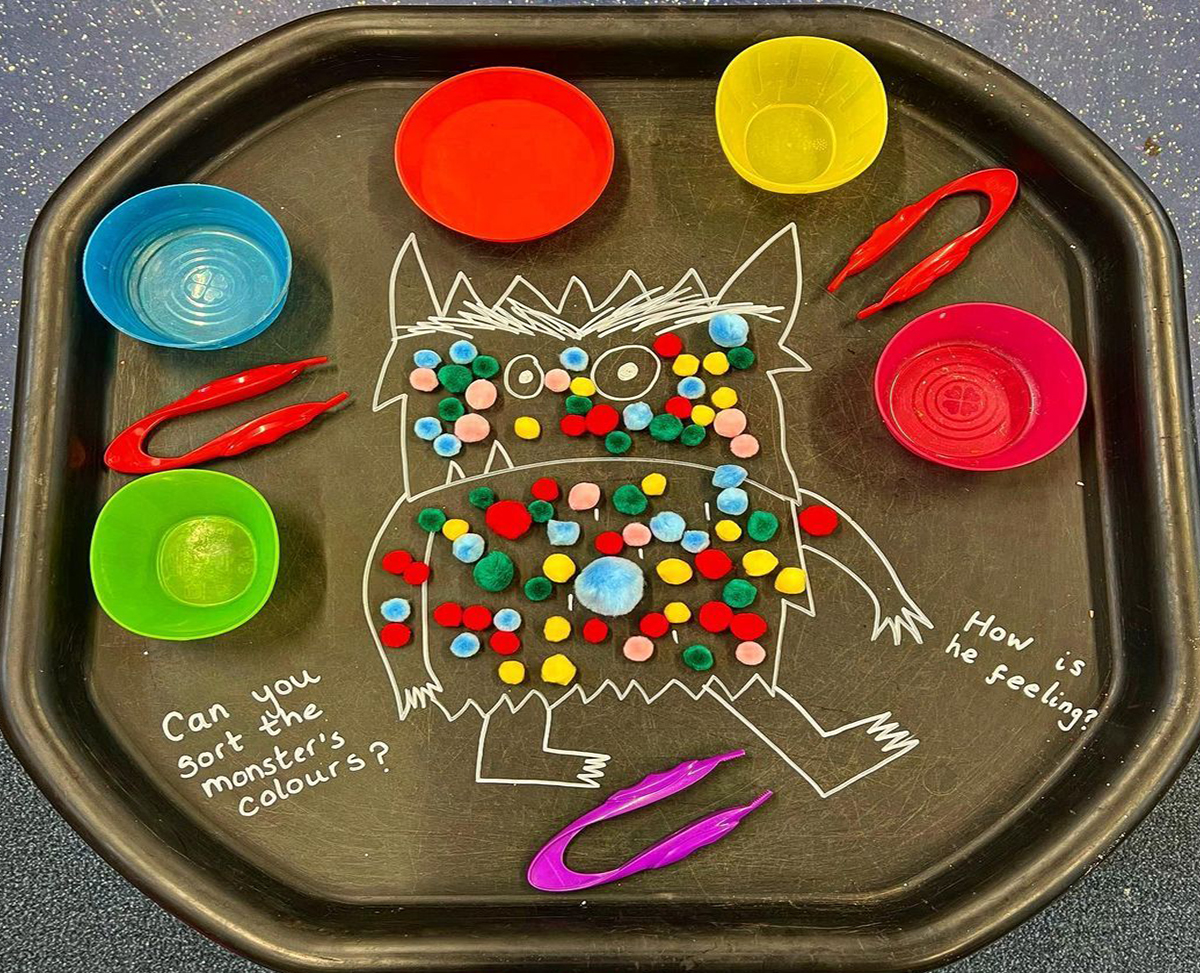
Image Reference: No Name, Pinterest
Sand Drawing Emotions
Invite children to draw faces in sand trays that reflect how the monster feels—happy, sad, scared, or calm.
Strategies for Educators:
- Prompt children to draw faces showing how they feel today.
- Use reflective language: “I see you drew a sad face — can you tell me why?”
- Photograph sand drawings to create an “emotions gallery” for reflection.
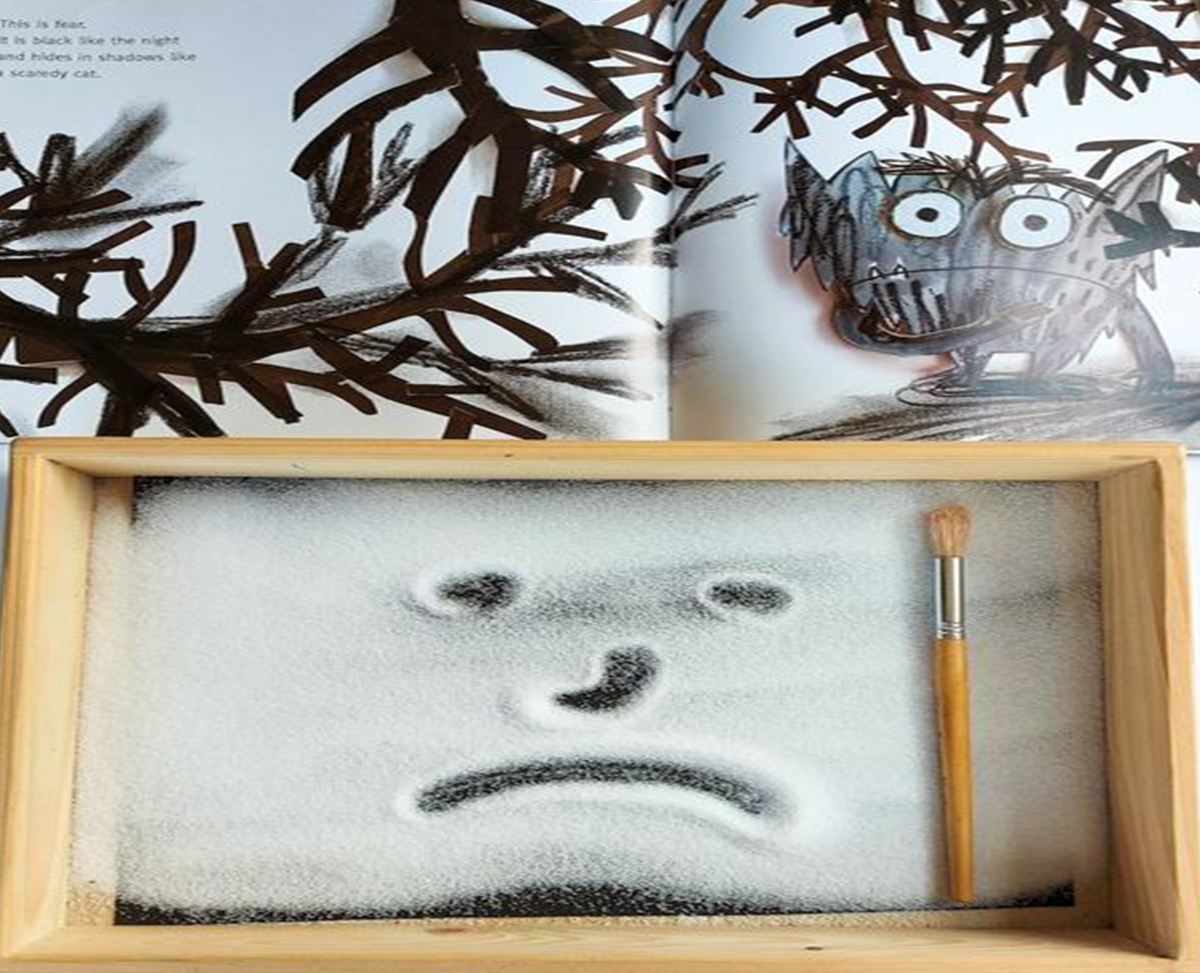
Image Reference: Nicola Walton, Pinterest
Threading Monsters
Use yarn to thread around monster cutouts, strengthening coordination while discussing emotions.
Strategies for Educators:
- Support grip development by modelling threading slowly.
- Encourage children to choose yarn colours that match their current feelings.
- Display finished threaded monsters on a wall as an “emotion rainbow".
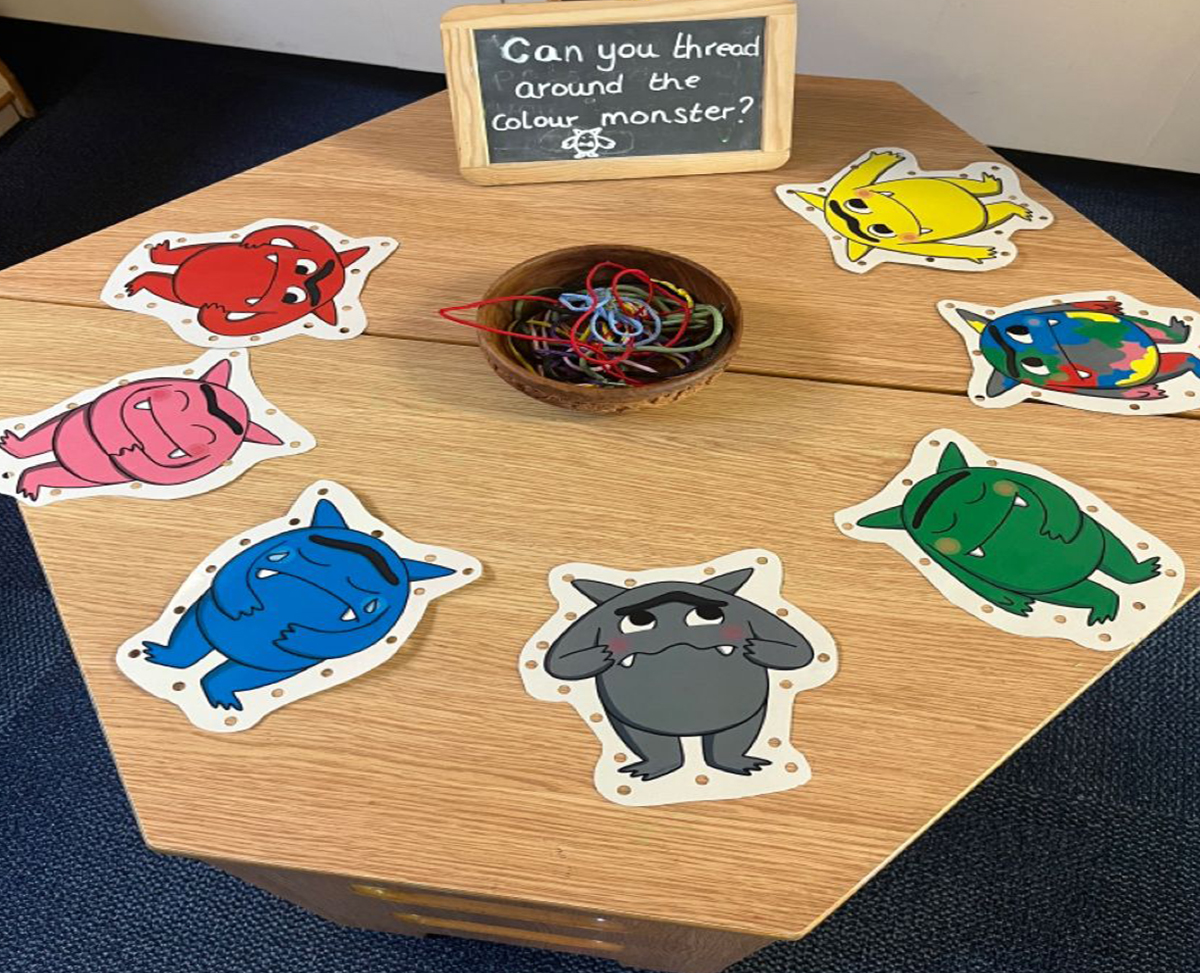
Image Reference: Miss Baron, Pinterest
Peg Monsters
Children clip coloured pegs onto monster figures, matching colours to emotions.
Strategies for Educators:
- Scaffold by demonstrating how to clip pegs carefully.
- Ask children to explain why they chose a colour for the monster.
- Turn it into a group game: “Which monster has the most pegs today?”
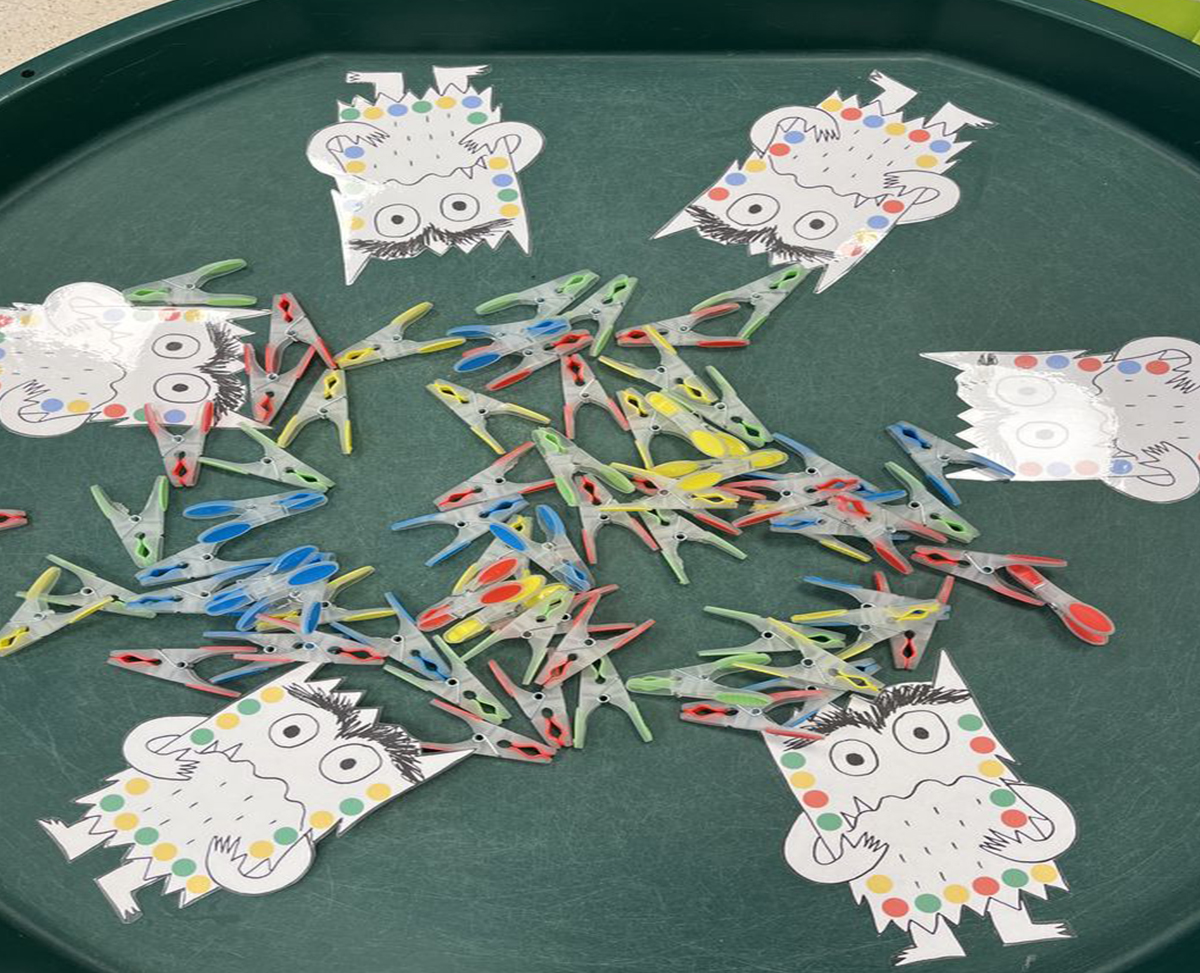
Image Reference: Juf Nele, Pinterest
Splatter Paint Monsters
Create expressive monsters with paint splatters, googly eyes, and marker mouths—each design representing a different feeling.
Strategies for Educators:
- Encourage children to choose paint colours based on their emotions.
- Discuss how different splatter shapes can represent feelings (sharp lines = anger, soft blobs = calm).
- Use finished art in circle time to talk about emotions.
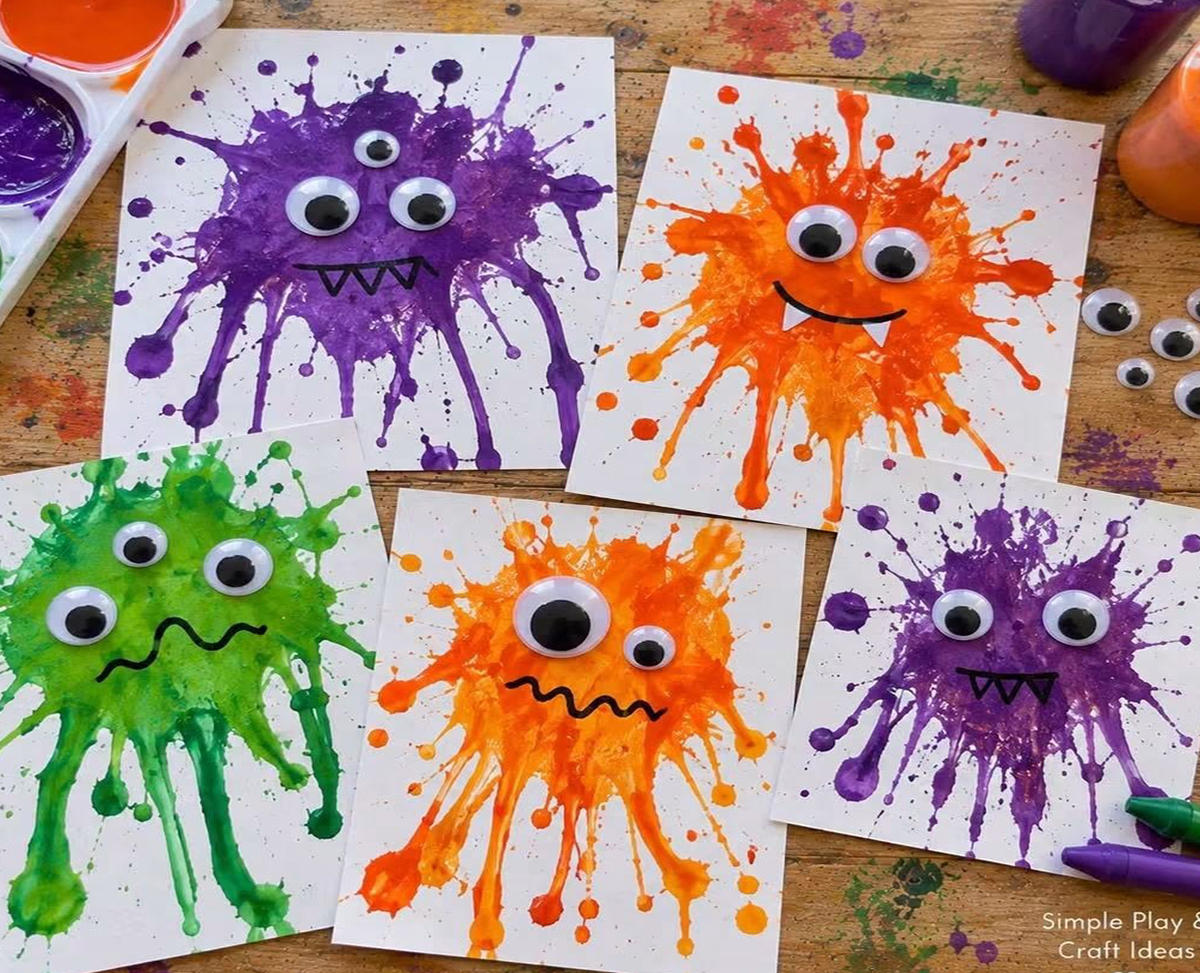
Image Reference: Tiia Salem, Pinterest
Practical Strategies
- Model emotional language
Consistently use clear words for feelings (happy, sad, angry, calm) during activities so children hear and practice emotional vocabulary in context. - Encourage reflection
After each activity, invite children to share why they chose a colour or expression. This builds self‑awareness and helps them connect emotions to experiences. - Link to daily routines
Integrate quick emotion check‑ins at transitions (morning arrival, after lunch, before home time) using Colour Monster visuals to normalise emotional expression. - Create safe spaces
Ensure activities are non‑judgmental. Validate all emotions equally, showing children that every feeling is acceptable and can be expressed constructively.
By linking colours to feelings, children learn to identify, name, and manage emotions in a safe and engaging environment. Educators can use these setups not only to spark curiosity but also to scaffold discussions about wellbeing, empathy, and self‑regulation. Each activity offers opportunities to connect with the EYLF learning outcomes, particularly in areas of identity, wellbeing, and communication.
Further Reading
The Colour Monster: Free Children's Book On Helping Children Understand Feelings
Feelings Through Play: Photo Ideas
How Educators Decode Big Feelings with Little Words
Feelings Toolbox
Helping Children Manage Big Feelings: A Guide for Educators
Encouraging Children to Express Emotions Appropriately
30 Emotional Regulation Activities For Toddlers and Preschoolers


 Open ended questions cannot be responded to with one word answers such as yes or no. These types of questions enables a child to provide
 During your child’s preschool years, an important milestone begins to emerge. This is the development of pre-writing skills. Pre-writing skills are used to encourage, develop
 An Acknowledgment of the Country is a way of showing respect for the Traditional Owners and can be given by both non-Indigenous people and Aboriginal
 Open ended materials enables children to play freely. They are objects that have no rules to follow, use or function. Raw materials that can be
 Language plays an important role in a child’s development. It enables a child to communicate effectively with their family, learn at school, socialize with friends,
 Like adults, children have to deal with their own stress in life. Moving house, starting a new school, preparing for a new sibling - these are
 Playdough is such a versatile material. It provides numerous benefits to children as they manipulate it, it is safe and soothing and provides children with
 Teaching children about sustainability enables them to appreciate and respect the natural environment. Early childhood services can provide meaningful hand on learning experiences in order
 Recycling is an important concept that teaches children to care for the environment. It encourages children to be responsible and show a growing appreciating for
 Incursions provide children with the opportunity to explore meaningful learning experiences in the comfort of their early childhood service. The following provides a directory of