Howard Gardner’s Multiple Intelligences is explained simply for educators with examples and EYLF links.
Howard Gardner’s Theory of Multiple Intelligences (1983) proposes that children are not defined by a single IQ score. Instead, they possess a blend of different intelligences, each shaping how they learn, express themselves, and succeed. Educators can nurture these intelligences by offering varied experiences that highlight children’s strengths and support growth in all areas.
Core Idea
Children learn and grow through different kinds of intelligences: language, logic, music, movement, social skills, self‑awareness, nature, and visual thinking. Every child has a unique profile of strengths.
Key Concepts
- Linguistic – using words, reading, and storytelling.
- Logical‑Mathematical – reasoning, problem‑solving, patterns.
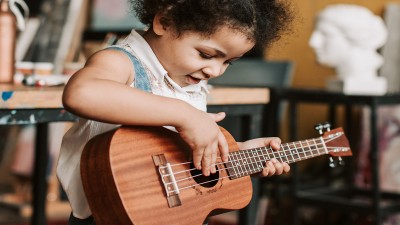
- Musical – rhythm, melody, sound awareness.
- Spatial – visual thinking, drawing, mapping.
- Bodily‑Kinesthetic – movement, coordination, hands‑on learning.
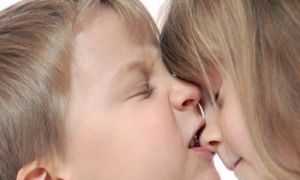
- Interpersonal – empathy, teamwork, communication.
- Intrapersonal – self‑reflection, emotional awareness.
- Naturalistic – observing nature, classifying, and caring for the environment.
10 Everyday Practice Examples
- Storytelling circles – nurture linguistic skills.
- Math puzzles and coding games – build logical‑mathematical thinking.
- Singing nursery rhymes – encourage musical intelligence.
- Drawing maps of the classroom – support spatial awareness.
- Obstacle courses and dance – strengthen bodily‑kinesthetic skills.
- Group projects and peer mentoring – foster interpersonal growth.
- Reflection journals – develop intrapersonal awareness.
- Gardening and nature walks – highlight naturalistic intelligence.
- Drama role‑play – combine linguistic, interpersonal, and bodily skills.
- Science experiments – integrate logical, naturalistic, and spatial intelligences.
EYLF Links
- Outcome 1: Confident self‑identities → Reflection journals, drama role‑play.
- Outcome 2: Fairness and respect → Group projects, peer mentoring.
- Outcome 3: Well‑being → Dance, obstacle courses, singing.
- Outcome 4: Confident learners → Math puzzles, science experiments.
- Outcome 5: Effective communicators → Storytelling circles, creative expression.
Observation Words
- Expressing
- Reasoning
- Singing
- Drawing
- Moving
- Cooperating
- Reflecting
- Caring
- Exploring
- Creating
Gardner’s theory reminds us that every child is intelligent in their own way. By offering diverse experiences, educators empower children to shine in multiple areas, building confidence, resilience, and a love of learning.
Further Reading
Child Theorists and Their Theories in Practice
Linking Theories To The EYLF
Learning Styles According To Howard Gardner
Howard Gardner - Multiple Intelligence


 Toddlers have a greater understanding of the world around them by this stage. Their cognitive development (also known as intellectual development and thinking skills) continues
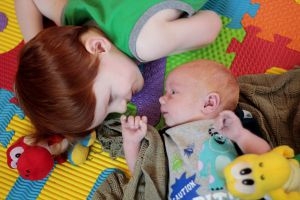 Infants begin to develop trust when parents begin to fulfil their needs. Such as changing an infant's nappy when needed, feeding on request and holding
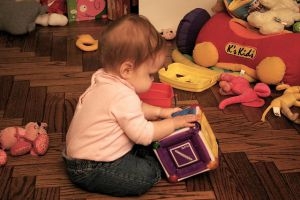 Beginning at birth the construction of thought processes, such as memory, problem solving, exploration of objects etc, is an important part of an infant’s cognitive
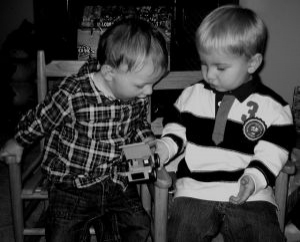 Toddlers want to do more on their own and do not like it when you begin to establish limits on their behaviour. Tantrums can become
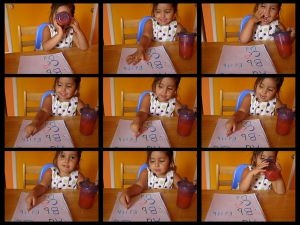 Your preschooler is now able to focus their attention more accurately and is less influenced by distractions. The intensity of questions increase as your child
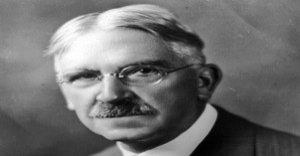 John Dewey is often seen as the proponent of learning by doing – rather than learning by passively receiving. He believed that each child was active,
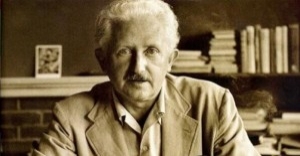 Erik Erikson developed a psychosocial theory to understand how we each develop our identities through eight stages of psychosocial development from infancy to adulthood. The
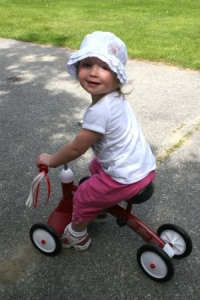 Toddler advance and gains new skills in Gross Motor Development milestones achieved throughout earlier years. Co-ordination and challenges that could not be performed before such
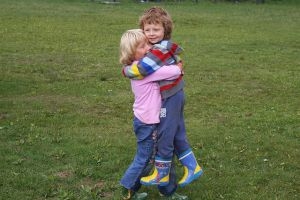 At this point preschoolers begin to interact effectively with others. Play becomes more innovative and organized and “boyfriend” or “girlfriend” begins to emerge. Preschoolers have
 From now, babies begin to identify and respond to their own feelings, understanding other's feelings & needs and interact positively with others. A baby's social and