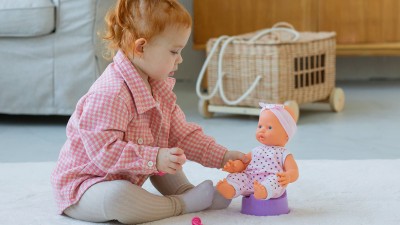
Toilet learning is part of development — educators guide children with patience and support.
AERO has named toilet learning as part of the Early Childhood Learning Trajectories. By naming toilet learning as part of learning trajectories, they’ve shifted it from being seen as a “readiness milestone” that children eventually reach, to being understood as something educators can intentionally teach and scaffold — just like motor skills or sensory development.
What This Means
-
Reframing toilet learning: Instead of waiting for children to “be ready,” educators can plan experiences and supports that help them acquire toileting skills step by step. It becomes part of the curriculum rather than a background expectation.
-
Professional responsibility: This wording signals that educators have a role in teaching and guiding toilet learning, not just leaving it to families or assuming it will happen naturally.
-
Integration with physical development: Placing it alongside motor and sensory skills highlights that toileting involves coordination, body awareness, and self-regulation — all areas educators already observe and plan for.
-
Implications for practice: The “missing piece” you noted is the pedagogy — how educators actually support toilet learning in daily routines, environments, and interactions. Naming it as learning opens the door, but the sector still needs clear strategies, reflective practice, and professional dialogue about how to teach it respectfully and effectively.
In short, this shift means toilet learning is no longer seen as something that “just happens.” It’s now framed as a teachable, supportable process within early childhood education.
Implications For Educators
-
Educator responsibility: Toileting is now part of intentional teaching, not just hygiene routines.
-
Documentation: As a trajectory, it requires observation, planning, and recording progress.
-
Family partnership: Families remain central, but services share responsibility for scaffolding independence.
-
Professional reflection: Educators must consider how routines, environments, and language normalize toilet learning.
Practical Strategies
-
Routine integration: Embed toileting into daily schedules with predictable cues.
-
Language use: Use consistent, respectful words to build understanding.
-
Environment design: Provide accessible toilets, child-sized fixtures, and privacy.
-
Scaffolding independence: Encourage small steps — pulling pants down, flushing, handwashing.
-
Observation and planning: Track progress across AERO’s stages: dependence → assisted → routine-following → independence.
Another "Add On" For Educators"
By reframing toilet learning as part of the learning trajectories, AERO has effectively added another responsibility to educators’ already full plates.
Why it feels like an “add-on”
-
Expanded scope: Educators are now expected to treat toileting as a teachable skill, not just a care routine.
-
Documentation load: If it’s learning, it must be observed, tracked, and reported — adding to assessment tasks.
-
Professional accountability: Services may be asked to show how they scaffold toilet learning, just as they do with literacy or motor skills.
-
Training gap: Most educators haven’t been trained in pedagogical approaches to toileting, so it risks becoming another expectation without support.
But there’s another way to see it
Rather than a bolt-on, toilet learning could be embedded in routines educators already manage:
-
Transitions: Linking toileting to group movement times.
-
Self-help skills: Aligning with dressing, feeding, and hygiene independence.
-
Observation: Using the same reflective lens already applied to physical development.
ACECQA’s Position
-
ACECQA hasn’t formally corresponded with AERO’s inclusion, but its National Quality Standard already frames toileting as both a health/safety requirement and a learning opportunity.
-
Quality Area 2: Toileting routines must uphold dignity, hygiene, and safety.
-
Quality Area 1: Programs should maximize learning opportunities, including self-help skills.
-
This means ACECQA is likely to interpret AERO’s trajectory as reinforcing existing expectations.
Risks if Not Implemented
-
Children: Missed scaffolding, reduced independence, inconsistent experiences.
-
Educators: Compliance risks, practice gaps, workload imbalance.
-
Services: Lower ratings in Quality Areas 1 & 2, reduced family trust, misalignment with national guidance.
AERO’s recognition of toilet learning as learning is a call to action. Educators must treat it as a developmental capability to scaffold, not just a milestone to wait for. ACECQA’s framework already supports this, meaning documentation and intentional practice will be expected.
Further Reading
Toilet Training In Childcare
Toilet Training Toddlers



 The Children’s Services Award introduces a streamlined classification system and updated pay rates designed to better recognise the skills, qualifications, and responsibilities of early childhood
 The Children’s Services Award has 8 clear levels. These levels make it easier to understand where you fit, based on your experience, qualifications, and responsibilities.
 When working as a qualified early childhood teacher (with a university degree) within a service, your rate of pay will come from the Educational Services
 Diploma-qualified educators play a vital role in early childhood services, taking on responsibilities that range from supporting children’s learning and development to leading rooms and
 Certificate III qualified educators form the backbone of early childhood services, providing essential care and learning support for children across all settings. Their wages under
 Early Childhood Teachers (ECTs) play a vital role in leading curriculum and pedagogy in early learning settings. Regulation 272 of the Education and Care Services
 Discover how school readiness programs support children’s independence, confidence, and skills for a successful transition into primary school.
 When an Educator is not performing their tasks or responsibilities at best practice, these issues need to be addressed for the Educator to understand where
 Educators can maximise tax deductions by claiming classroom supplies, training, union fees, and home office costs this financial year.
 A staff appraisal is a formal, systematic process of determining and reviewing the performance of early childhood educators over a period of time, usually a