
Changing ratios is vital to protect children first, ensuring safety, quality care, and stronger educator‑child connections.
Early childhood services are meant to be a place of safety, trust, and nurturing. Yet recent cases in Sydney — including a daycare worker charged with over 120 offences allegedly involving more than 120 children, and an OOSH employee jailed for producing child abuse material across six services, show that children remain vulnerable.
Despite policies like the Four Eyes principle, CCTV monitoring, and phone bans, abuse is still happening. These measures increase visibility and accountability, but they cannot replace the most basic safeguard: adequate educator‑to‑child ratios.
Why Ratios Protect Children
-
Constant supervision: Infants and toddlers require eyes‑on care every moment. High ratios create blind spots predators exploit.
-
Early intervention: Lower ratios allow educators to notice distress, injuries, or unsafe behaviour quickly.
-
Safe environments: Adequate ratios reduce opportunities for abuse, neglect, or unnoticed harm.
-
Family trust: Parents expect centres to provide safe care. Ratios stretched too thin erode confidence in the system.
Current Safeguarding Measures — Still Not Enough
-
Four Eyes Policy: Ensures no adult is alone with a child.
-
CCTV monitoring: Provides accountability and transparency.
-
Phone bans: Prevents distractions and unauthorized recordings.
These are valuable, but they are paper shields without safe ratios. Abuse continues because predators exploit supervision gaps that cameras or bans cannot close.
The Policy Blind Spot
Governments often respond with training mandates or compliance audits, but these do not solve the core issue: too few adults for too many children. Ratios are the frontline defence against abuse. Without reform, children remain exposed.
Children deserve more than policies — they deserve real protection through presence.
-
Ratios protect children.
-
Four Eyes protect visibility.
-
CCTV protects accountability.
-
Phone bans protect privacy.
Together, these measures form a layered defence — but without safe ratios, the shield is broken.
Call to Action
-
Families: Demand safer ratios as the foundation of safeguarding.
-
Educators: Advocate for child‑centred ratio reform.
-
Government: Recognise that ratios are the frontline defence against abuse.
Safeguarding children must always come before convenience, compliance, or cost. The recent Sydney cases prove that policies alone cannot protect children — predators exploit supervision gaps, and those gaps exist because ratios are too high.
-
Four Eyes, CCTV, and phone bans are valuable safeguards, but they are not enough.
-
Ratios are the foundation of protection. Without reform, every other safeguard is weakened.
Children deserve more than paper promises. They deserve constant presence, vigilant care, and safe ratios that make abuse harder to commit and easier to detect.
The message is clear: Ratios must change! Not tomorrow, not after another tragedy, but now.
Further Reading
Keeping Children Safe: Practical Solutions in Light of the Melbourne Abuse Case
Rebuilding Trust: Importance Of Reassuring Parents On Their Child's Safety
Four Eyes Policy
Suppression Orders in Place for NSW Educator Charged With More Than 190 Offences Allegedly Involving Over 120 Children




 The Children’s Services Award introduces a streamlined classification system and updated pay rates designed to better recognise the skills, qualifications, and responsibilities of early childhood
 The Children’s Services Award has 8 clear levels. These levels make it easier to understand where you fit, based on your experience, qualifications, and responsibilities.
 When working as a qualified early childhood teacher (with a university degree) within a service, your rate of pay will come from the Educational Services
 Diploma-qualified educators play a vital role in early childhood services, taking on responsibilities that range from supporting children’s learning and development to leading rooms and
 Certificate III qualified educators form the backbone of early childhood services, providing essential care and learning support for children across all settings. Their wages under
 Early Childhood Teachers (ECTs) play a vital role in leading curriculum and pedagogy in early learning settings. Regulation 272 of the Education and Care Services
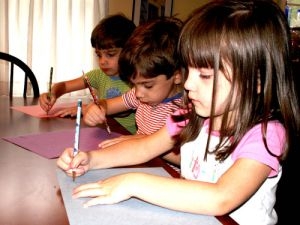 Discover how school readiness programs support children’s independence, confidence, and skills for a successful transition into primary school.
 When an Educator is not performing their tasks or responsibilities at best practice, these issues need to be addressed for the Educator to understand where
 Educators can maximise tax deductions by claiming classroom supplies, training, union fees, and home office costs this financial year.
 A staff appraisal is a formal, systematic process of determining and reviewing the performance of early childhood educators over a period of time, usually a