


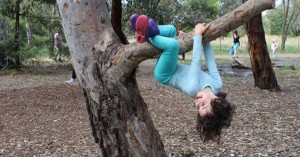
Early education care services are increasingly making bush kinders part of their educational programs. These involve excursions to sites in the midst of nature and away from structured service settings. The following article provides information about the Benefits of Bush Kinders, Supervision, Planning and more.
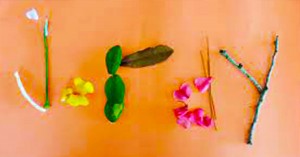
For children who are beginning to learn to write their names, this experience is a great way for children to practice writing their name with natural materials.
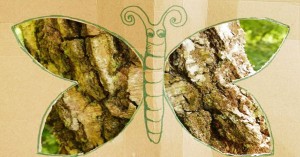
Nature art see-through frames are a simple and creative art experience that enables children to create frames to view their natural environment.
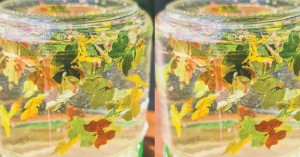
This is an excellent idea for children to create a keepsake of natural leaves they have collected from different types of trees.

Leaf printing is an easy art experience for young children to engage in. It's a great way for young children to discover patterns, lines, and colours of different leaves.

Using recycled plastic bottles, these leaf lanterns are mess free and showcase the colours and shapes of different types of leaves around us.
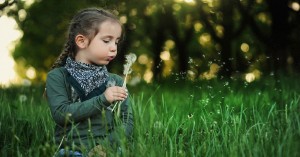
Outdoor spaces hold great significance in early education and care settings which is why they are highlighted in Learning Environments, one of eight pedagogical practices put forward in the EYLF. It further says that Outdoor learning is a feature of Australian learning environments. They offer a vast array of possibilities not available indoors. One of the ways that outdoor spaces do this is by allowing children access to elements of Nature. The following article provides the importance of natural elements and strategies educators can use to enrich children’s play and learning experiences.
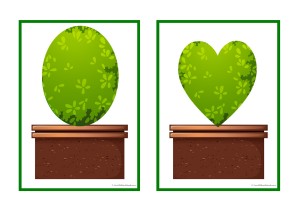
The Grass Pot Matching Shapes is a fun matching activity for children that enables them to learn 2d shapes. Children should match the grass shape to the correct shapes plant pot. This is a fun way to incorporate nature into the learning too.
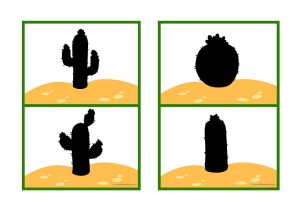
Cactus Shadow Match Cut and Paste is a great activity for children to identify the right shadow cactus with their matching image. This activity enables children to develop visual discrimination skills, hand-eye coordination and learning to analyse the shapes of images to match.
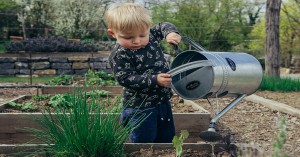
The NQS mandates services to take an active role in caring for the environment and contributing to a sustainable future. According to NQS Standard 3, Element 3.2.3, “The service cares for the environment and supports children to become environmentally responsible.” The following article provides information on Understanding Sustainability, Sustainability Ideas For Early Childhood Services and Sustainability Learning For Children.
 The Children’s Services Award introduces a streamlined classification system and updated pay rates designed to better recognise the skills, qualifications, and responsibilities of early childhood… Read More
 The Children’s Services Award has 8 clear levels. These levels make it easier to understand where you fit, based on your experience, qualifications, and responsibilities.… Read More
 When working as a qualified early childhood teacher (with a university degree) within a service, your rate of pay will come from the Educational Services… Read More
 Diploma-qualified educators play a vital role in early childhood services, taking on responsibilities that range from supporting children’s learning and development to leading rooms and… Read More
 Certificate III qualified educators form the backbone of early childhood services, providing essential care and learning support for children across all settings. Their wages under… Read More
 Early Childhood Teachers (ECTs) play a vital role in leading curriculum and pedagogy in early learning settings. Regulation 272 of the Education and Care Services… Read More
 Discover how school readiness programs support children’s independence, confidence, and skills for a successful transition into primary school.
Read More
Discover how school readiness programs support children’s independence, confidence, and skills for a successful transition into primary school.
Read More
 When an Educator is not performing their tasks or responsibilities at best practice, these issues need to be addressed for the Educator to understand where… Read More
 Educators can maximise tax deductions by claiming classroom supplies, training, union fees, and home office costs this financial year.
Read More
Educators can maximise tax deductions by claiming classroom supplies, training, union fees, and home office costs this financial year.
Read More
 A staff appraisal is a formal, systematic process of determining and reviewing the performance of early childhood educators over a period of time, usually a… Read More
Sustainability in early childhood education is an important part of keeping a natural and clean...
See more...
Recent headlines have sounded alarms about the sharp rise in “serious incidents” reported in Australian...
See more...
The following lists the sub outcomes, examples of evidence when children can achieve each sub...
See more...