
A: No. There is no requirement in the National Regulations, the EYLF, or ACECQA guidance that says educators must add EYLF outcome numbers, sub‑outcomes, or codes to observations. Linking is optional, not mandatory.
Documentation should support children’s learning, not overwhelm educators. When linking becomes a tick‑box exercise, it loses meaning and adds unnecessary workload. This article breaks down what’s actually required, what’s optional, and how to use EYLF links only when they genuinely add value.
There is no requirement anywhere in the National Law, National Regulations, EYLF, or ACECQA guidance that says educators must:
- add EYLF outcome numbers
- include sub‑outcomes
- write codes
- link every observation to the framework
Linking is optional—not mandatory.
ACECQA has consistently clarified that:
- Documentation should be meaningful, not coded
- Educators should use professional judgment, not tick‑boxes
- Linking outcomes is not required to show learning
- Overlinking creates unnecessary workload
A fully compliant observation can have zero EYLF links.
When EYLF Links Can Be Useful (Still Optional)
Some services choose to include links because it can:
- support new educators learning the framework
- help teams discuss learning with shared language
- assist leaders in tracking curriculum balance
- make planning cycles more visible
Even then, you only need one simple link, not multiple codes.
Example of an optional link:
EYLF: Outcome 4—Children are confident and involved learners.
That’s it.
No sub‑outcomes. No 4.1, 4.2, 4.3. No paragraphs.
When EYLF Links Are NOT Needed
You do not need EYLF links for:
- every observation
- every photo
- every spontaneous moment
- every experience
- every plan
- every reflection
And you definitely don’t need:
- multiple outcomes
- sub‑outcome numbers
- colour‑coded charts
- long explanations
- digital uploads
- templates that force linking
These are service‑imposed, not regulatory.
What Assessors Actually Look For
Assessors are not looking for codes or numbers. They look for evidence that:
- educators understand the EYLF
- children’s learning is being assessed
- planning is informed by observations
- the program reflects EYLF principles and practices
- educators know why they planned something
They do not look for:
- outcome numbers
- codes
- templates
- volume
- digital systems
- colour‑coding
They care about quality, not quantity.
The Simplest, Compliant Approach
For minimal paperwork, you can:
Option 1: Skip EYLF links entirely
This is fully compliant.
Option 2: Add one simple, plain‑language link only when it adds clarity
Example:
“This supports his emerging fine motor skills and confidence as a learner.”
This already aligns with Outcome 4—without writing “4.2”.
Examples of Observations With and Without Links
Example 1: No EYLF Link (Fully Compliant)
Observation:
Ava spent 10 minutes experimenting with the balance scales, adding and removing stones to see which side would tip. She began predicting which side would be heavier before placing the stones.
Analysis:
Ava is exploring early scientific thinking, prediction, and cause‑and‑effect.
Follow-Up:
Offer more loose parts for weight comparison.
No EYLF link needed.
Example 2: With One Optional Link
Observation:
Luca invited two peers to help him build a road for the trucks. He negotiated roles and suggested they “work together so it’s faster.”
Analysis:
Luca is developing social negotiation and collaborative problem‑solving.
Optional EYLF Link:
Outcome 2—Children are connected with and contribute to their world.
Simple. Clear. Enough.
Example 3: Plain‑Language Link (No Numbers)
Observation:
Mia used the tongs to transfer pom‑poms into small containers, adjusting her grip each time.
Analysis:
Mia is strengthening fine motor control and hand‑eye coordination.
Plain‑Language Link:
“This experience supports her developing physical skills and confidence as a learner.”
Already aligned with Outcome 3 and Outcome 4; no numbers needed.
Why Overlinking Creates Workload (and Doesn’t Improve Quality)
Overlinking leads to:
- longer documentation
- duplicated information
- confusion for new educators
- unnecessary pressure
- less time with children
It also shifts the focus from learning to compliance, which is the opposite of what the EYLF intends.
A Helpful Rule of Thumb
If the link helps you understand the learning, include it.
If it’s only there because you feel you “”should”—skip it.
Further Reading
Observations in Childcare
Q: How Do I Write A Group Observation?
Simplified Observation & Planning Cycles
Q: How Do I Write An Observation?
Q: How Do I Come Up With Extension Ideas During Observations
Q: Do All Observations and Learning Stories Require A Follow Up
Practical Examples Of The Planning Cycle In Action


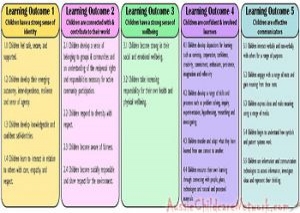 Here is the list of the EYLF Learning Outcomes that you can use as a guide or reference for your documentation and planning. The EYLF
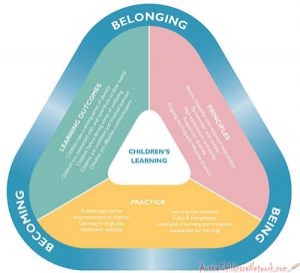 The EYLF is a guide which consists of Principles, Practices and 5 main Learning Outcomes along with each of their sub outcomes, based on identity,
 This is a guide on How to Write a Learning Story. It provides information on What Is A Learning Story, Writing A Learning Story, Sample
 One of the most important types of documentation methods that educators needs to be familiar with are “observations”. Observations are crucial for all early childhood
 To support children achieve learning outcomes from the EYLF Framework, the following list gives educators examples of how to promote children's learning in each individual
 Reflective practice is learning from everyday situations and issues and concerns that arise which form part of our daily routine while working in an early
 When observing children, it's important that we use a range of different observation methods from running records, learning stories to photographs and work samples. Using
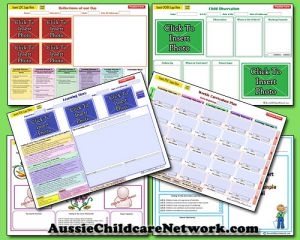 Within Australia, Programming and Planning is reflected and supported by the Early Years Learning Framework. Educators within early childhood settings, use the EYLF to guide
 This is a guide for educators on what to observe under each sub learning outcome from the EYLF Framework, when a child is engaged in
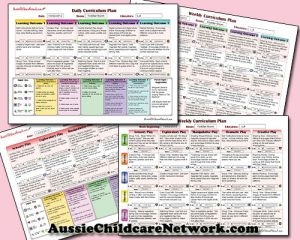 The Early Years Learning Framework describes the curriculum as “all the interactions, experiences, activities, routines and events, planned and unplanned, that occur in an environment