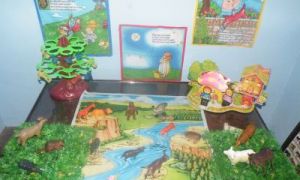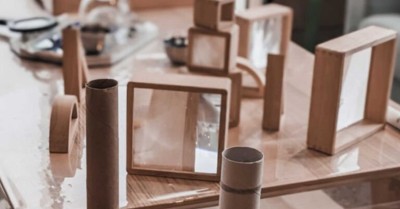
Provocations are not displays. They are not Pinterest‑perfect tableaus or aesthetic arrangements designed to impress adults. At their core, provocations are intentional invitations, carefully curated materials that nudge children toward exploration, questioning, and meaning‑making.
When we design with purpose, we shift from “setting up activities” to co-constructing possibilities. A well‑designed provocation whispers:
“I wonder what you’ll do with this…”
“What might you discover today…”
This shift honours children as thinkers, researchers, and capable contributors to their learning community.
The Anatomy of a Powerful Provocation
A strong provocation is built on four pillars:
1. Purpose
What concept, skill, or line of inquiry are you inviting children to explore?
Purpose is not a learning outcome—it’s the heartbeat of the experience.
2. Materials
Open‑ended, sensory‑rich, culturally respectful, and thoughtfully limited.
Materials should invite manipulation, not overwhelm.
3. Placement
Where materials sit matters. Height, light, proximity, and flow shape how children approach and interact.
4. Possibility
The provocation should not have a “right way” to engage.
It should offer multiple entry points and endless directions.
Examples of Provocations That Spark Curiosity
1. The Sound of Shadows
Purpose: Exploring light, sound, and pattern through sensory experimentation.
Materials:
- A small light source (torch or lamp)
- Translucent and opaque objects
- Metal bowls, wooden blocks, and natural materials
- A reflective surface (tray, mirror, foil board)
Setup:
Place materials on a low table near a dimmable light source. Arrange objects so children can test how shadows change when sound vibrations occur (e.g., tapping a bowl near the light).
What children might do:
- Notice how shadows “dance” when objects vibrate
- Explore cause and effect
- Create stories about the shapes they see
Educator prompts:
- “What do you notice when the bowl makes a sound?”
- “How does the shadow change when you move closer?”
2. Stories in the Sand
Purpose: Encouraging narrative thinking, symbolic representation, and cultural storytelling.
Materials:
- A shallow tray of sand
- Natural objects (shells, sticks, stones)
- Small wooden figures or culturally relevant story tokens
- Pattern stamps or textured objects
Setup:
Create a calm, open space with enough room for children to move around the tray. Place objects in small clusters to invite selection.
What children might do:
- Build landscapes and story worlds
- Recreate cultural stories shared at home
- Explore mark‑making and early literacy
Educator prompts:
- “Who might live in this place you’ve created?”
- “What story does this pattern remind you of?”
3. The Curious Tinker Table
Purpose: Investigating engineering concepts, problem‑solving, and persistence.
Materials:
- Loose parts (nuts, bolts, corks, washers, wooden offcuts)
- Small tools (screwdrivers, magnifying glasses, tweezers)
- Clipboards with blank paper
- Photos of real‑world machines or structures
Setup:
Arrange materials in shallow trays with clear pathways for children to move between them. Include visual references at child height.
What children might do:
- Build structures
- Test balance and stability
- Draw their designs
- Collaborate on shared inventions
Educator prompts:
- “What could make this stronger?”
- “How did you decide which pieces to use?”
4. Nature’s Palette
Purpose: Exploring colour theory, natural pigments, and sensory creativity.
Materials:
- Flowers, leaves, berries (safe and non‑toxic)
- Mortars and pestles
- Water droppers
- Small canvases or recycled card
- A colour wheel nearby
Setup:
Place natural materials in small bowls. Provide tools that encourage grinding, mixing, and experimenting.
What children might do:
- Create natural paints
- Compare colours
- Explore scent, texture, and transformation
Educator prompts:
- “What colours can you make from this leaf?”
- “How does the texture change when you add water?”
5. Cultural Echoes: Sound & Story Table
Purpose: Honouring cultural identity, oral traditions, and musical heritage.
Materials:
- Small percussion instruments (bells, wooden blocks, shakers)
- Photos of cultural celebrations
- Fabric pieces with traditional patterns
- Story cards with open‑ended prompts
Setup:
Create a warm, inviting space with soft lighting. Place instruments and fabrics together to encourage multisensory storytelling.
What children might do:
- Create rhythms inspired by home culture
- Combine sound and story
- Explore identity and belonging
Educator prompts:
- “What does this sound remind you of?”
- “How might this fabric be used in a celebration?”
What Makes These Provocations Effective?
They are open‑ended
- Children decide the direction, pace, and meaning.
They are culturally respectful
- Materials reflect the identities and stories of the children in the room.
They are sensory‑rich
- Children learn through touch, sound, movement, and experimentation.
They are intentionally limited
- Fewer materials = deeper thinking.
They invite collaboration
- Provocations become shared spaces for negotiation, empathy, and co‑construction.
Documenting Provocations Meaningfully
This is where your Learning Collective philosophy shines.
Instead of documenting what happened, focus on:
- What children wondered
- What questions emerged
- What theories children tested
- How materials shaped thinking
- What this tells us about identity, culture, and capability
A simple, powerful documentation frame:
- “The children explored…”
- “They wondered…”
- “We noticed…”
- “This tells us…”
- “Next, we might…”
This keeps documentation purposeful, identity‑centred, and aligned with your advocacy for reducing paperwork while deepening meaning.
Provocations are not about perfection. They are about possibility.
They are small acts of trust—trust that children are capable, curious, and ready to lead their own learning journeys. When we design with purpose, we create environments that honour children’s voices, cultures, and ways of knowing.
And in doing so, we reclaim time, presence, and joy.
Further Reading
STEAM Displays and Learning Provocations For Children
Designing Intentional Outdoor Learning Environments
Five Evidence-Based Features of High-Quality Play Environments
List Of Reflection Questions For The Learning Environment




 The Children’s Services Award introduces a streamlined classification system and updated pay rates designed to better recognise the skills, qualifications, and responsibilities of early childhood
 The Children’s Services Award has 8 clear levels. These levels make it easier to understand where you fit, based on your experience, qualifications, and responsibilities.
 When working as a qualified early childhood teacher (with a university degree) within a service, your rate of pay will come from the Educational Services
 Diploma-qualified educators play a vital role in early childhood services, taking on responsibilities that range from supporting children’s learning and development to leading rooms and
 Certificate III qualified educators form the backbone of early childhood services, providing essential care and learning support for children across all settings. Their wages under
 Early Childhood Teachers (ECTs) play a vital role in leading curriculum and pedagogy in early learning settings. Regulation 272 of the Education and Care Services
 Discover how school readiness programs support children’s independence, confidence, and skills for a successful transition into primary school.
 When an Educator is not performing their tasks or responsibilities at best practice, these issues need to be addressed for the Educator to understand where
 Educators can maximise tax deductions by claiming classroom supplies, training, union fees, and home office costs this financial year.
 A staff appraisal is a formal, systematic process of determining and reviewing the performance of early childhood educators over a period of time, usually a