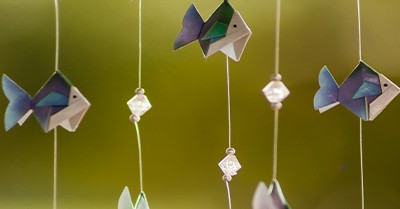
The Sea of Fish Challenge is a national initiative that invites children, educators, families, and communities to create and display fish artworks as a symbol of unity, culture, and respect for Aboriginal and Torres Strait Islander people. It’s a creative way to embed First Nations perspectives into early childhood settings. The following article provides information on the Purpose, How To Participate, Display ideas, Educator Tips and more.
Purpose
- Celebrate Torres Strait Islander culture and artistry.
- Promote inclusion, reconciliation, and cultural pride.
- Encourage intergenerational storytelling and creativity.
- Provide a hands-on way to engage with NAIDOC Week themes.
How to Participate
- Create your fish using paper, fabric, natural materials, or recycled items.
- Display your sea in a visible space—windows, fences, verandas, or hallways.
- Share your display on social media using hashtags: #SeaOfFish #NAIDOCWeek #ConntectingTheDotsThroughCulture
Display Ideas
- Hanging mobiles from branches or driftwood
- Fence installations with laminated fish
- Interactive gallery walls with children’s names or reflections
- Woven baskets filled with fish and family stories
Educator Tips
- Use the activity to spark conversations about Aboriginal and Torres Strait Islander culture.
- Invite families to contribute fish and share stories.
- Link the challenge to EYLF outcomes around identity, community, and cultural competence.
- Reflect with children on the meaning of their creations.
Download our FREE Sea Of Fish Family Challenge - which includes a letter to parents and a blank fish for families to decorate:
Reference:
The Sea Of Fish Challenge: Connecting The Dots Through Culture


 The Children’s Services Award introduces a streamlined classification system and updated pay rates designed to better recognise the skills, qualifications, and responsibilities of early childhood
 Children need safe and positive environments to learn and grow. To ensure this, services and educators need to ensure effective supervision at all times. The
 Floorbook is a documentation approach that uses a large book with blank pages for children to record different aspects of their learning in small groups
 In Norway and most other Scandinavian countries, children nap in the outdoors. According, to research outdoor sleeping not only promotes better daytime sleeping, but it
 Educational leaders play a crucial role in their early childhood service by ensuring that the educational program aligns with best practices and supports the holistic
 From 2026, every educator covered by the Children’s Services Award will move into a new, simplified classification structure. Instead of navigating 30 different levels, educators
 Nature programs in early childhood settings are a fantastic way to connect children with the natural world and promote holistic development. The following article provides
 Schemas are patterns of repeated behavior that allow children to explore and express developing ideas and thoughts through their play and exploration. The following article
 The following article lists 30 art and craft descriptions and links to the EYLF. These can be used as a blurb, during observations, used for
 Positive phrases play a crucial role in children's growth because they help nurture their emotional, social, and cognitive development. The following article lists 30 positive