


EYLF Learning Outcome 1 - Children Have A Strong Sense Of Identity focuses on children developing a strong sense of identity. The following article provides information on Key Learning Goals, Strategies To Support Learning Goals, Activities That Link To EYLF Learning Outcome 1, Lesson Plan Sample For EYLF Outcome 1 and more.

Creating an Early Years Learning Framework (EYLF) curriculum plan involves several key steps to ensure it aligns with the framework’s principles and supports children’s learning and development. The following article provides a step by step guide on writing the EYLF curriculum plan.

The Early Years Learning Framework (EYLF) planning cycle is a structured process that helps educators plan, document, respond to, and support children’s learning. The following article provides information and examples of each of the 5 stages of the EYLF planning cycle.
The Early Years Learning Framework recognizes the inextricable links that belonging, being and becoming have with learning. As part of this recognition, the framework elaborates learning outcomes, principles and practices for educators that will help them meet their professional goals while ensuring personal growth and well-being too. The following article provides definitions of belonging, being and becoming.
The EYLF Learning Outcomes are broad and observable. They acknowledge that children learn in a variety of ways and vary in their capabilities and pace of learning. Children’s learning is ongoing acknowledge that children learn in a variety of ways. The following article provides practical examples of each individual learning outcome that children will progress towards in different and equally meaningful ways.

The EYLF Outcomes Meanings and Examples provide detailed meanings for each of the 5 learning outcomes as well as examples of how each learning outcome can be implemented into practice.
EYLF Outcomes In Action provides examples of how each learning outcome can be demonstrated within the learning environment. These are great to display to show how children and Educators are actively engaging in each learning outcome.

In an early childhood setting pedagogical documentation refers to the practice of collecting and displaying evidence of the different ways children think and learn over a specific period of time. The following article provides strategies for collecting pedagogical documentation for future planning.
To support children achieve learning outcomes from the EYLF Framework Version 2.0, the following list gives educators examples of how to promote children's learning in each individual learning outcome. These can be used when assessing children's learning, critically reflecting on the experiences planned, strategies to implement for each learning outcome and more. It also encourages and promotes each individual outcome throughout the early childhood setting.
This is a guide for educators on what to observe under each sub-learning outcome from the EYLF Framework Version 2, when a child is engaged in play and learning. Educators can plan experiences for the curriculum and for individual learning and gain an understanding of how children can achieve each individual outcome.
 Toddlers have a greater understanding of the world around them by this stage. Their cognitive development (also known as intellectual development and thinking skills) continues… Read More
 Infants begin to develop trust when parents begin to fulfil their needs. Such as changing an infant's nappy when needed, feeding on request and holding… Read More
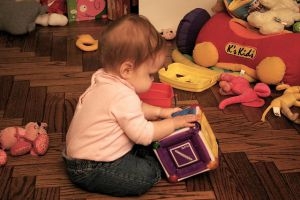 Beginning at birth the construction of thought processes, such as memory, problem solving, exploration of objects etc, is an important part of an infant’s cognitive… Read More
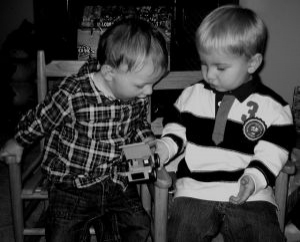 Toddlers want to do more on their own and do not like it when you begin to establish limits on their behaviour. Tantrums can become… Read More
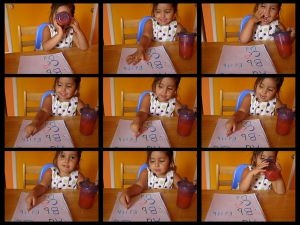 Your preschooler is now able to focus their attention more accurately and is less influenced by distractions. The intensity of questions increase as your child… Read More
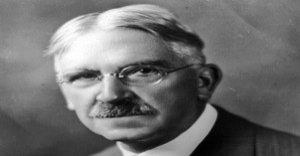 John Dewey is often seen as the proponent of learning by doing – rather than learning by passively receiving. He believed that each child was active,… Read More
 Erik Erikson developed a psychosocial theory to understand how we each develop our identities through eight stages of psychosocial development from infancy to adulthood. The… Read More
 Toddler advance and gains new skills in Gross Motor Development milestones achieved throughout earlier years. Co-ordination and challenges that could not be performed before such… Read More
 At this point preschoolers begin to interact effectively with others. Play becomes more innovative and organized and “boyfriend” or “girlfriend” begins to emerge. Preschoolers have… Read More
 From now, babies begin to identify and respond to their own feelings, understanding other's feelings & needs and interact positively with others. A baby's social and… Read More
Supporting toddlers aged 2–3 years with challenging behaviors requires understanding their developmental stage and using...
See more...
At this age, preschoolers make big progress in gross motor skills such as running, jumping...
See more...
Brain development is directly related to cognitive development which describes how a child’s intellect grows...
See more...