
Every time a shocking case of child abuse surfaces, the sector braces for another wave of reactionary policies. Device bans, endless training modules, and compliance paperwork pile up on educators who already uphold professional standards. Yet none of these measures address the core issue: ratios.
The Misplaced Focus
- Training overload: Educators who would never harm children are burdened with more courses, while predators — who are criminals, not “undertrained staff” — remain undeterred.
- Device bans: Easily circumvented, they punish staff who used personal devices responsibly (for music, communication, or efficiency) without stopping those intent on wrongdoing.
- Cost shifting: Compliance measures add expense and workload but do not improve safety or learning outcomes.
The Reality of Abuse
- Less than 2% of child abuse occurs in education settings (including childcare, schools, OOSH).
- Of that 2%, childcare is the least represented.
- More than 88% of abuse occurs in homes or extended family networks.
- Childcare is already one of the most highly regulated and governed sectors.
- Private providers are not “hiring criminals” in fact, they are often more diligent reporters than small parent‑run NFPs.
This is not an “early learning issue.” It is a societal issue requiring criminal detection and prevention strategies, not more red tape for educators.
The Real Solution: Ratios
Lowering educator‑to‑child ratios is the most direct way to:
- Protect children: More eyes, more supervision, fewer blind spots.
- Improve learning outcomes: Smaller groups allow educators to engage meaningfully with each child.
- Ease behaviour management: With fewer children per educator, disruptive behaviour can be addressed quickly and constructively.
- Reduce workload stress: Responsibilities spread across more staff, preventing burnout and turnover.
Why hasn’t this been addressed? Because lowering ratios costs money. Profit margins and budget constraints are consistently prioritised over children’s wellbeing. Device bans are cheap. Training modules are cheap. Ratios are not.
If policymakers are serious about child safety, they must stop scapegoating educators with superficial fixes and start funding what truly matters: lower ratios. Until then, the sector will remain trapped in a cycle of compliance theatre, while the real risks of societal predators go unchallenged.
Further Reading
Beyond Ratios: Why Room Size Per Child Deserves Urgent ReformSafe Ratio Recommendations In Early Childhood Services
Ratio Reform: Seeing Every Child, Supporting Every Educator
Critical Reflection Questions For Ratios
Opinion: Ratios Ignored While Serious Incidents Rise
Educator-to-Child Ratios: A System Built for Profit, Not Quality Care
OPINION: Training Isn't The Problem — Ratios Are




 The Children’s Services Award introduces a streamlined classification system and updated pay rates designed to better recognise the skills, qualifications, and responsibilities of early childhood
 The Children’s Services Award has 8 clear levels. These levels make it easier to understand where you fit, based on your experience, qualifications, and responsibilities.
 When working as a qualified early childhood teacher (with a university degree) within a service, your rate of pay will come from the Educational Services
 Diploma-qualified educators play a vital role in early childhood services, taking on responsibilities that range from supporting children’s learning and development to leading rooms and
 Certificate III qualified educators form the backbone of early childhood services, providing essential care and learning support for children across all settings. Their wages under
 Early Childhood Teachers (ECTs) play a vital role in leading curriculum and pedagogy in early learning settings. Regulation 272 of the Education and Care Services
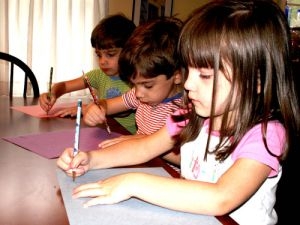 Discover how school readiness programs support children’s independence, confidence, and skills for a successful transition into primary school.
 Floorbook is a documentation approach that uses a large book with blank pages for children to record different aspects of their learning in small groups
 When an Educator is not performing their tasks or responsibilities at best practice, these issues need to be addressed for the Educator to understand where
 Educators can maximise tax deductions by claiming classroom supplies, training, union fees, and home office costs this financial year.